




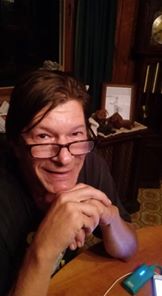

Mr. Baer did, in fact, commit disorderly conduct, according to New Hampshire repressive law, as written and defined, simply by breaking a two minute public meeting rule. Although his has been the most publicized case, to date, he probably isn't alone. A review of all lower 48 state statutes reveals that several states, including New York and Mississippi, have similarly phrased clauses.
To Minneapolis police in 2011, this was a predetermination that any Occupy protest or gathering was illegal under Minnesota law. In another example of this progressive state's one-upsmanship repressive attitude, activists were also often battered with secondary charges of "terroristic threats" as an added bonus.
Missouri Section 514, which was used against the Ferguson protestors, is far too lengthy to state in its entirety, but includes clauses limiting public assembly, inciting a riot and "terroristic threats" which are specifically written to limit public dissent.
But this isn't the first time disorderly conduct and similar laws have been abused for intentional repressive misapplication.
In the past, this has led to fierce legal challenges.
Jessica Eidsmoe writes of the many Supreme Court challenges to states' disorderly conduct laws, including Minnesota's, written specifically for silencing free speech in her excellent book "Arrested for Swearing: Why Minnesota Needs to Redefine Disorderly Conduct.
"The definition and scope of disorderly conduct statutes are shaped by Supreme Court and respective state court decisions evaluating statutory constitutionality in areas of speech proscription. Due to their broad scope and generalized language, disorderly conduct statutes can effectively silence free speech and permit discriminatory enforcement."
Remaining one of the worst in repressing free speech, even today, Mississippi Penal Code 97-35 abused disorderly conduct laws in a profound way toward activists of the Civil Rights movement, leading to numerous court battles which, ultimately, were not successful.
What differentiates the misapplication of the charge disorderly conduct then, and now, is that this is no longer abuse confined largely to one or two small, racist southern states.
In most places it's still unlikely that Mr. Baer, or anybody else for that matter, is going to be arrested under disorderly conduct law for expressing themselves at a school board meeting--yet. But, there is a prevailing trend of repressive and intentional misapplications of disorderly conduct law, accelerating in certain regions that don't only include the south.
There are plenty of other laws addressing specific, individual criminal acts in the 21st century, so there really isn't any need for sweeping disorderly conduct laws, unless the intent is ultimately repression.
When discussing disorderly conduct law in America, however, that's just a matter of opinion.
Next Page 1 | 2 | 3 | 4 | 5 | 6 | 7
(Note: You can view every article as one long page if you sign up as an Advocate Member, or higher).
 3
3
 3
3
 2
2






