




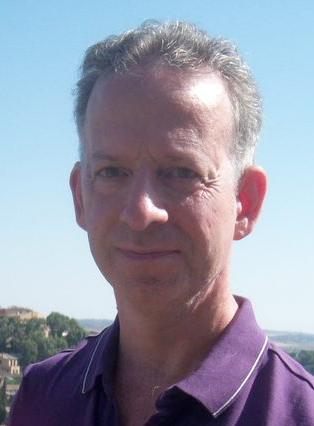


My first article was a plea to retain New York State's manual lever voting machines, a concern that now seems quaint in an era of electronic vote-flipping accusations. An early piece titled Ending the Conflict with Iran so Everyone Wins reads as almost touchingly naïve today. The idea that there could be co-operation under the Nuclear Non-Proliferation Treaty, to which Iran is a signatory but the U.S. is not, is still technically valid, even if vitriol and revenge is mostly all that is driving all parties today.
In my career as an amateur journalist (i.e. one who is rarely paid), I made two pledges to myself:
1. I won't write any me-too articles. That is, I have no desire to add to the cacophony of like-minded articles that just reinforce the walls of a siloed point of view. If I can't add something unique to the conversation, I won't write it.
2. I won't write "hate articles" or hate speech. There are enough reasons to be angry, but anger does not lead to solutions, and I'm not interested in turning up the vitriol meter, even if it gets me more views, or clicks on social media. I fully realize that posting short, bitter, hate-filled, angry diatribes on X could get me more attention, but there's just too much of that already, and the world does not need more, it needs a lot less, actually. I've never had more than 800 followers on X, and 80 on OpEdNews, but that's not why I write. Getting likes, followers and reposting is important to get ideas promoted, but if that's all you're doing it's just ego-fulfillment, not informing the public.
Journalist and political economist Henry George was an optimist of the human condition as well, writing in the late 19th century, during the gilded age. That was an age which bears much resemblance to our own, but which actually was less dangerous, due to the advancement of technology that could end civilization today. My Georgist conviction hasn't wavered, though. George's Single Tax remains a credible remedy for boom-and-bust cycles driven by land speculation. However, an AI-fueled stock market bubble may be a different kind of beast, one Henry George never anticipated. Bernie Sanders' recent proposal for the government to own 50% of AI and distribute profits publicly carries the same underlying logic: that the commons, whether land or collective human ingenuity should benefit everyone, not just those positioned to capture it without compensation. Compensation for land use should go towards those who created its value in the surrounding community, while compensation for improvements, like new buildings, should go to those whose labor or capital created them. And no one should be able to just sweep up the results of hard effort in creating the intellectual heritage that now belongs to society.
What's surprising, given the broader traffic decline at OpEdNews, is how resilient individual article readership has proven. Viral pieces drive the totals far more than steady accumulation, but articles that age off the front page keep collecting views quietly for years, especially when they touch on enduring questions. The writing, it turns out, has a longer shelf life than the news cycle suggests.
Here is my latest group of articles, from my author's first page:
Next Page 1 | 2 | 3 | 4 | 5 | 6
(Note: You can view every article as one long page if you sign up as an Advocate Member, or higher).






