






While both sides continue to engage in sharp rhetoric, underlying strategic calculations suggest that neither Ankara nor Tel Aviv is seeking a full-scale confrontation-- at least for now. However, the persistence of these tensions, combined with fragile regional dynamics, leaves open the possibility of further escalation in the near future.
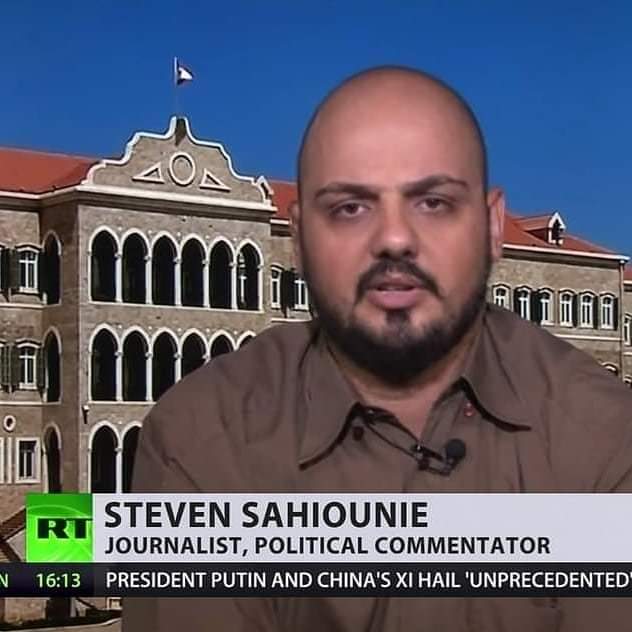
Journalist Steven Sahiounie interviewed Syrian -Turkish Journalist and political commentator Ali Asmar
1.
Ankara and Tel Aviv had good relations in the past. In your opinion, why did the relationship between them change and reach this level of tension? Does this tension extend to economic and social relations?
In fact, Turkish-Israeli relations are historical and have been relatively stable for most of their phases. Turkey was among the first countries to recognize Israel, but within the 1967 borders, not according to any expansionist projects. Traditionally, the Turkish position has rejected using regional crises as a pretext for expansion or imposing dominance over other states.
The tension in these relations is often linked to the rise of right-wing governments in Israel, such as Benjamin Netanyahu's government. Its disagreements are not limited to Turkey alone but extend to many countries in the region, due to policies based on threats, military escalation, and targeting multiple arenas simultaneously.
Since the outbreak of the war in Gaza, Recep Tayyip Erdo?an has directed direct criticism at the Israeli government, calling on it to act as a responsible state within international law, rather than as an entity that exceeds these rules-- whether by using food as a tool of siege or by targeting civilians and journalists.
Based on this, it can be said that the problem is not in the Turkish-Israeli relationship itself, but rather in the nature of the policies pursued by the current Israeli government. Netanyahu is seen as a key factor of tension, seeking to expand the scope of conflict and perhaps using it politically to avoid his internal crises. If a change in the Israeli government occurs, it is likely that we will witness a gradual return to normal relations, especially since the tension began economically before developing into political and social dimensions, with Turkish attempts to exert pressure through economic tools that have not yet succeeded in changing Israeli behavior.
2.
There have been mutual statements and threats between Turkey and Israel, including claims that after dealing with Iran, Turkey would be next. In your opinion, what would be the Turkish response on all levels? Will Washington play a role in reducing the tension, especially given its good relations with both Tel Aviv and Ankara?
This narrative about the possibility of a direct military confrontation between Turkey and Israel is frequently repeated in the media and often falls within an Israeli narrative based on the idea of a "constant need for an enemy" to strengthen internal cohesion.
However, in practice, the likelihood of a direct military confrontation between the two sides remains low, although theoretically possible, for several reasons:
First, Turkey is a member of NATO, which provides it with a complex strategic umbrella.
Second, Ankara is an important ally of the United States and is not in a position similar to Iran in terms of isolation or the nature of the threat.
Third, Turkey is a strong regional power with multiple leverage tools-- geographical, political, and economic.
Any direct confrontation with Turkey would not have limited consequences but could expand to a wider scope involving the West, given Ankara's central role in sensitive issues such as the Russia-Ukraine war and the refugee situation in Europe, in addition to being a strategic energy corridor and controlling the Bosporus and Dardanelles straits. The Turkish military is also considered among the strongest in the world and enjoys a notable degree of independence in defense industries.
(Note: You can view every article as one long page if you sign up as an Advocate Member, or higher).






