




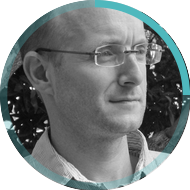


According to Salah, Netanyahu has tried to take aim not just at his movement, but at the entire Palestinian population. More specifically he believes the measures aim to disrupt the movement's strong presence at the al-Aqsa mosque compound, the Haram al-Sharif, in the Old City of Jerusalem.
Salah has been leading a campaign under the slogan "Al-Aqsa is in danger" for nearly 20 years. He argues that Israeli leaders are asserting ever greater control over the site, where they believe the ruins of two ancient Jewish temples are located.
The Israeli prime minister has repeatedly accused Salah of incitement over al-Aqsa and blamed him for the unrest that has periodically erupted in Jerusalem since last summer.
"Goal to create vacuum""Netanyahu thinks that by banning us he can create a vacuum at al-Aqsa," the sheikh said. "He hopes that will give him the chance to increase the raids by the occupation forces [to remove Muslim activists from the compound]."
"His ultimate goal is to impose a division at al-Aqsa," he added, referring to fears that Israel wishes to break with traditional, if waning, rabbinical prohibitions against prayer at the site.
At some point Israel will try to enforce a separate prayer space and prayer times for Jews, echoing what it did at the Ibrahimi mosque 20 years ago, Salah warned.
But Netanyahu will fail, he concluded. "The ban serves only to make our role even more important. Now the entire Palestinian public understands that they must make efforts to defend al-Aqsa, not just the Islamic Movement. The ban has recruited everyone to this cause."
He points to the fact that the buses the movement regularly runs from Palestinian communities in Israel to Jerusalem have increased by 50 percent since the movement was outlawed. Salah considers the buses a vital weapon to bolster Muslim presence at the mosque, as Israel imposes ever tighter restrictions on worship.
"Could there be a stronger proof that this ban will not scare people and that it is counter-productive?" Salah said, while adding that the timing of the ban appears opportunistic, exploiting anti-Muslim sentiment in the west following the Islamic State group's attacks in Paris in which 130 people were killed.
Collusion by Arab statesBut he also accuses neighboring Arab countries of colluding in the decision.
"The origins of this ban date to the renewal of relations between Israel and Egypt after [President Abdel Fattah] Sisi came to power." Sisi ousted the Muslim Brotherhood in Egypt in 2013 in a coup and quickly declared the movement an illegal organization.
Netanyahu was taking advantage of the Muslim Brotherhood's beleaguered status in the region, the sheikh said.
More intriguingly, Salah also points the finger at another Arab state.
He believes the crackdown on the Islamic Movement was engineered at a meeting in late October between Netanyahu and US secretary of state John Kerry. The talks were ostensibly designed to calm mounting tensions in Jerusalem over al-Aqsa.
Afterwards, Kerry, Netanyahu and King Abdullah of Jordan, who is formally responsible for al-Aqsa through an Islamic body known as the Waqf, agreed to set up cameras at the site to monitor events there.
Salah says that, according to his sources, a senior US official told his counterpart from an Arab country -- which Salah declines to identify -- that the agreement was also designed to "clear the path to banning the Islamic Movement, to get us out of the way."
(Note: You can view every article as one long page if you sign up as an Advocate Member, or higher).
 1
1
 1
1






