




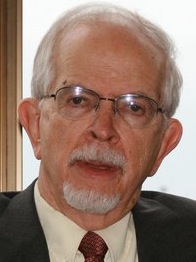

Freeman survived his 2009 encounter with the Israel Lobby. Today, he continues to provide wise guidance on all matters related to Israel's conquest of Palestine.
A most recent example may be found in an address he gave at a January 16 Washington conference convened by the Middle East Policy Council, entitled, "U.S. Grand Strategy in the Middle East: Is There One?"
Freeman was the opening speaker at the conference, the full text of which may be found here.
The opening of Freeman's presentation put the US Middle East strategy in a moral context:
"Over the past half century or so, the United States has pursued two main but disconnected objectives in West Asia and North Africa: on the one hand, strategic and economic advantage in the Arabian Peninsula, Persian Gulf, and Egypt; on the other, support for the consolidation of the Jewish settler state in Palestine. These two objectives have consistently taken precedence over the frequently professed American preference for democracy.
"These objectives are politically contradictory. They also draw their rationales from distinct moral universes. U.S. relations with the Arab countries and Iran have been grounded almost entirely in unsentimental calculations of interest. The American relationship with Israel, by contrast, has rested almost entirely on religious and emotional bonds. This disconnect has precluded any grand strategy."
It is significant that Freeman does not refer to Israel's "occupation," but instead, stresses that what the US is supporting is "the Jewish settler state in Palestine".
Occupation is the term Israel and the world media employs as Israel steadily and deceptively seizes more and more Palestinian land, not unlike King Leopold's deceptive strategy to set up a "confederation of free republics" along the Congo River.
Occupation is a euphemism, one of many employed in Israel's hasbara (re-education) campaign to rewrite the reality of a conquered people. Occupation is a word used to cover the truth of Israel's long-range plans to seize all of the land between the Mediterranean Sea and the Jordan River.
Occupation is a term normally used to describe a temporary holding arrangement, as, for example, the US occupation of Germany following World War II. This so-called "occupation" has continued since Israel, under the United Nations first established its modern state in 1949. It is no occupation; it is, as Freeman writes, the creation of a "settler state in Palestine."
Israel has pretended, with the help of its AIPAC-led allies in the Congress and White House, that it really wanted to participate in a "peace process," a carefully orchestrated lie maintained by Western mainstream and alternate media alike.
It has been a lie successfully maintained with the support of the American public's desire for a reality easily grasped in black and white terms, e.g., "savage" American Indians facing the Puritans; "inferior" black Africans trading land for a pittance to King Leopold; and more recently, the long-running Cold War between communists and the "free world."
Israel has effectively manipulated public opinion to make Islam the new communism, a new enemy to engender fear of constant imminent danger.
Eager to engender more fear, our politicians and media have together elevated the alleged Boston Marathon bombers into Islamic-driven zealots, following every lead that might link the Boston bombers to a dark, foreign, Islamic organization.
The Zionist campaign to see any and all designated "enemies" of Israel as the action of "terrorists," is the ongoing effort to retrieve The Class of Civilization, a theory "that people's cultural and religious identities will be the primary source of conflict in the post-Cold War world."
The Clash concept was proposed by political scientist Samuel P. Huntington in a 1992 lecture at the American Enterprise Institute, which he then developed in a 1993 Foreign Affairs article titled "The Clash of Civilizations?" in response to Francis Fukuyama's 1992 book, The End of History and the Last Man (Wikipedia).
(Note: You can view every article as one long page if you sign up as an Advocate Member, or higher).






