




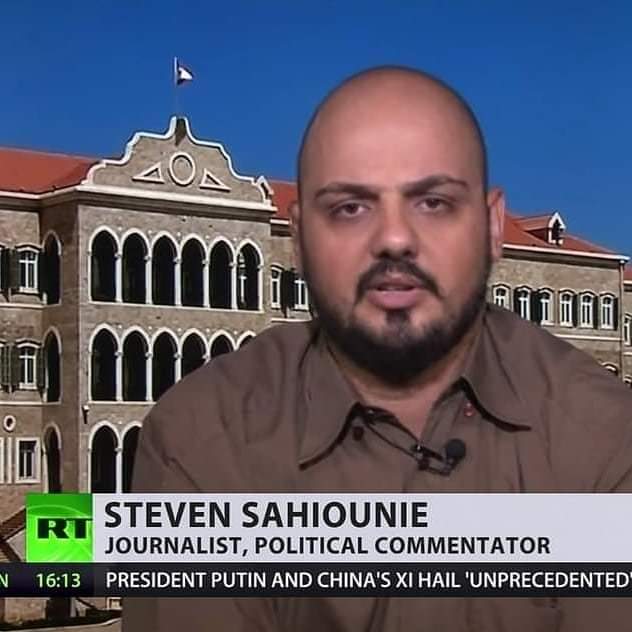


Mohamed Shamsadeen (MS): Regardless of the personal relationship between Netanyahu and Trump, what ultimately matters to the United States is protecting Israel as a strategic project-- not protecting Netanyahu as an individual. Today, Israel is facing growing international isolation, and it has become increasingly clear that Netanyahu himself has turned into a burden on the state, as his political and military behavior is now clashing with broader American strategic interests.
From this perspective, Washington no longer has much room to maneuver. The messages sent by the Trump administration have been clear and firm-- whether through direct statements, political and media pressure, or even by opening communication channels with figures from the Israeli opposition, which in itself is a highly significant signal.
For that reason, I believe Netanyahu will sooner or later be compelled to move toward a ceasefire. This could be accompanied by partial Israeli withdrawals from southern Lebanon, while some limited friction or localized clashes may continue at certain border points
2. SS: Lebanon is divided between those who support direct negotiations with the Israeli enemy and those who oppose them. In your opinion, could this disagreement ignite sectarian strife among the Lebanese? What is the solution?
MS: I do not believe that the dispute over direct negotiations with Israel will lead to a full-scale sectarian conflict or a new civil war. It is true that this issue is extremely sensitive and provokes deep political and sectarian divisions, but Lebanon has historically grown accustomed to this kind of political escalation at every critical turning point.
The main reason a civil war remains unlikely is that the forces capable of igniting one do not currently want it, for reasons tied to both internal and regional balances. That does not, however, rule out the possibility of limited security tensions or isolated incidents here and there.
As for a solution, unfortunately, none is clear at this stage. Lebanon appears to be moving increasingly toward a model resembling the period before the events of 1860, when each sect was tied to a regional patron that provided protection and support. This only deepens the fragility of the state rather than strengthening it
3. SS: Both Katz and Netanyahu have declared their refusal to withdraw from Lebanon. On the other hand, Tehran refuses to continue negotiations with Washington until the aggression against Lebanon stops and there is a withdrawal from the south. In your opinion, is the region heading toward a new round of escalation, and what is Netanyahu betting on?
MS: I said it before and I repeat it: the war, in the broader sense, effectively ended around two months ago. What remains unresolved is how to politically manage its aftermath. So far, neither the United States nor Israel has succeeded in achieving the major objectives for which they entered the war, and this makes a return to full-scale confrontation unlikely.
That does not mean escalation is entirely off the table. We may still witness limited rounds of fighting or localized clashes if negotiations falter, and Lebanon-- particularly the south-- remains the arena most capable of absorbing this type of military messaging.
As for Netanyahu, he is betting on time and on using any limited escalation to improve his negotiating position and compensate for the political and military failures he faces both domestically and internationally.
4. SS: There are pressures and threats regarding Syrian intervention in Lebanon, but there is Syrian, regional, and Arab opposition to this. In your opinion, will the regional powers be able to stop this American plan?
I believe the likelihood of direct Syrian intervention in Lebanon remains very low-- not only because of Syria's own reluctance, but because the new strategic reality in Syria has created an entirely different set of equations.
Today, Syria is deeply tied to Turkey, and Turkey has no interest in opening a new front or allowing anti-Israel forces to collapse entirely. Ankara understands that a radical shift in the balance of power could eventually place it in direct confrontation with Israel.
In addition, any Syrian intervention under the framework currently promoted by the United States would risk exhausting the new Syrian order and dragging it back into the cycle of regional conflicts. Both Ankara and Damascus are fully aware of these risks. For that reason, despite the pressure, this scenario remains unlikely.
5. SS: Statistics indicate that there are more than one million internally displaced Lebanese due to the war. Are there any plans or discussions by the Lebanese government regarding the reconstruction phase or finding alternative solutions for them?
(Note: You can view every article as one long page if you sign up as an Advocate Member, or higher).






