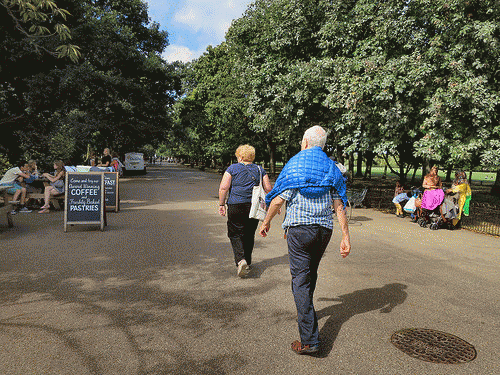
Benefits of physical activity for seniors extend beyond just helping them to avoid injury and disability; physical activity may also include faster and stronger recovery after injury.
Most previous studies looking at exercise’s benefits only focused on whether physical activity could prevent disability. But since most elderly spend time cycling in and out of periods of immobility, the latest results show exercise can also help reduce the time spent with limited activity and independence.
“This demonstrates that a physical activity program really has continued, sustained benefit over an extended period of time,” The exercise could be working to build up a reserve capacity that makes them fitter and stronger and therefore better able to bounce back after injuries like falls or illness. That means they might be able to recover more quickly if they do experience a blow to their health.
Read the rest of the story HERE:

At time.com
Rob Kall is an award winning journalist, inventor, software architect,
connector and visionary. His work and his writing have been featured in the New York Times, the Wall Street Journal, CNN, ABC, the HuffingtonPost, Success, Discover and other media.
Check out his platform at RobKall.com
He is the author of The Bottom-up Revolution; Mastering the Emerging World of Connectivity
He's given talks and workshops to Fortune
500 execs and national medical and psychological organizations, and pioneered
first-of-their-kind conferences in Positive Psychology, Brain Science and
Story. He hosts some of the world's smartest, most interesting and powerful
people on his Bottom Up Radio Show,
and founded and publishes one of the top Google- ranked progressive news and
opinion sites, OpEdNews.com
more detailed bio:
Rob Kall has spent his adult life as an awakener and empowerer-- first in the field of biofeedback, inventing products, developing software and a music recording label, MuPsych, within the company he founded in 1978-- Futurehealth, and founding, organizing and running 3 conferences: Winter Brain, on Neurofeedback and consciousness, Optimal Functioning and Positive Psychology (a pioneer in the field of Positive Psychology, first presenting workshops on it in 1985) and Storycon Summit Meeting on the Art Science and Application of Story-- each the first of their kind. Then, when he found the process of raising people's consciousness (more...)