




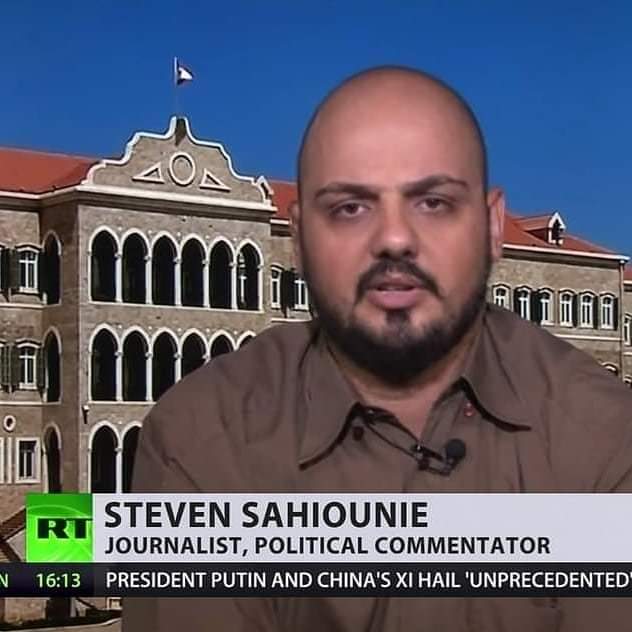


Steven Sahiounie, journalist and political commentator
On August 30, at 8:00 pm. local time, Israel struck a four-story residential building in the southern section of Beirut, Lebanon. The airstrike assassinated Fuad Shukr, killed three civilians, and injured 174 others.
Shukr was a senior military commander in the Lebanese resistance organization, Hezbollah, and was a founding member of its military wing. Shukr is accredited with obtaining the bulk of the group's more advanced weapons, which experts have said are on parity with those of Israel.
Israeli military planners had accused Shukr of a missile strike on July 27 that killed 12 children playing football in Majdal Shams in the occupied Golan Heights. The children were not Israeli citizens, or Jewish, but were Syrian Druze living under occupation on their own land.
Hezbollah denied responsibility for the strike, and said after investigation the missile was an Israeli air-defense missile that misfired.
Israeli ministers attempted to visit the funerals of some of the killed children, but were attacked verbally by parents and relatives, who blame the Israeli military for the massacre.
Netanyahu deflected blame on Hezbollah for the dead children, and used them to justify the assassination of Shukr. If a regional war starts because of a lie, it won't be the first time. The US used 9/11 to justify the attack, invasion and occupation of Iraq based on what we know was a lie.
Prime Minister Najib Mikati of Lebanon condemned the "blatant Israeli aggression", describing the assassination as a "criminal act" in a "series of aggressive operations killing civilians in clear and explicit violation of international law".
Iran
At 2:00 am. Beirut time, just six hours after the Shukr assassination, Hamas political chief Ismail Haniyeh was assassinated by an Israeli airstrike in Tehran, along with his bodyguard Wasim Abu Shaaban.
Hamas and Hezbollah are both part of the 'axis of resistance', which is formed by armed groups across the region. They are united in the armed resistance of Israeli occupation of the Palestinian people in Gaza and the West Bank, as well as Israeli occupied areas in Lebanon and Syria. The groups have been in military exchanges with Israel during the current Gaza war beginning on October 7. The groups have vowed to continue their struggle in support of the people of Gaza until Israel will stop the war.
Israeli media has reported that the missile that struck Haniyeh's residence was launched from outside Iran, which would be a first for Israel.
Haniyeh had been living outside of Gaza since 2019, and was in Tehran for the inauguration of President Masoud Pezeshkian that he attended just hours before his death.
Israel has previously sabotaged Iranian nuclear and military facilities and assassinated nuclear scientists from inside Iran. In April, Israel launched an attack inside Iran on a military facility in Isfahan, and inflicted damage to a Russian-made S-300 missile defense system.
Iran's Khamenei, Pezeshkian and IRGC have all promised retaliation for Haniyeh's assassination, but have not disclosed their plans. Haniyeh was a guest of the government of Iran when he was killed, and in the culture of the region, a guest is considered the responsibility of the host.
Iraq
(Note: You can view every article as one long page if you sign up as an Advocate Member, or higher).






