







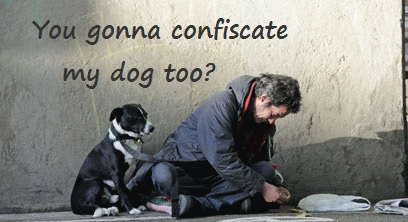
If he's a "personal possession", probably.
Though they may not have a home in which to secure their stuff, homeless people
still have possessions like everyone else.
The war on the nation's homeless is ramping up.
Yet
the city of Ft. Lauderdale, Florida is
on the cusp of passing a new
regulation that would make it
illegal for anyone to store their personal things on public property.
Specifically, it would empower police to confiscate any personal possessions
stored on public property, provided they have given the homeless person
24-hours notice. If the homeless people wish to retrieve their items, they must
pay the city "reasonable charges for storage and removal of the items," though
that fee is waived if the person is able to demonstrate he or she cannot afford
to pay. The city may dispose of any possessions not retrieved within 30 days.
One of the driving factors behind the measure, according to the legislation, is
the city's "interest in aesthetics."
"Aesthetics"
While no one wants to see ragged, unkempt people sitting on the streets with
whatever they have left out of a life of poverty, "aesthetics" may be
the most frivolous, contemptuous reason to cast a human being aside. However,
newborn tech industries seem to be very, very concerned about aesthetics: the
Facebook post of San Francisco's Greg
Gopman may have garnered
outrage in the City by the Bay known for its compassion, but other cities eager
to cash in on the gentrification start-ups bring with them (like higher rent
and real estate values) have turned a blind eye to "the last of
these."
Venice, California used to be a haven for homeless people, but
not any more. Even though people were horrified at the beating of a
homeless person last December, the attitudes of the new tech residents is less
than compassionate:
Recently, a homeless man named Brian Connolly bought food at the Starbucks at
Navy and Main, but was told he'd have to eat it outside; he wrote
last month that the incident
has a creepy segregation feel to it: Starbucks will take his money, but they
don't want him hanging around.
And some meanies added padlocks to a homeless storage facility. Park and Rec
had to apply bolt cutters to return the stored goods back to their owners.
"Possessions"
The above proposed law has not delineated what "personal possessions"
are, but one can guess that it may be up to law enforcement to determine it: is
a dog a "personal possession"? Aren't clothes personal possessions?
Cigarettes? Blankets? Shoes? Will the homeless be strip-searched?
Criminalizing Compassion
In an effort to consolidate compassion to the homeless, Houston tried to enact
a law that forbade any unpaid volunteers for "sharing
cooked food with the needy public." Mayor Annise Parker got a lot of
flak for it, not for the seeming heartlessness of it, but because the measure
was supported by Star of Hope Mission, a large evangelical concern that wanted
to get the homeless off the streets and into its city-subsidized shelters. You
can go to the Mayor Parker, empress of homelessness Facebook page to see related videos on
the issue.
Back To Fort Lauderdale
The measures are just the first
in a series to come before
the commission. City staff is currently drafting ordinances that would prohibit
panhandling and other solicitations at intersections, that would prohibit
people from sleeping on public property, and that would restrict when, where
and how often groups could set up sites to feed the homeless.
(Note: You can view every article as one long page if you sign up as an Advocate Member, or higher).
 1
1
 1
1
 1
1






