







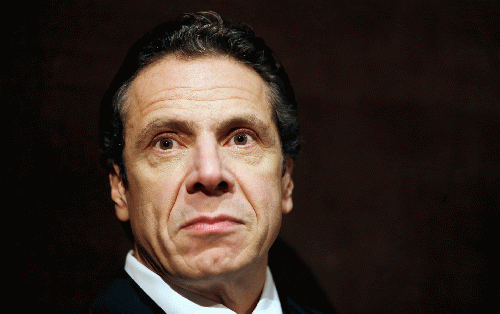
A month ago, as New York became the national coronavirus/COVID-19 epicenter, many were hailing Gov. Andrew Cuomo as a hero.
Looking and sounding far more of a leader at his daily press briefings than Donald Trump, and totally locking down New York so to "flatten the curve", there was even talk (albeit informal) about a Cuomo presidential run, or the possibility of his unseating former Vice President Joe Biden for the Democratic party's presidential nomination at this summer's national convention.
Andrew Cuomo is the governor of one of the nation's largest and most populated states, home to the country's largest city headquartering the United Nations, Wall Street, Broadway, JFK and LaGuardia airports.
When the coronavirus hit, he behaved like any governor should.
But most Democrats know Cuomo is not a paragon of progressive ideals.
He is a middle-of-the-road centrist Democrat often times far too cozy with corporations, banks, and special interests.
Even amid all the heroic accolades, he was not about to disappoint them.
In 2018, while campaigning for re-election against progressive challenger, actor Cynthia Nixon, Cuomo accepted $1.25 million from the Greater New York Hospital Association (GNYHA) lobbying group.
Last month, Cuomo reciprocated this largess by signing legislation inserted into an annual budget bill, which states:
[Hospital and nursing-home companies] shall have immunity from any liability, civil or criminal, for any harm or damages alleged to have been sustained as a result of an act or omission in the course of arranging for or providing health care services [to address the COVID outbreak.]
Some argue this language intends to make it easier for nursing-home corporations to profit off questionable business practices.
This extends temporary legal immunity to front-line doctors and nurses by offering more to any "health care facility administrator, executive, supervisor, board member, trustee or other person responsible for directing, supervising or managing a health care facility and its personnel or other individual in a comparable role".
Assembly member Ron Kim and fourteen fellow state lawmakers are proposing legislation to repeal the language, stating:
[The immunity law] egregiously uses severe liability standards as a means to insulate health care facilities and specifically, administrators and executives of such facilities, from any civil or criminal liability for negligence. Repealing this article is a much-needed step to holding health care administrators accountable and doing everything possible to stop even more preventable deaths from happening.
Attorney Andrew G Finkelstein, managing partner at Jacoby & Meyers law firm, explained:
(Note: You can view every article as one long page if you sign up as an Advocate Member, or higher).






