




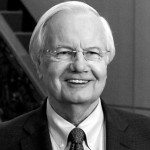

Moyers: Do you recall that there was a comprehensive study of all 37 presidents up to 1974? Half of them reportedly had a diagnosable mental illness, including depression, anxiety and bipolar disorder. It's not normal people who always make it to the White House.
Lifton: Yes, that's amazing, and I'm sure it's more or less true. So people with what we call mental illness can indeed serve well, and people who have no discernible mental illness -- and that may be true of Trump -- may not be able to serve, may be quite unfit. So it isn't always the question of a psychiatric diagnosis. It's really a question of what psychological and other traits render one unfit or dangerous.
Moyers: You write in the foreword of the book: "Because Trump is president and operates within the broad contours and interactions of the presidency, there is a tendency to view what he does as simply part of our democratic process, that is, as politically and even ethically normal."
Lifton: Yes. And that's what I call malignant normality. What we put forward as self-evident and normal may be deeply dangerous and destructive. I came to that idea in my work on the psychology of Nazi doctors -- and I'm not equating anybody with Nazi doctors, but it's the principle that prevails -- and also with American psychologists who became architects of CIA torture during the Iraq War era. These are forms of malignant normality. For example, Donald Trump lies repeatedly. We may come to see a president as liar as normal. He also makes bombastic statements about nuclear weapons, for instance, which can then be seen as somehow normal. In other words, his behavior as president, with all those who defend his behavior in the administration, becomes a norm. We have to contest it, because it is malignant normality. For the contributors to this book, this means striving to be witnessing professionals, confronting the malignancy and making it known.
Moyers: Witnessing professionals? Where did this notion come from?
Lifton: I first came to it in terms of psychiatrists assigned to Vietnam, way back then. If a soldier became anxious and enraged about the immorality of the Vietnam War, he might be sent to a psychiatrist who would be expected to help him be strong enough to return to committing atrocities. So there was something wrong in what professionals were doing, and some of us had to try to expose this as the wrong and manipulative use of our profession. We had to see ourselves as witnessing professionals. And then of course, with the Nazi doctors I studied for another book -- doctors assigned, say, to Auschwitz -- they were expected to do selections of Jews for the gas chamber. That was what was expected of them and what for the most part they did -- sometimes with some apprehension, but they did it. So that's another malignant normality. Professionals were reduced to being automatic servants of the existing regime as opposed to people with special knowledge balanced by a moral baseline as well as the scientific information to make judgments.
Moyers: And that should apply to journalists, lawyers, doctors --
Lifton: Absolutely. One bears witness by taking in the situation -- in this case, its malignant nature -- and then telling one's story about it, in this case with the help of professional knowledge, so that we add perspective on what's wrong, rather than being servants of the powers responsible for the malignant normality. We must be people with a conscience in a very fundamental way.
Moyers: And this is what troubled you and many of your colleagues about the psychologists who helped implement the US policy of torture after 9/11.
Lifton: Absolutely. And I call that a scandal within a scandal, because yes, it was indeed professionals who became architects of torture, and their professional society, the American Psychological Association, which encouraged and protected them until finally protest from within that society by other members forced a change. So that was a dreadful moment in the history of psychology and in the history of professionals in this country.
Moyers: Some of the descriptions used to describe Trump -- narcissistic personality disorder, antisocial personality disorder, paranoid personality disorder, delusional disorder, malignant narcissist -- even some have suggested early forms of dementia -- are difficult for lay people to grasp. Some experts say that it's not one thing that's wrong with him -- there are a lot of things wrong with him and together they add up to what one of your colleagues calls "a scary witches brew, a toxic stew."
Lifton: I think that's very accurate. I agree that there's an all-enveloping destructiveness in his character and in his psychological tendencies. But I've focused on what professionally I call solipsistic reality. Solipsistic reality means that the only reality he's capable of embracing has to do with his own self and the perception by and protection of his own self. And for a president to be so bound in this isolated solipsistic reality could not be more dangerous for the country and for the world. In that sense, he does what psychotics do. Psychotics engage in, or frequently engage in a view of reality based only on the self. He's not psychotic, but I think ultimately this solipsistic reality will be the source of his removal from the presidency.
Moyers: What's your take on how he makes increasingly bizarre statements that are contradicted by irrefutable evidence to the contrary, and yet he just keeps on making them? I know some people in your field call this a delusional disorder, a profound loss of contact with external reality.
Lifton: He doesn't have clear contact with reality, though I'm not sure it qualifies as a bona fide delusion. He needs things to be a certain way even though they aren't, and that's one reason he lies. There can also be a conscious manipulative element to it. When he put forward, and politically thrived on, the falsehood of President Obama's birth in Kenya, outside the United States, he was manipulating that lie as well as undoubtedly believing it in part, at least in a segment of his personality. In my investigations, I've found that people can believe and not believe something at the same time, and in his case, he could be very manipulative and be quite gifted at his manipulations. So I think it's a combination of those.
Moyers: How can someone believe and not believe at the same time?
Lifton: Well, in one part of himself, Trump can know there's no evidence that Obama was born in any place but Hawaii in the United States. But in another part of himself, he has the need to reject Obama as a president of the United States by asserting that he was born outside of the country. He needs to delegitimate Obama. That's been a strong need of Trump's. This is a personal, isolated solipsistic need which can coexist with a recognition that there's no evidence at all to back it up. I learned about this from some of the false confessions I came upon in my work.
(Note: You can view every article as one long page if you sign up as an Advocate Member, or higher).
 1
1
 1
1






