





"In A Full Life, Carter puts the long arc of his story together the way he sees it. The book includes his accomplishments as a negotiator and peacemaker in the humblest way -- as a man who was at work on a larger project, something he continues to be. A primer for the generations who don't know his work and a personal retelling for those who do, A Full Life may herald the reappraisal he deserves."
In the months and years ahead, as the nation and the world reflect on Carter's life, "the reappraisal he deserves" should dominate the reflection.
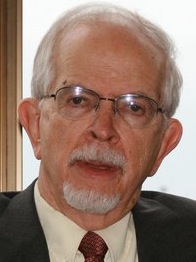
When you travel with a candidate, as I did with Jimmy Carter through two campaigns in Illinois, where I served as his state chair, you come to know him. How well you know him will depend on his openness, his candor and his patience.
From my experience, I can testify that he has an abundance of all three.
Thinking back on our first Illinois campaign together in 1976, one incident stands out. It is not an important incident. But it taught me all I needed to know about this nation's next president.
Carter was a former governor of Georgia when he launched his 1976 Illinois campaign. I had arranged a campaign stop in the south side of Chicago where the Reverend Jesse Jackson was a dominant political figure.
I had made the very major political mistake of taking Carter to an African-American church without clearing the location with Jackson. A leading political figure in Jackson's circle, a strong woman with a forceful manner, called me several days before the stop.
She was adamant. "You cannot go to that church without my approval" was the gist of her message to me. I told her it was too late to make a travel change. I remember her words vividly, and they taught me a political lesson: "You can't come into our house without first coming through the kitchen."
I apologized for my ineptness. She remained adamant.
I spoke to Governor Carter. "Call Andy," was his response, referring to African-American civil activist and political leader, the Rev. Andrew Young, in Atlanta, Carter's home base.
Carter already knew Chicago politics better than his state chairman. Young was later a Carter appointee to the United Nations, a congressman and a future mayor of Atlanta.
Andy mollified the strong personalities involved. We stuck to our original plan.
The night Carter spoke at the church, one of our staff members talked to the crowd as it assembled, a crowd not as large as Jesse Jackson would have produced, but adequate.
I was holding Governor Carter "backstage" until he was introduced. Chicago Sun Times political writer Basil Talbot cornered Carter with a question about our choice of that particular church.
Basil also had another political question about the Illinois campaign, which was just in its early stages.
Carter said nothing. He merely nodded to me to handle the mess I had gotten him into. I said not a word about the "kitchen" I had failed to enter earlier. I mumbled a few words about campaign plans unfolding.
(Note: You can view every article as one long page if you sign up as an Advocate Member, or higher).






