




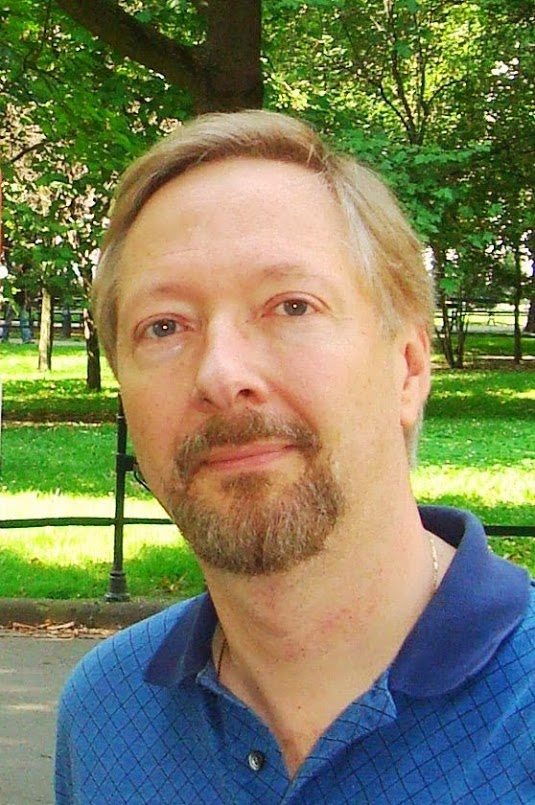

The Berlin-born Petro, who worked briefly for the U.S. State Department, has published articles in Russian and U.S. magazines and reviews. He co-authored the 1997 book Russian Foreign Policy: From Empire to Nation-State.
While in the former Soviet Union he monitored local elections in central Russia, Belarus, and Latvia. In 1987, he established the Center for Contemporary Russian Studies at the Monterey Institute of International Studies in California.
Petro, who is interested in Russian politics and culture, spoke on a panel about religion and visited Kazan, a largely Muslim city.
He also attended a Sunday service at a Christian Orthodox cathedral. The traditional image of the Russian churchgoer is an old woman, a sign that religion is dying, he said. But just the opposite is happening, Petro said. He saw mostly young families in church.
“The number of churches and mosques has grown tenfold in the last decade,” he said.
Westerners still have an outdated Cold War picture of Russia, he said. But the country has become wealthy with the jump in oil prices. “They are building pipelines everywhere,” Petro said.
Putin, he added, has a three-year plan to improve housing, invest in technology, and improve roads and sewers.
The average middle-class Russian “has more money to spend than the average middle-class American,” in part because the state pays the health and education bills, Petro said.
(Note: You can view every article as one long page if you sign up as an Advocate Member, or higher).





