





And here we are today.
At the start of this year, The Bulletin of the Atomic Scientists moved its "Doomsday Clock" forward to 90 seconds to midnight. This is the closest to midnight that the clock has been since it was set up in 1947. Says The Bulletin: "The Doomsday Clock is a design that warns the public about how close we are to destroying our world with dangerous technologies of our own making. It is a metaphor, a reminder of the perils we must address if we are to survive on the planet."
Nuclear weaponry today involves yet ever more gigantic destructive power.
Consider the Ohio-class ballistic missile submarines built across the Long Island Sound in Groton, Connecticut. As The National Interest, a middle-of-the-road publication, describes them: "If you do the math, the Ohio-class boats may be the most destructive weapon system created by humankind. Each of the 170-meter-long vessels can carry twenty-four Trident II submarine-launched ballistic missiles which can be fired from underwater to strike at targets more than seven thousand miles away"As a Trident II reenters the atmosphere at speeds of up to Mach 24, it splits into up to eight independent reentry vehicles, each with a 100- or 475-kiloton nuclear warhead. In short, a full salvo from an Ohio-class submarine""which can be launched in less than one minute-could unleash up to 192 nuclear warheads to wipe twenty-four cities off the map. This is a nightmarish weapon of the apocalypse."
"Let's eliminate these weapons before they eliminate us," said UN Secretary-General Antonio Guterres, the former prime minister of Portugal, at the conclusion last year of a "Political Declaration and Action Plan" for implementation of the Treaty on the Prohibition of Nuclear Weapons""important steps," he said, "toward our shared goal of a world free of nuclear weapons." Guterres said that with 13,000 nuclear weapons still held across the globe, "the once unthinkable prospect of nuclear conflict is now back within the realm of possibility."
"In a world rife with geopolitical tensions and mistrust, this is a recipe for annihilation. We cannot allow the nuclear weapons wielded by a handful of States to jeopardize all life on our planet," he said. "We must stop knocking at doomsday's door."
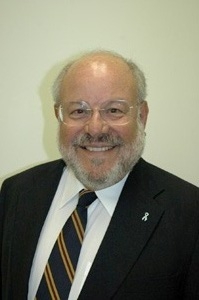
Recently I did a TV program with Seth Shelden, a professor of law, an attorney, and UN liaison for the International Campaign to Abolish Nuclear Weapons which received the Nobel Peace Prize in 2017. The Treaty on the Prohibition of Nuclear Weapons was passed at the UN that year much due to the work of ICAN.
The program will be broadcast at 4:30 p.m. this coming Saturday, the day after the theatre release of Oppenheimer, via Free Speech TV on nearly 200 cable TV systems in 40 states, on satellite TV networks and on internet platforms,
In the program Shelden details the provisions of the treaty termed by the UN as "a legally binding instrument to prohibit nuclear weapons, leading towards their total elimination."
You can view the program by visiting www.envirovideo.com
The treaty declares that because of the "catastrophic humanitarian consequences that would result from any use of nuclear weapons, and recognizing the consequent need to completely eliminate such weapons, which remains the only way to guarantee that nuclear weapons are never used again under any circumstances," nations agree not to "develop, test, produce, manufacture, otherwise acquire, possess or stockpile nuclear weapons." Further, no country may "threaten to use" them.
Asked about the lack of coverage by media of the treaty creating a nuclear weapons-free world, and thus so few people being aware of it, Shelden points to "myopic framing" by media. He cites how long it took "for journalists to accept that there were not two sides to the climate crisis." The horrendous impacts of nuclear weapons, "like the climate crisis, even more so, is a very black-and-white issue," he says. Shelden notes that the abolition of nuclear weapons has been a focus of the UN since its formation, the subject of its first resolution. He discusses the years of work that have led to the treaty.
An issue for the treaty is opposition from countries with nuclear weapons""including the United States, Russia and China. The film Oppenheimer can help lead to a groundswell of action by people challenging that.
The coalition Back From the Brink has a website headed "'Oppenheimer' Advocacy Resources" which has a graphic with the words: "LIFE WITH NUCLEAR WEAPONS: Not a Hollywood Movie." The group says: "The film Oppenheimer provides an important opportunity to engage your community in efforts for a safer, more just world that is free of nuclear weapons." It goes on: "The film is a lesson in what is possible when smart, committed people act. And today if smart, committed people act it is both possible and practicable to eliminate nuclear weapons and this unacceptable threat to our future and all we hold dear." There are many pages of suggestions of what people can do.
ICAN on its website has an "Oppenheimer: Campaigners' Action Kit."
ICAN says: "The release of the Oppenheimer film, and the wave of (media) attention surrounding it, creates an opportunity to spark public attention on the risks of nuclear weapons and invite new audiences to get involved in the movement to abolish nuclear weapons. We can educate about the risks, and share a much-needed message of hope and resistance: Oppenheimer is about how nuclear weapons began, the UN Treaty on the Prohibition of Nuclear Weapons (TPNW) is how we end them. That is why we have put together some resources for all ICAN campaigners""or anyone who is willing to take action""to use at local theatres around the world or to join the conversation online!"
(Note: You can view every article as one long page if you sign up as an Advocate Member, or higher).






