




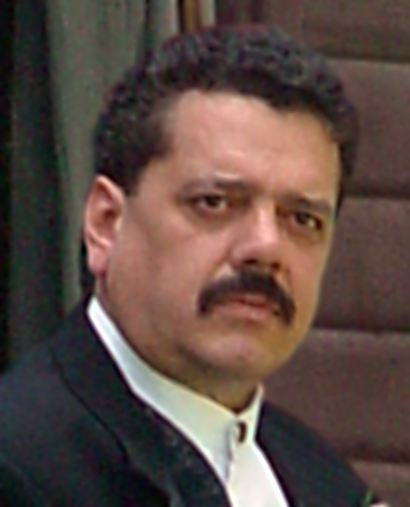

University of Toronto - Professor Ted Sargent
I'm Ted Sargent. I'm a professor in the department of electrical and computer engineering. I hold the Canada research chair in nanotechnology and in my researh I find discoveries in materials chemistry towards solving problems like trying to generate really low-cost efficient solar cells.
I'm an engineer, and I'm applying some of these discoveries in how to manipulate matter on the molecular scale and I'm using them in order to solve practical problems.
We are really at the convergence of a whole bunch of traditional fields in trying to push forward the boundaries of this new field. The University of Toronto is right at the heart of this movement culturally and scientifically and it's an incredibly exciting place to be.
So far, the world of solar energy has managed to make either efficient solar cells OR low-cost solar cells. We're on a path toward making solar cells that will break records for efficiency and for low-cost simultaneously.
At the University of Toronto, now and going forward, we get to participate day by day in building the technologies that will power the world cleanly in the future.
Interview with Ted Sargent on Solar Technology
Sargent: The graduate student who was working on that came into my office and said, "We've got a fordable take. We've got something that can really do power conversion." And together we just looked into 'how important is that', because of course there's something about the infrared colors that's a bit intangible. They're colors that you and I can't see. And so you don't necessarily appreciate them. But we recognize that in fact half the sun's energy reaching the earth, in fact a little bit more than that, is actually invisible to us.
Interviewer: In the infrared?
Sargent: Yeah, it's in that infrared. Infrared means 'beyond red', so it's beyond what you and I can see. But it's just as real as anything, as any other source of power, and if we don't tap into it in our solar cells, then we throw away more than half of the potential sun's energy that we could be using.
The passion that the PhD students and post-doctoral fellows bring to this work is remarkable, and they're working 20 hours a day in the lab in order to get there. We recognize that solar energy isn't just an incredibly exciting science problem, which it is, but it's an incredibly important human problem. And this is something that we think about every day unabashedly.
Interviewer: You do, ehh? Well tell me about some of the conversations that come out of that.
Sargent: Well, you know these kinds of considerations of how to get the efficiency up, can we get another factor of 3 doing this or another factor of 10 doing that, every once in a while in one of our meetings where we're making this systematic progress toward this goal, I'll say, "Listen guys, this is great, and we're optimizing and improving, but we need a revolution here. We need something that's gonna take us to the next level."
Sometimes the grad students will say, "Well, you know, that's true. But we've just got a factor of 3 through systematic optimization over the last week. If we can give you another factor of 3 two times, that's a factor of 10, and that's a revolution."
I remember a time when it wasn't so much on my mind. And then you go outside and you stand in the sun and it beats down on you, and it's incredibly powerful. And you can't but wonder surely there has to be enough energy there for a civilization, for something as small as the earth.
And indeed there is, and of course it's been powering life forever. This is our only energy source. It's the sun that feeds plants that ultimately feed us. Clearly its power is vast, and one that is largely untapped. And as scientists and engineers, it's incumbent upon us to try to figure out how to make this something we can tap into in a way that's practical.
And you can almost say -- and of course this is ignoring the practicalities of where we are today -- but you could almost say, "abundant, free and clean, why would we do anything else?" The answer is that we haven't yet engineered our way through this. The limitations today are technological and ultimately that means they are human. There are things that we haven't yet discovered.
And that of course is what engineers do. They break assumptions.
******
Ted Sargent is a pioneer in solar science. He's working on solar technology that could literally be woven into every aspect of daily life, from our clothes to our roads, using what is known as a spray-on solar cell.
Ted is working on solar nanotechnology with the potential to make solar energy very cheap and allow society to collect it on a huge scale. Currently, solar technology costs more to build and install than most people are willing to pay. Solar panels, for example, the technology most commonly associated with solar energy, are installed on your rooftop. The cost of collecting one kilowatt per hour of solar energy (about a third of the electricity an average household uses on any given day) is about $11,000.
Not only are panels expensive to install, they capture only the visible portion of the sun's rays so they work only on sunny days. Ted's focus is the infrared portion of the sun's rays which accounts for more than half of all solar energy. What's more, infrared energy is available to us even in cloudy weather.
The plastic material uses nanotechnology and contains the first solar cells able to harness the sun's invisible, infrared rays. The breakthrough has led theorists to predict that plastic solar cells could one day become five times more efficient than solar cell technology.
A quantum dot is a semiconductor nanostructure that confines the motion of conduction band electrons, valence band holes, or excitons (bound pairs of conduction band electrons and valence band holes) in all three spatial directions.
The confinement can be due to electrostatic potentials (generated by external electrodes, doping, strain, impurities), the presence of an interface between different semiconductor materials (e.g. in core-shell nanocrystal systems), the presence of the semiconductor surface (e.g. semiconductor nanocrystal), or a combination of these. A quantum dot has a discrete quantized energy spectrum. The corresponding wave functions are spatially localized within the quantum dot, but extend over many periods of the crystal lattice. A quantum dot contains a small finite number (of the order of 1-100) of conduction band electrons, valence band holes, or exciton, i.e., a finite number of elementary electric charges.






