

Refresh   Tag(s): ; ; ; ;
Add to My Group
August 30, 2008 at 12:50:22

View Ratings | Rate It

UFOs, Sovereignty and Politics

FACEBOOK
submit to twitter
submit to reddit
submit to digg

Tell A Friend

By Michael Salla (about the author)     Page 1 of 1 page(s)

opednews.com     Permalink

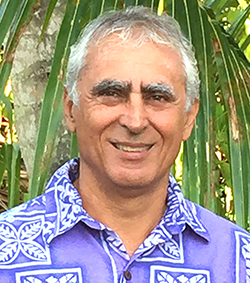
For OpEdNews: Dr Michael Salla - Writer

"UFO ignorance is political rather than scientific"- that's the conclusion of two prominent university professors who had the results of their research on UFOs published in the August 2008 edition of Political Theory. It was the first time a major political science journal had published an article dealing with the UFO phenomenon so it has predictably sparked controversy in the academic world. The joint authors of “Sovereignty and the UFO,” are Alexander Wendt, Professor of International Security at Ohio State University; and Professor Raymond Duvall, Chair of Political Science at the University of Minnesota. Their article breaks new ground in opening up for academic debate the way in which evidence of UFOs has not been seriously analyzed in the modern era. Their main argument is that this is due to a “metaphysical threat” that UFOs pose to the sovereignty of modern states. This threat comes not from the reality of UFOs as an inexplicable physical phenomenon that ultimately have mundane explanations, but the implicit assumption that UFOs are intelligently guided vehicles controlled by extraterrestrial intelligences (the extraterrestrial hypothesis).

Wendt and Duvall argue that a serious study of UFOs could undermine the “anthropomorphic sovereignty” under which modern states operate. They explain in their paper: “When sovereignty is contested today, therefore, it is always and only among humans, horizontally so to speak, rather than vertically with Nature or God. In this way modern sovereignty is fundamentally anthropocentric (pp.607-608).” Put simply, only humans compete for sovereignty over the population, resources and territory of the planet.

In the absence of any conclusive scientific evidence of intelligent extraterrestrial life, political sovereignty remains an exclusively human affair. This is why, according to Wendt and Duvall, modern states have not devoted sufficient scientific resources to the UFO problem.

… since 1947 over 100,000 UFOs have been reported worldwide, many by militaries. However, neither the scientific community nor states have made serious efforts to identify them, the vast majority remaining uninvestigated…. For both science and the state, it seems, the UFO is not an “object” at all, but a non-object, something not just unidentified but unseen and thus ignored (p. 610).

This directly led to Wendt and Duvall concluding that states are deliberately promoting an “epistemology of ignorance.” They write: “our puzzle is not the familiar question of ufology, “What are UFOs?” but, “Why are they dismissed by the authorities?” Why is human ignorance not only unacknowledged, but so emphatically denied? In short, why a taboo?” (p. 611).

One critic, Henry Farrell, responded to their paper arguing that “the evidence is inadequate to the claims made.” In their online response to Farrell’s criticism, Wendt and Duvall agreed that they had supplied insufficient evidence in support of their theory but that the “intent in the paper is not in any case to test our theory: it is to demonstrate the existence of an unacknowledged puzzle, and then, in the spirit of systematic theorization, offer what we think is a plausible solution to it.”

Farrell’s criticism is the familiar skeptical position used not only to challenge the evidence supporting UFO research and the extraterrestrial hypothesis in the first place, but also claims that governments are systematically covering up, or in denial over, the evidence. Wendt and Duvall are not positing a systematic government cover up of the evidence, but are proposing the theory that there exists a deep denial by the modern state over the significance of UFO evidence: “the sovereign represses the UFO out of fear of what it would reveal about itself (p. 625).

UFO researchers have long claimed that the governments have covered up evidence confirming the extraterrestrial hypothesis, or are in denial over the evidence. Terms such as “Cosmic Watergate” have been coined to describe the government UFO cover-up, and how this systematically has influenced public perceptions over the extraterrestrial hypothesis. Other researchers have referred instead to a government “foul-up” which is that governments basically have mangled the scientific research of UFOs, and it’s up to civilian researchers to shepherd government authorities back onto the right track.

Wendt’s and Duvall’s theory is a variation of the government foul-up argument. Rather than governments consciously choosing to neglect the serious study of UFOs through a deliberately thought out public policy process, this denial is expressed unconsciously due to the metaphysical threat posed by UFOs. They point out that these “are questions of social rather than physical science, and do not presuppose that any UFOs are ETs. Only that they might be” (p. 611). Consequently, this leads to arguably Wendt’s and Duvall’s most significant observation about the fundamental nature of the UFO issue stated at the beginning of this article, “UFO ignorance is political rather than scientific” (p. 613).


The greatest contribution of Wendt's and Duvall's article is that it correctly casts light on the political factors that contextualize evidence of UFOs and the extraterrestrial hypothesis. For decades, many have argued that the study of UFOs is a scientific problem that requires a strict application of the scientific method to get definitive answers. The scientific approach has made little progress since political factors have not been properly accounted for in the way modern states are in denial about the evidence (the foul-up thesis), and/or cover-up hard evidence supporting the extraterrestrial hypothesis. The shift from a purely scientific approach to a more politically oriented understanding ought to be greatly welcomed. It will provide greater awareness of how modern states participate in the study of UFOs and the extraterrestrial hypothesis. Wendt’s and Duvall’s “Sovereignty and the UFO,” moves academia one step closer to formal political studies of evidence concerning the extraterrestrial hypothesis, and its public policy implications. That will ultimately lead, as I argue elsewhere, to the development of ‘exopolitics’ as the formal political discipline for studying the public policy implications of extraterrestrial life.

[Author’s Note: An abstract and further details of Wendt’s and Duvall’s paper is available online at: http://ptx.sagepub.com/cgi/content/abstract/36/4/607 .]


www.exopolitics.org

Dr. Michael Salla is an internationally recognized scholar in international politics, conflict resolution, US foreign policy and the new field of 'exopolitics'. He is author/editor of five books; and held academic appointments in the School of (more...)
 

The views expressed in this article are the sole responsibility of the author
and do not necessarily reflect those of this website or its editors.

Contact Author Contact Editor View Authors' Articles


Book Recommendations for "Politics Security Sovereignty State"
Society, Security, Sovereignty and the State in Somalia: From Statelessness to Statelessness?
by Maria H. Brons

$29.95
Lowest New Price $25.95

Number of pages: 312
Publisher: International Books

The Pacific Island States: Security and Sovereignty in the 1990s
by Stephen Henningham

$59.95
Lowest New Price $39.50

Number of pages: 200
Publisher: Palgrave Macmillan

Africa in the New International Order: Rethinking State Sovereignty and Regional Security

$26.50
Lowest New Price $24.99

Number of pages: 253
Publisher: Lynne Rienner Publishers

Sovereignty Games: Instrumentalizing State Sovereignty in Europe and Beyond (Governance, Security and Development)

$85.00
Lowest New Price $36.97

Number of pages: 268
Publisher: Palgrave Macmillan

View All Book Recommendations

Share this page: (what's this?)                   Tell a Friend: Tell A Friend

FACEBOOK      DIGG THIS      Add This Page to Mr Wong!           NEWSVINE      DEl.ICIO.US      Looksmart Furl      NETSCAPE      My Web      Tag!RawSugar      Blink List     (More...)

Comments: Expand   Shrink   Hide  
12 comments
To view all comments:
Expand Comments
 

Actually, by richard on Saturday, Aug 30, 2008 at 8:23:59 PM
the study by Ron R. on Saturday, Aug 30, 2008 at 9:53:17 PM
It is the 1-10% unexplained that is ignored or covered up. by nightgaunt on Sunday, Aug 31, 2008 at 2:10:58 PM
Just Connect the Dots by Patrick on Monday, Sep 1, 2008 at 12:47:54 AM
Actually by jeff prager on Monday, Sep 1, 2008 at 1:51:57 AM
Crime against Humanity by Sylvain Pimpare on Monday, Sep 1, 2008 at 10:07:21 AM
We are the walking dead! by Shallel on Monday, Sep 1, 2008 at 11:48:19 AM
Ok so St. Germaine is not a lazy sack! by Shallel on Monday, Sep 1, 2008 at 5:20:42 PM
Then there's this - by Shallel on Wednesday, Sep 3, 2008 at 2:00:24 AM
Missing link by Nick van Nes on Thursday, Sep 4, 2008 at 6:30:57 AM
Missing link by Nick van Nes on Thursday, Sep 4, 2008 at 6:34:51 AM
Missing link by Nick van Nes on Thursday, Sep 4, 2008 at 6:35:16 AM


Tell a Friend: Tell A Friend

Copyright © 2002-2010, OpEdNews

Powered by Populum

