


 Would you like to know how many people have visited this page? Or how reputable the author is? Simply
sign up for a Advocate premium membership and you'll automatically see this data on every article. Plus a lot more, too.
Would you like to know how many people have visited this page? Or how reputable the author is? Simply
sign up for a Advocate premium membership and you'll automatically see this data on every article. Plus a lot more, too.
 SHARE 
|
|





Robert D. Bullard is Distinguished Professor of Urban Planning and Environmental Policy in the Barbara Jordan-Mickey Leland School of Public Affairs at Texas Southern University in Houston. His most recent book is entitled "The Wrong Complexion for Protection: How the Government Response to Disaster Endangers African American Communities" (NYU Press 2012).
OpEdNews Member for 1012 week(s) and 4 day(s)
73 Articles, 0 Quick Links, 2 Comments, 0 Diaries, 0 Polls
List By Popularity
Page 1 of 4 First Last Back Next 2 3 4 View All
Tuesday, August 18, 2020Racism and COVID-19, Two Viruses That Threaten Black America Black America is under siege from converging multiple threats unlike any it has seen in modern time, all made worse by COVID-19 and the underlying condition of systemic racism. The coronavirus is acting like a "heat-seeking" missile targeting the most vulnerable in our society, resulting in elevated hospitalizations and deaths among Black Americans. Ending racism will save lives and money and improve health.
 Tuesday, February 19, 2019
Black History Month: Why African Americans Are Leading Fight for Environmental Justice Millions of Americans have the "wrong complexion for protection." Race is still more potent than income in predicting the distribution of pollution and polluting facilities. America is segregated and so is pollution. African Americans for more than four decades have been at the forefront fighting for environmental, climate, economic, energy and racial justice in the United States.
 Tuesday, February 21, 2017
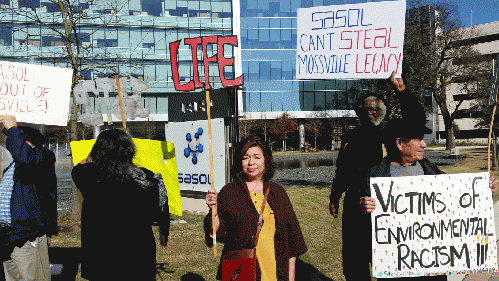
African Americans Need a Strong and Independent Federal EPA Millions of African Americans look to the federal EPA for equal environmental protection they have been denied by their state environmental agencies. A weakened EPA is a recipe for disaster and a roadmap for more trips to the emergency room for many Americans who live on the fenceline with polluting industries. We must resist all efforts to dismantle the EPA and our nation's environmental protection apparatus.
 Wednesday, February 17, 2016
Help Make 2016 the Year of Justice: A Call for Environmental Justice Milestones In 2016, we have an opportunity to commemorate and celebrate some important environmental justice milestones and work on finishing other struggles. The Flint water crisis unfolding today provides a textbook case for why we must build justice and equal protection into environmental decision making. It's time to stand with communities endangered by environmental injustice and the principle of profit over people.
Wednesday, November 25, 2015Leaders from 15 Historically Black Colleges to Attend United Nations COP21 Climate Summit in Paris The Historically Black Colleges and Universities Climate Change Consortium is sending a delegation of 50 student leaders and faculty mentors to the United Nations COP21 Climate Summit in Paris. The summit runs from November 30 to December 11, 2015. The HBCU COP21 delegation includes 15 schools in states stretching from Texas to Pennsylvania.
 Saturday, September 5, 2015
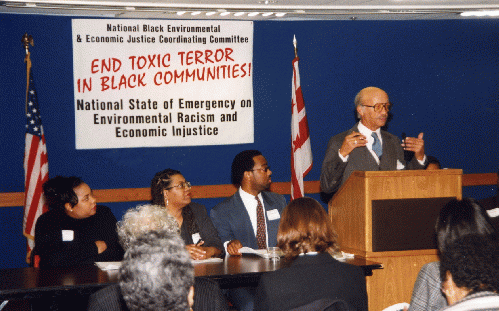
'Dumping in Dixie' Turns 25 as Racial Inequality Continues to Deepen "Dumping in Dixie," the first book to chronicle environmental justice and environmental racism struggles in African American communities from Texas to West Virginia, just turned 25. Race and income inequality issues covered in the 1990 book are still relevant today.
 Tuesday, August 25, 2015
Racist 20-Point Plan to Destroy Black New Orleans Uncovered a Few Months After Hurricane Katrina This August 29 will mark the tenth anniversary of Hurricane Katrina. Much attention has already been given to what has and has not happened over this decade-long struggle to repair, rebuild and reclaim a New Orleans devastated by the massive flooding caused by the levee breech. The article revisits the "Twenty Point Plan to Destroy Black New Orleans," written a few months after the flood in 2005.
Wednesday, April 15, 2015After New Orleans HBCU Climate Change Consortium Planning Next Stop COP21 in Paris Over 200 students and faculty mentors attended the Third Annual HBCU Climate Change Conference in New Orleans on March 26-29 sponsored by Dillard University and Texas Southern University. Consortium members developed a 6-month fund-raising plan to ensure a diverse number of students/faculty mentors and leaders from climate-impacted communities engage in on-the-ground activities leading up to the United Nations COP21 in Paris.
Wednesday, March 18, 2015A Call to Diversify Green Groups and Equitable Funding of People of Color Environmental Justice Groups A new push is now underway to diversity white environmental groups by adding more people of color to their boards and staff. However, diversifying white environmental organizations is only part of the solution. Diversifying funding to people of color and indigenous environmental justice organizations and institutions also needs to be given equal weight.
Thursday, March 5, 2015Environmental Justice Leaders to Hold Tribunal at Selma 50th Anniversary Commemoration A coalition of environmental and climate justice and civil rights leaders will hold a tribunal in Selma, AL on Saturday March 7 as part of the 50th Anniversary Commemoration of Jubilee Bridge Crossing. The theme of the tribunal is "Change Is Gonna Come: Advancing an Environmental and Climate Justice Agenda in the South." A strategy session will also be held to map out a "southern initiative" on climate justice.
Monday, March 2, 2015Third Annual HBCU Climate Change Conference to Be Held in New Orleans March 26-29 A consortium of historically black colleges and universities, led by Dillard University's Deep South Center for Environmental Justice and Texas Southern University Barbara Jordan-Mickey Leland School of Public Affairs, will host the Third Annual HBCU Student Climate Change Conference March 26-29,2015 in New Orleans, Louisiana.
 Tuesday, September 16, 2014
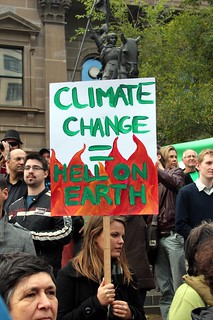
After People's Climate March - Call to Diversify Funding of Climate Justice In order for the nation to make headway on the climate change front, we need mainstream environmental organization and the philanthropic community who supported the People's Climate March to support the recommendations for diversifying funding and building an infrastructure of "grassroots" efforts, ethnic-based networks, and regional environmental and climate initiatives--better known as Climate Justice Movement.
 Sunday, September 7, 2014
Why a U.S. "Southern Initiative" on Climate Justice is Needed Climate-related disasters in the southern United States have outnumbered those in other regions of the U.S. annually in both scale and magnitude by a ratio of almost 4:1 during the past decade. Given its unique history, a "southern initiative" is needed to address climate vulnerability and develop strategies for building just and resilient communities.
Sunday, August 10, 2014Will Billionaire's Bucks Be Used to Dump Garbage on Black and Brown Houstonians? The Waste and Environmental Justice Summit was held in Houston to hear from experts discuss public policy issues related to recycling, waste and race, environmental justice and the city's controversial One Bin for All Recycling Plan.
Sunday, July 13, 2014Houston's Experimental Recycling Plan Targets Minority Neighborhoods for Waste Facility The Zero Waste Houston Coalition released a new report that documents the environmental justice and civil rights implications of the City experimental One Bin for All waste recycling plan. The plan gives preference to locating new waste facility at an existing landfill. Houston since the 1920s has located its landfills, incinerators and garbage transfer stations exclusively in mostly African American and Latino neighborhoods.
Thursday, February 13, 2014Environmental Justice Leaders CelebrateTwentieth Anniversary of Executive Order 12898 It has now been twenty years since President Bill Clinton signed the Environmental Justice Executive Order 12898, "Federal Actions to Address Environmental Justice in Minority Populations and Low-Income Populations." The Executive Order has survived three presidents. Although it has never been fully implemented, there are some positive signs at the executive level that environmental justice is back on the federal radar.
Monday, February 10, 2014New Report Tracks Environmental Justice Movement Over Past 50 Years On Tuesday February 11 groups from around the country will commemorate the twentieth anniversary of the historic Environmental Justice Executive Order 12898 signed by President Bill Clinton. As part of the 20-year anniversary, a team of researchers from Texas Southern University released â??Environmental Justice Timeline and Milestones, 1964-2014,â? a report that tracks the movement over the past five decades.
 Friday, February 7, 2014
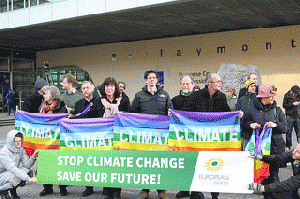
Black History Month: Why We Need Just Energy and Climate Policies Now The campaign to make clean energy available to all communities is clearly an environmental and climate justice issue. A number of coalitions have called on President Obama to "close the environmental justice gap" in his climate action plan. African Americansâ?? quest for just energy and climate policies is about environmental justice, economic justice and civil rights.
Saturday, January 25, 2014Why Improving Chemical Facility Safety and Security Must Be a National Priority Because of congressional gridlock and the growing threat of chemical disasters, President Obama signed Executive Order 13650: Improving Chemical Facility Safety and Security. The Executive Order seeks to improve Federal agency coordination and information sharing; modernize policies, regulations, and standards; and work with stakeholders to identify best practices to prevent chemical disasters.
Monday, January 13, 2014MLK Day 2014: Service for Justice and Human Rights The year 2014 has special meaning for justice in America. It represents some important milestones in our nationâ??s turbulent civil rights history, including the 60th anniversary of the 1954 Brown v. Board of Education U.S. Supreme court decision, 50th anniversary of the Civil Rights Act of 1964, and the 20th anniversary of the 1994 Environmental Justice Executive Order.
