




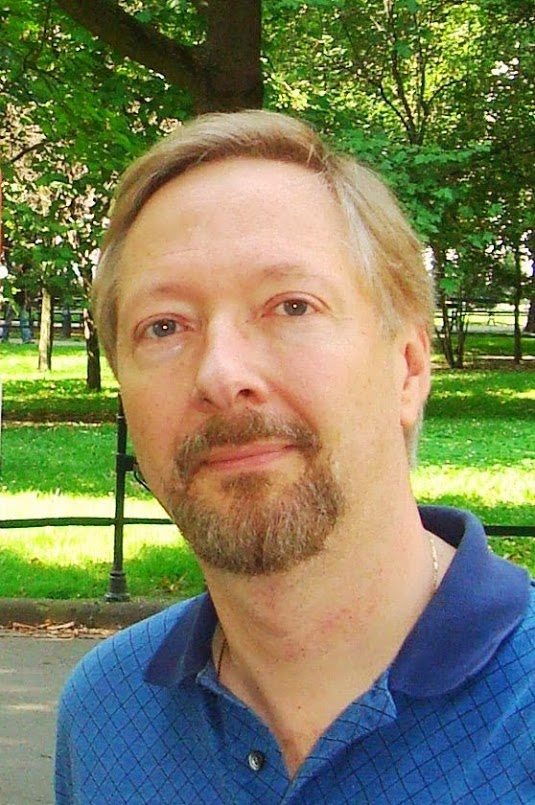

Those seeking to categorise Dmitry Medvedev, the presumptive next president of Russia, have quickly settled into two camps: pessimists, who dismiss him as a puppet of Vladimir Putin [1], and optimists, who cling to the slim hope that he might someday develop his own agenda.
A careful reading of his more than 2,000 public pronouncements over the past seven years, however, suggests that neither of these descriptions is accurate. His record suggests that Medvedev - after the presidential election [6] of 2 March 2008 and the transfer of power in May - will indeed pursue a concerted liberalisation of Russian politics: but as the next logical stage in the strategy of democratic modernisation known as the "Putin plan", rather than as an alternative to it.
A liberal project
A law professor by training, Dmitry Medvedev [7] was initially put in charge of judicial reform. In just four years he managed to eliminate most of the local laws that contradicted the Russian constitution, spearhead the introduction of a new criminal code, a juvenile-justice system, trial by jury, habeas corpus, and a nationwide system of bailiffs.
His later responsibilities included supervision of four new "priority national projects" (PNPs): in healthcare, education, housing [8], and agriculture. Yet he continued to take an active interest in legal reforms, promoting a new nationwide network of free legal-support centres and overseeing the liberalisation of governmental policy on immigration.
By some accounts, it was the experience of trying to reform [9] the cumbersome Soviet legal system that led Medvedev to formulate a simple economic credo: "If government participation is not essential, then the government should not be involved."
For Medvedev, the state has only two positive economic obligations: to assist Russian companies become more globally competitive, and to combat poverty. Beyond that, he says - sounding at times like a supply-side economist - government may legitimately collect only two kinds of taxes: those needed for the functioning of the state, and those that will make business in Russia the most profitable in the world.
The solutions Medvedev has proposed for Russia's social problems repeatedly reflect his clear preference for market-based solutions. He has forced regions to compete with each other for federal funding. In education, healthcare, and pension reform he has championed the idea that government funding ought to follow individuals rather than institutions. He lobbied hard for, and finally won, changes in the law that allow universities to set up their own small businesses, and create endowments to ensure funding independent from the state.
Moreover, even when the state retains control of a corporation, Medvedev has insisted that it be reconstituted as a public company, and forced to compete globally for private investment. His model is Gazprom [10], where he has served as chairman [11] of the board (apart from a one-year period as deputy chairman) since 2000. Its capitalisation has increased fifty-fold over the past seven years, and he now proposes doing the same with other state corporations in order to attract one trillion dollars of new investment into Russia's decaying infrastructure.
Dmitry Medvedev's approach to civil society [12] is likewise suffused by market and legal terminology. He has described the relationship between government and civil society as a contract, which government "offers" to civil society in the form of specific national priorities. If that offer is accepted, the results will be positive, and if not it must be changed. Civil society, he says, serves admirably "to prevent idiotic excesses" by the government.
Non-governmental organisations (NGOs) must play a key role [12] in any truly vibrant civil society, which is why Medvedev insists that every level of government in Russia must "absolutely use the experience of NGOs and public organisations which, among other things, have learned to control their expenses better than government." Government officials need to set up a stable system of "direct and permanent contacts with NGOs." Without such feedback, he says, "the government is blind and winds up working only for itself."
To encourage the growth of NGOs, he has pushed through new legislation supporting business philanthropy, and given tax exemptions to businesses that support NGOs. Charities, he points out, not only do good works, they also serve "as a serious medicine against dependency and paternalism, which we have historically been disposed to."
Other notable Medvedev initiatives include: independent public television, an independent judiciary, and parliamentary oversight of the executive branch. In contrast to Putin, he has said that future presidents [13] of Russia ought to be members of a political party, and that strong political parties are "the only way of making politicians accountable for their ideas."
Medvedev too has reached out to Russia's business community in the effort to make them more involved in policymaking. He has created a council of experts to help generate new ideas for the priority national projects [14]. His policy of "mutual interpenetration" of business and government is a striking contrast to Putin's "equidistant removal" of major business interests from government.
Medvedev's most recent campaign speeches have been consistent [15] with his past record. He has proposed a new national television channel dedicated to legal education, "aggressive" support for business, the shift of a "significant" portion of local government functions to NGOs, a national plan to fighting bureaucracy, and tax exemptions for personal healthcare, education, and pension expenditures.
A partnership plan
Nowhere, however, is Dmitry Medvedev's pragmatic emphasis more evident than in foreign policy, where he invariably stresses areas where the west and Russia should be cooperating.
(Note: You can view every article as one long page if you sign up as an Advocate Member, or higher).






