

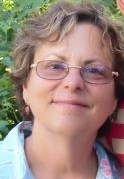
I’m very happy to have an interview with Nancy Tobi as the first in my series of articles using Fooled Again as a jumping-off point for discussion on the state of our elections. For those of you who don’t know her, here’s a little background on Nancy. She is a native New Englander, and a 22-year New Hampshire resident. She is the author of numerous articles on election integrity, including "The Gifts of HAVA: Time to Ask for a Refund," "What's Wrong with the Holt Bill," "We're Counting the Votes: An Election Preparedness Kit," and the soon to be released "Hand Count Primer: Lessons from New Hampshire." She is Legislative Coordinator of Election Defense Alliance, co-founder of Democracy for New Hampshire, and Chair of the New Hampshire Fair Elections Committee. Her writings may be found at www.opednews.com , www.electiondefensealliance.org , and www.democracyfornewhampshire.com .
Q. What did you think of the latest edition of Mark Crispin Miller’s Fooled Again?
A. Mark's book lays out in honest and fearless language the truth about America's recent elections. We are a country in trouble, and Mark pulls no punches in letting us know just how deep our troubles go. This is a necessary truth that Americans need to be able to hear and, no matter how painful, listen to and act upon. It's a call to action for all of us who care about the American dream, and are willing to defend it.
Q. What does democracy look like to you? How is your view affected by living in New Hampshire?
A. I have a lot of privileges as an American citizen living in New Hampshire. We have a long history of grassroots politics and grassroots democracy. Our legislature is the largest citizen legislature in the nation, with one state rep for every 3,089 citizens. It's been said that California would need something like 12,000 reps to have the same proportional representation. This is not accidental. Our large legislature is borne of the inherent distrust the founders of our state (and our country, coincidentally) had for centralized power.
As a result, this large legislature allows for a certain intimacy between the community and its elected representatives. Nobody is too hard to reach, too far "above" the citizenry. We take pride in our community involvement and how it plays out in our political culture. Community is built into the legal political infrastructure too. Our elections are all held locally, in our towns or city wards. The elections are run by eight locally elected election officials who are all members of the community. In the towns, our elections are typically held in the old town halls, with bake sales, quilt raffles, and other fun events that invite community members to enjoy community chatter and interaction as part and parcel of their voting experience. In my town, whenever a new voter casts a ballot, the election official calls out, "Another new voter in town!" and everyone applauds.
Q. Boy, does that not sound like anything ever likely to happen in Cook County where I live! It sounds more like a Rockwell painting come to life. Elsewhere around our country, such deep-seated involvement at the grass-roots level has sadly atrophied, if it ever existed. For the rest of us, please explain how this whole thing works.
A. When community is part of the democratic process, there is a sense of accountability and responsibility. Our local election official reminds his ballot counters – all community volunteers who come in when the polls close to help hand count the ballots – to "handle their neighbors’ votes with care."
The counting of ballots, in public view and observation, by community volunteers who have all taken the oath of office, takes on a celebratory air. Teams of counters representing the different parties, and independents too, watch over each other. They correct each other’s mistakes, and check and balance the counting, the tallying, and the recording of the votes. We all know, at the end of the night that whoever won really did win. Whether or not they were our candidates of choice, we are all satisfied with a job well done by all the election volunteers who were serving their community. Handshakes and smiles abound. There are no ill feelings regardless of the election outcome.
This is the way democracy works – community, responsibility, accountability, checks and balances, and friendly patriotism.
Q. How did New Hampshire come out the way it has? Why is it so different than elsewhere in America?
A. Grassroots democracy is embedded in our New Hampshire history and political culture. New Hampshire founders were also signers of the Declaration of Independence and the US Constitution. They drafted the first state constitution of our free country, which was ratified in 1784, just after Massachusetts ratified theirs. Our NH Constitution makes no less than four references to the need for our elected public officials to sort and count our votes in open meeting. Back in the day, this might have been a vote where those on one side of the issue stood on one side of the town meeting hall, and those on the other side of the issue stood on the opposite side of the hall. Their votes, in their physical stance, were sorted and counted in that open meeting. We then progressed to paper ballots – all cast into the wooden ballot box, and all sorted and counted in open meeting.
Q. So far so good. So what happened?
A. Then came the techno-election revolution of the 1980's, when computers were introduced to our nation's election systems. New Hampshire went along with that, too. But in 1994, we passed the first paper ballot law in the nation, which says that no machines may be approved for use that don't read the voter's choice on a paper ballot. Now we have 45% of our polling places counting ballots by hand, and 55% using computerized optical scanners.
The cities and towns that chose to go techno – because the choice in New Hampshire is a local one – were persuaded by the Diebold salesmen that this would help them get things done quickly and easily. Now those election officials have become addicted to their machines, and have forgotten the community aspect so necessary for real democracy to flourish. They are afraid that they won't be able to find enough community members to hand count the ballots.
Q. So, where does that leave you Granite State citizen-democrats? How do you get back to your tradition of community-based participatory democracy?
Joan Brunwasser is a co-founder of Citizens for Election Reform (CER) which exists for the sole purpose of raising the public awareness of the critical need for election reform. We aim to restore fair, accurate, transparent, secure elections where votes are cast in private and counted in public. Electronic (computerized) voting systems are simply antithetical to democratic principles.
CER set up a lending library to achieve the widespread distribution of the DVD Invisible Ballots: A temptation for electronic vote fraud. Within eighteen months, the project had distributed over 3200 copies across the country and beyond. CER now concentrates on group showings, OpEd pieces, articles, reviews, interviews, discussion sessions, networking, conferences, anything that promotes awareness of this critical problem. Joan has been Election Integrity Editor for OpEdNews since December, 2005.
"Nearly 100% of America's polling jurisdictions have hand counted paper ballot elections within living memory. And nearly 27% of America's polling jurisdictions are already utilizing hand counted, paper ballot election administration; it's simple, it's cost effective, and eminently do-able in every polling place in the country."
I can't wait to read the primer in full.
by
Rady Ananda (95 articles, 244 quicklinks, 19 diaries, 689 comments)
on Tuesday, August 14, 2007 at 10:41:02 PM
Joan, this is a very enlightening interview. I like the non partisan approach which makes it much easier to forward to my (still) right wing friends in the south.
DD
by
Joan Brunwasser (133 articles, 3335 quicklinks, 3 diaries, 589 comments)
on Thursday, August 16, 2007 at 2:36:34 AM
...what comes to my mind is the time I worked as a civilian on a Navy base. They had been defying EEO laws and consent decrees for years, but they'd finally gotten some female apprentices. Everyone was told that these were the first females to hold those particular positions. Many people, including instructors and shop foremen, said that females weren't suitable for such jobs and couldn't perform them.
I happened to do some reading and I came across the fact that all those jobs were not only done by females during WWII, but that they had set production and quality control standards that have never since been equaled.
I'm 67. I'm one of the youngsters in my senior building and at my senior center. We are the ones who usually are pollworkers, although in the last few years I've been pollwatching instead. We all remember hand-counted paper ballots, none of us have forgotten how to count, most of us do not like the machines, very few of us have ever figured out how to make the machines work (at the last election where two precincts voted downstairs in my building, one precinct inspector only managed to print out and post 4 of the 5 machine tapes, and the other didn't manage to post any tapes at all), and we'd be happy to go back to HCPB[hand-counted paper ballots].
Rumors of our incapacity are probably sponsored by vendors and officials and are, in any event, greatly exaggerated. As for hostile elections officials, many of us have canes and know how to use them on young whippersnappers trying to steal elections. I don't have a cane myself, but I know how to post reports to websites keeping track of election problems.
The resistance from those in government, no matter how they choose to frame it, stems from the fact that they and their colleagues were never legitimately elected and they are terrified of democracy. They depend upon the corporations they are beholden to for getting them into office and they do not represent us, nor do they wish to.
All you have to do is announce that there will be hand-counted paper ballots, and we seniors will march en masse down to our local elections officials and train them. We potty trained the snivelling little brats in the first place and it's time they learned some respect. MS, CA
by
Joan Brunwasser (133 articles, 3335 quicklinks, 3 diaries, 589 comments)
on Thursday, August 16, 2007 at 3:12:19 AM
Nancy has been very helpful to us here in Humbldt County, CA
The Voter Confidence Committee is grateful to Nancy for her assistance during our recent eight month study resulting in a weighty "Report On Election Conditions in Humboldt County, CA." We have also recently made available a spreadsheet tool (.xls) for estimating the labor, cost and time needs of a hand-counted election. The tool can be used to customize numbers for any community and it is based entirely on the DemFest presentation mentioned in this interview.
by
Dave Berman (39 articles, 0 quicklinks, 6 diaries, 32 comments)
on Thursday, August 16, 2007 at 3:48:44 PM
Thank you, Joan Brunwasser and Nancy Tobi! Having spent my professional career in computer software development, part of which was as manager of a Florida election tabulation system, the state of our election systems is troubling indeed. And finally it’s being taken seriously.
Still I wonder is anyone focusing on the need to revamp election laws? Until we fix our election laws to be on par with technology, to protect us from machine and human error, and HUMAN INTERPRETION of election results our election process will continue to be broken. The courts should not decide the people’s choice. In 2006, it was the failure of Florida's revised election laws that permitted an election with statistically improbable results to stand (18,000 undervotes). 2000's debacle with the pregnant chads resulted from failure to maintain the voting equipment properly. However it was the failure of Florida's election laws that permitted the chaos that followed. Had Florida's election laws caught up with technology, both elections would have been an automatic re-do.
Also, we seem to be jumping into the middle of the problem… the broken machines. How did we get bamboozled into purchasing them in the first place? If we are to achieve one voter, one vote…every time, we must go back to basics. Apply sound business practices to ensure the voting systems we purchase fully meet our needs for election integrity. And ensure those machines work…all of them. Not just a sampling.Until we implement high-bar guidelines for voting machine providers and elections officials to uphold, no hedging, no exceptions we are at risk. And while the heroine of my novel, "A Margin of Error: Ballots of Straw" scoffs at the notion of a silent coup marching across the country in her fictitious voting machines…. It could happen more easily than any of us want to believe.
Lani Massey Brown, "A Margin of Error: Ballots of Straw," a political intrigue/romantic suspense novel.
by
Lani Massey Brown (9 articles, 0 quicklinks, 1 diaries, 5 comments)
on Friday, August 17, 2007 at 3:25:14 PM

