

The teacup tempest over retired Gen. Wesley Clark’s self-evident remark about John McCain—to whit that flying a fighter aircraft and getting shot down and captured is not particularly relevant to the skill set needed to be a president—raises a larger question: Why do veterans, and particularly the veterans of the criminal and pointless war in Iraq, or the earlier criminal and pointless one in Vietnam, automatically get “hero” status, and why are they seen as naturals to run for higher national office?
I’m sure there are plenty of heroes in the military—people who put their lives on the line, and even give their lives, for their comrades, people who give up safe jobs and leave their families for what they see as a patriotic duty. But let’s face it: the whole recruiting project is about convincing young men and women that joining the military is in their self-interest—a way to get ahead, a way to see the world, a way to get financial aid for college, a way to have some excitement, a way to get a fat signing bonus so you can buy that new car you’ve been coveting. And people who sign up for these self-interested reasons are no more heroic than people who go to work for Merrill Lynch or Wal-Mart.
Furthermore, while there are dangerous posts in Iraq and Afghanistan, the nature of the military is that the vast majority of people who wear a uniform just work in offices or motor pools, and face dangers no greater than workers who do the same thing in civilian life at home. In fact, in the case of more hazardous work, like heavy equipment repair or flying cargo planes, it’s probably safe to say that after years of speedups and of gutting worker safety rules and inspections, it may be safer working for the Pentagon than working for a civilian employer.
Beyond that, there are people who are easily as heroic as many of our uniformed citizens who don’t get any credit for their courage and dedication to humanity and to their country. How about young doctors who eschew lucrative careers in plastic surgery to work as GPs in low-income communities or on Indian reservations? How about Peace Corps or Vista volunteers who go to dangerous places at home and abroad to help people improve their lives? The Pennsylvania soldier who died throwing himself on top of a live grenade to save his buddies is a true hero. But so is the 23-year-old math teacher slain in Philadelphia last month who left safe, suburban Minnesota to take a low-wage post teaching underserved kids in this notorious murder capital. Even in uniform there are heroes who don’t get credit for their courage. How about people like Lt. Ehren Watada or Sgt. Camilo Mejia, or other members of the military who risked jail, or even did hard time rather than fight, or continue to fight in an illegal war?
There are heroes in our schools, heroes on the job, heroes who work in jobs like police officer or firefighter, heroes trying to raise families in adversity, even heroes in politics (though these are few and far between!). Most of them aren’t ever recognized by society for what they do. Not everyone who serves in the military is a hero, and plenty of people who don’t, or won’t, wear a uniform are genuine heroes.
Furthermore, as Gen. Clark noted, wearing a uniform, and going to war, or even earning a medal, do not make a person better suited for government or politics. But I’d go him one further. Even having been a high-ranking officer, and having had significant administrative or policy-making experience in the military does not make a person any better suited for an executive or a legislative position in government. In fact, arguably, it makes a person less well suited for government in a democratic society. The military is not a place that values open expression of opinions. It is a top-down organization in which obedience to “superiors” is valued more highly than initiative and self-direction. The military isn’t even as democratic as the old Bolshevik Party. At least in theory, Lenin’s Bolshevik model was supposed to encourage democratic discussion until a decision was reached by the leadership, after which there would be discipline and unquestioned obedience. In the military, the democratic discussion part is eliminated from the model. What that has to do with democratic governance I don’t know.
Don’t get me wrong. I have a endless sympathy for the hundreds of thousands of military personnel, active duty, reservist and National Guard members, who got dragged off under false pretenses to have to serve in an illegal war of aggression, even to get seriously wounded or to die there, and I’m a strong supporter of generous veterans’ benefits for all of them and for their long-suffering families.
But let’s not cheapen the term “hero” by assigning it to all of them—especially while ignoring the heroism of those who have refused to fight, or of those who engage in heroic efforts to better the lives of their fellow human beings instead of just helping to kill them.
And let’s stop pretending that having worn a uniform somehow automatically makes someone a better person, and a more competent leader, than someone who never wore one.
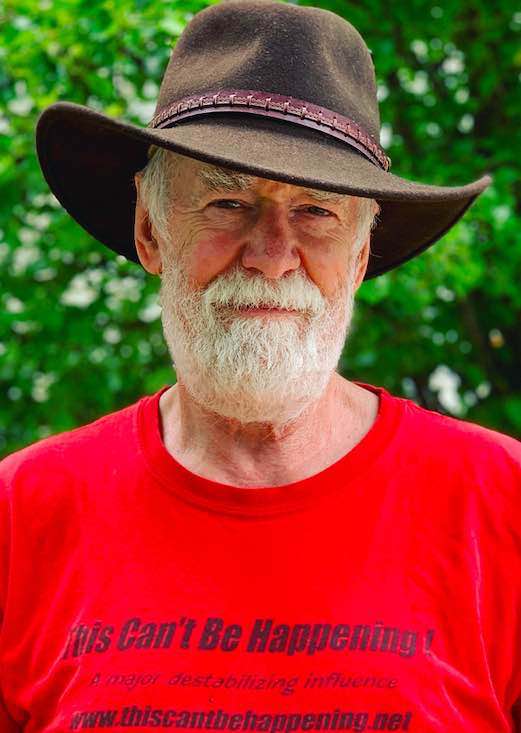
The returned soldiers I’ve known from Vietnam, and the soldiers I’ve spoken to who have served in Iraq, have for the most part been the first to say that they don’t feel like heroes. It is, in fact, the charlatans and political cowards in government who are busy promoting endless war who are tossing that label around with such abandon. They are in both parties, and we should recognize their abuse of the term, “hero” and their fake stances of “respect” and “support” for the troops, for what it is: cheap political posturing, designed to intimidate critics of a criminal war. ___________________ DAVE LINDORFF is a Philadelphia-based journalist and columnist. His latest book is “The Case for Impeachment” (St. Martin’s Press, 2006, and now available in paperback. His work is available at www.thiscantbehappening.net
http://www.thiscantbehappening.net
Dave Lindorff, a columnist for Counterpunch, is author of several recent books ("This Can't Be Happening! Resisting the Disintegration of American Democracy" and "Killing Time: An Investigation into the Death Penalty Case of Mumia Abu-Jamal"). His latest book, coauthored with Barbara Olshanshky, is "The Case for Impeachment: The Legal Argument for Removing President George W. Bush from Office (St. Martin's Press, May 2006). His writing is available at http://www.thiscantbehappening.net
A woman giving birth is as much of a veteran of something as a military veteran. Soldiers are suckers and victims and sometimes lucky. The human race is nothing but a bunch of crooks, suckers, and lazy cowards. Republicans are crooks. They use force and fraud. They are liars and bullys. Everybody else seems to be a sucker or a lazy coward.
by
John Hanks (1 articles, 0 quicklinks, 0 diaries, 1376 comments)
on Tuesday, July 1, 2008 at 2:17:47 PM
US society is unable to discuss this subject rationally.
Every citizen of this country is bullied & indoctrinated from birth into accepting uncritical attitudes which are conducive to the policies of empire. The country is really ruled, not by "We the People," but by the military-industrial complex (MIC). Open-minded questioning of US militarism cannot be tolerated by the MIC any more than opendmindedness about Christian dogma can be tolerated by the Church.
American society's worship of the military is all complete & utter BULLSH*T. Its origin has nothing to do with truth or democratic values, but rather with the self-interest of ruling groups aligned with the MIC.
Dave very accurately limns several aspects of this mass mental disorder that we're all part of. The reason people can't think critically about veterans, & are supposed to automatically assume that a pathetic cadaver like McCain is a "hero," is the same as the reason why they never even raise the question of cutting military spending in "presidential debates" -- basically, any questioning of the dogma is blasphemy.
by
Richard Mynick (2 articles, 3 quicklinks, 1 diaries, 1212 comments)
on Tuesday, July 1, 2008 at 3:18:07 PM
Don't forget the rampant and unbelievably excessive rate of sexual assault and rape of both men and women in the military combat zones, and all of it is covered right up by the powers that be instead of justice being served to the perpetrators.
by
daveys (4 articles, 0 quicklinks, 16 diaries, 176 comments)
on Tuesday, July 1, 2008 at 5:20:33 PM
I get more than a bit offended whenever these charlatans invoke the all holy mantra of "support the troops" as if they could really give a rat's ass. I totally agree with Wesley Clark and unless the DemocRATs grow a set and start to take on McCain's war hero (self admitted war criminal is more like it) storyline then they will once again be forced to play Hanoi Jane and the defenders of Acid, Amnesty and Abortion in that ongoing loop that loves to rip open the scabs of the national psyche over the Vietnam war and rub salt into them for political gain.
EE
by
Ed Encho (8 articles, 18 quicklinks, 56 diaries, 394 comments)
on Tuesday, July 1, 2008 at 5:49:17 PM
Hero's put themselves at great risk or lay down their lives for others. McCain is nothing of the kind. He was engaged in killing civilians and got caught doing it. In my mind, that in no way makes him a Hero.
Veteran '66-68
by
Roger (0 articles, 0 quicklinks, 0 diaries, 388 comments)
on Tuesday, July 1, 2008 at 7:38:05 PM
Many of the combat vets come home with what first world war vets called shell shock. Now they call it battle fatigue or something silly like that...
Our government sends these KIDS (most of them are not even old enough to drink legally) over to the front line to be shot at, to be blown to bits, or to endure whatever else is thrown at them...
While you are correct when you suggest that the majority of Military personnel are more likely to be in a supportive role, it does not change the fact that when they DO come home, they are treated with a great deal of disrespect from people like you. (you stated that it is not you per say, so I am giving you the benefit of the doubt.)
Those suffering from shell shock, are expected to integrate back into society as if nothing ever happened.... They are not given the opportunity to see a psychologist to help them deal/cope, but instead, they are spat on, demeaned, and ridiculed...
Perhaps the question you should ask, rather than beating on the military, as a whole, is "What is so special about John McCain?"
That is a much easier question to answer. Nothing is special about John McCain.. He is the TYPICAL DC Politician who will do and say whatever to become elected. This is not an attack against him personally, it is a statement born from years of observing his speaking vs his voting.
Regarding Soldiers... Based on my experience, and myself, none of us would consider ourselves "heros." I had a job to do, and I did the best I could with what I had.
Ciao, CZ
by
steve scheetz (4 articles, 0 quicklinks, 2 diaries, 673 comments)
on Tuesday, July 1, 2008 at 9:19:51 PM
Steve, just to be clear, I disrespect no one sent to Iraq
And i agree, most of these folks are kids and need first rate help when they come back, not the trash treatment they have been getting--charged for the damage caused to their armor, charged for meals, hidden away when they return, etc.
I also feel great sympathy for those older guys and women who signed up for the Natl. Guard thinking they'd be protecting america, only to find themselves ripped away from family, home and job, and sent off to the far corner of the globe to do imperialism's bidding.
I see these men and women, and the ones who've given their lives, or parts of them, as victims. And I see those who try to cavalierly label them all as "heroes" as charlatans who are trying to hide from their responsibility for messing up all those lives.
by
Dave Lindorff (354 articles, 0 quicklinks, 1 diaries, 163 comments)
on Tuesday, July 1, 2008 at 9:33:31 PM
Blessed are the meek, for they shall inherit the earth.
Christian America doesn't seem to put much emphasis on this particular saying of Christ.
It can be literally true. When the bunch of men come past, flags a waving, drums a thumping, weapons a shining; the meek don't have a rush of excitement and join them.
The soldiers who march off, frequently never return.
The meek who stayed, often ended up with the farm.
by
John Haigh (1 articles, 0 quicklinks, 1 diaries, 107 comments)
on Wednesday, July 2, 2008 at 8:29:45 AM
"Four score and seven years ago our fathers brought forth on this continent a new nation, conceived in liberty and dedicated to the proposition that all men are created equal. Now we are engaged in a great civil war, testing whether that nation or any nation so conceived and so dedicated can long endure. We are met on a great battlefield of that war. We have come to dedicate a portion of that field as a final resting-place for those who here gave their lives that that nation might live. It is altogether fitting and proper that we should do this. But in a larger sense, we cannot dedicate, we cannot consecrate, we cannot hallow this ground. The brave men, living and dead who struggled here have consecrated it far above our poor power to add or detract. The world will little note nor long remember what we say here, but it can never forget what they did here. It is for us the living rather to be dedicated here to the unfinished work which they who fought here have thus far so nobly advanced. It is rather for us to be here dedicated to the great task remaining before us - that from these honored dead we take increased devotion to that cause for which they gave the last full measure of devotion - that we here highly resolve that these dead shall not have died in vain, that this nation under God shall have a new birth of freedom, and that government of the people, by the people, for the people shall not perish from the earth," - http://www.loc.gov/exhibits/gadd/ .
And, of course, Lincoln's remarks at Sanitary Fair (Washington D.C.) on March 18, 1864:
"Ladies and Gentlemen: I appear to say but a word. This extraordinary war in which we are engaged falls heavily upon all classes of people, but the most heavily upon the soldier. For it has been said, all that a man hath will he give for his life; and while all contribute of their substance the soldier puts his life at stake, and often yields it up in his country's cause. The highest merit, then is due to the soldier," - click here .
Death is a condition of employment for all soldiers, while it's the employer's responsibility to provide a workplace "free of recognized hazards" for the inner-city school teacher and private citizen. There are distinct differences here, are there not?
This distinction, though, seems to have been lost on you, Mr. Lindorff, but was very visible to President Lincoln. Whereas Lincoln elevated the sacrifice and potential of sacrifice of the soldier, you diminish it to the point of irrelevance. Furthermore, Mr. Lindorff, you tarnish the soldier's service by declaring Operation Iraqi Freedom (and Enduring Hope...?) both criminal and pointless, while exalting those service members that refuse to deploy.
With this attitude, then, of borderline scorn, I can readily see why you would ask, "What's so special about veterans?"
by
Tom Murphy (3 articles, 4 quicklinks, 12 diaries, 1767 comments)
on Wednesday, July 2, 2008 at 1:57:09 PM
there is a big difference between the Civil War and Iraq
In one case, the nation was facing destruction, and the institution of slavery was being challenged. In the other, an imperial power is seeking world domination. There is a nobility to fighting to defend your country, or to overturn an evil institution like slavery. There is little nobility in trying to destroy a people and to steal their oil. There may be nobility in standing up for your comrades in the platoon, but not for the larger task.
There was also a nobility in fighting against equal odds, as the soldiers in Lincoln's war were doing. There is little nobility in flying an F-16 and plunking "smart" bombs on men who have to fight back with rifles and home-made explosives.
Killing civilians at the prodigious rate that US forces are killing them in Iraq and Afghanistan, and then calling it "collateral damage," is not noble. It is a war crime.
I have great sympathy for the men and women who have been tricked and lured into fighting America's imperial wars in Iraq and elsewhere, but I don't see their actions as automatically noble. And I don't see a uniform as conveying any kind of special badge of heroism. That is something every individual has to earn by their actions, whether in uniform or out of uniform.
And for your information, disobeying illegal orders, as Lt. Watada and others have done, is the highest calling of a military person, as is defending the Constitution.
Those are indeed noble, even heroic, acts.
by
Dave Lindorff (354 articles, 0 quicklinks, 1 diaries, 163 comments)
on Wednesday, July 2, 2008 at 3:03:44 PM
Difference between the wars? yes. The soldiers? no.
You miss the point of Lincoln's focusing on the soldier FIRST and the war SECOND. You, though, focus again on the war first and then the soldier. As a result, you continue to diminish the soldier, while paying the appropriate lip service of having sympathy for their "plight" of having been misled.
To claim that America's involvement in Iraq is no more than an imperialistic urge is... silly. If America wanted to make it's "Iraq Conquest" right in the eyes of the skeptics, WMDs WOULD have been found. The fact that they weren't speaks volumes that the naive discard uselessly for their own political agendas.
Of course, you are entitled to your belief in that claim - similar to the non-sensical claim about American wanting to steal Iraq's oil. Do you think America would permit foreign entities to bid on development of the oil fields - http://www.reuters.com/article/newsOne/idUSL3018942120080701 , given their imperial grip on Iraq? Do be serious.
Regardless, your comments on these subjects, Mr. Lindorff, are nothing more than deflections from focusing on the fact that you qualify the soldier's service not by their actions but by the "nobility" of the war in which they participate. This qualification presumes that your regard or more correctly disdain of Operation Iraqi Freedom is correct and well-placed (which I'd dispute) and that war in general and under certain constructs - is actually noble.
The latter is spoken like a true civilian that knows not the horrors of war. And this, "...disobeying illegal orders, as Lt. Watada and others have done, is the highest calling of a military person..." is spoken like one who has not served. The highest calling of the soldier is clearly defined in the Oath of Enlistment/Office, and not suprisingly, you "tack on" that calling after the above - http://www.history.army.mil/faq/oaths.htm (i.e., read CYA).
It is the DUTY of service members to refuse unlawful orders, but this duty does NOT represent their highest calling. That is reserved (and rightly so) for the defense of the Constitution. Why? The Constitution represents the Will of the People and not the whim of an individual - now, there's a BIG difference you shuld be able to comprehend. I sense your own personal story biasing your perception of what is the highest calling - http://www.thiscantbehappening.net/?q=node/168 .
by
Tom Murphy (3 articles, 4 quicklinks, 12 diaries, 1767 comments)
on Wednesday, July 2, 2008 at 4:03:20 PM
That's because my whole point is uniforms don't make heroes
As I said in the article--and I stand by this--wearing the uniform does not a hero make, and those who try to say everyone who has been in the military is a hero is either deluded, or a charlatan.
The military is simply a reflection of the society at large. It is full of every kind of person--heroes and cowards, bullies and victims, honorable men and women and crooks, con men and selfless do-gooders. People join the military for reasons ranging from patriotism to careerism. Guys like Lincoln can make great political hay by praising them all as heroes after sending them off to battle, but the truth is they're not all heroes.
And while you seem to deny it, I think that a firefighter, who can quit his job and walk away from it anytime, with no consequences but loss of income, who instead walks into a burning inferno to check if there are any people to save is as heroic as any soldier who acts bravely under fire (on pain of being charged with desertion or dereliction of duty). I disagree profoundly with the current craze of elevating those who chose killing and destruction as their profession as being somehow better than ordinary citizens, as you are doing here.
by
Dave Lindorff (354 articles, 0 quicklinks, 1 diaries, 163 comments)
on Wednesday, July 2, 2008 at 4:59:59 PM
"I disagree profoundly with the current craze of elevating those who chose killing and destruction as their profession as being somehow better than ordinary citizens, as you are doing here."
I fail to see how respecting the troops for their commitment to defend the Constitution a "craze". I also fail to see that all men and women in uniform being declared "heroes". And it is you, Mr. Lindorff, who see the soldiers through tinted glasses as killers and destructors. Ask the soldiers themselves and I doubt you'd get that response. Instead, you'd probably hear defender or peacekeeper – although the latter has a certain UN connotation to it.
Also, it is you (and those like you) that have created this artificiality of portraying the troops as persons better than "ordinary citizens". The service members certainly don't think such thoughts. I believe they should be respected by the civilian populace for their service when it isn't compulsory, but such respect does not imply a default and elevated position in society.
I wonder sometimes if it's guilt or remorse that drives those to diminish and dismiss a soldier's commitment as that of a weak-minded individual that is incapable of independent thought...
"The war is illegal... That is why Lt. Watada refused to go. He was obeying his oath to uphold the Constitution--a point you miss."
Operations Iraqi Freedom and Enduring Hope are not "illegal". Rather than reiterate my position anew, you are more than welcomed to read my past comments on this subject - click here , http://www.opednews.com/maxwrite/diarypage.php?did=7575 , and http://www.opednews.com/maxwrite/diarypage.php?did=6826 . Simply declaring the war illegal does NOT make it illegal – period. The Operations are very much in the realm of legality, given what was known at the time of the Operations. To apply hindsight to the time before the Operations is both untruthful and inaccurate.
As to 1LT Ehren Watada's case being moved to the civilian court after three military courts had rejected his claim of double jeopardy (all three finding no abuse of discretion by the military judge in declaring a mistrial), this is nothing more than political pandering.
It is quite unusual for civilian intervention to occur in a wholly-military proceeding. And yet, US District Court Judge Benjamin Settle ruled that no further courts-martial could be permitted because the military judge had compromised the judicial process when the military judge declared a mistrial.
Say what? The following reasonable questions should be asked about the civilian's court's interference in this case – and it IS interference:
1. Does the principle of "double jeopardy," by which a person acquitted of an offense may not be tried again on the same charge, extend also to cover prosecutions that end in a mistrial with NO verdict at all? Many legal scholars disagree with the Judge's interpretation.
2. Do the civilian courts have jurisdiction over military officers being tried in courts-martial by military judges for military offenses against the Universal Code of Military Justice (UCMJ) during a war time posture? This is a wholly-military trial with no apparent need for civilian intervention other than to exemplify a political point. And yet, the Judge felt compelled to intervene days before the second court-martial proceeding was scheduled to commence.
3. Can a civilian judge determine that a military judge only called a mistrial for less than honorable reasons and not because the defendant first stipulated one thing, and then based his defense on the denial of that same one thing?
LTC John Head, the military judge, ruled a mistrial three days into the court-martial and immediately before 1LT Watada was going to take the stand in his own defense. LTC Head did so after he expressed concern that 1LT Watada did not understand what the soldier had earlier agreed to in what's called a stipulation of facts because it conflicted with his own defense - click here . This was done (a) to protect the good lieutenant from being convicted on a procedural error and (b) to keep the court-martial focus on 1LT Watada's actions, as opposed to those of the Iraq conflict.
Rule first on the charges at hand, which detail a failure to follow movement and conduct unbecoming. And then, on appeal if necessary, rule on whether or not the movement was legal or not. The two are separate issues, although the politicization of the case would have you think differently. Without such a separation, the cart is being placed either before or on equal footing with the horse.
How Judge Settle concluded that LTC Head's action here were less than honorable is beyond me. In fact, it looks more like Judge Settle was looking to make a contentious issue disappear for expediency's sake – only to have it backfire on him because the military has this issue with (heaven forbid) principles.
Therefore, you may hold 1LT Watada up as the poster child of heroics because he fits your political stance against the war. But to those who are most impacted by his decision (his fellow soldiers – especially those in his unit), 1LT Watada's lack of action reflects poorly on himself, his unit, and the United States Army. And no one can tell his fellow soldier's otherwise.
I'm through arguing because we clearly will disgaree on the issue of respecting veterans for their voluntary service to defend that which others depend upon for their secured existence.
by
Tom Murphy (3 articles, 4 quicklinks, 12 diaries, 1767 comments)
on Wednesday, July 2, 2008 at 10:46:32 PM

