




President Thabo Mbeki of the Republic of South Africa, who is hosting the African Ministerial Conference on the Environment in Johannesburg, launched the book, as leaders meet to discuss policy initiatives that seek to develop climate-proof economies.
Mass human migration, a topic not usually highlighted in global warming discussions, adds further stress to the environment as people flee ongoing resource wars, and, increasingly, in pursuit of food and water. Urbanization creates its own feedback loop as drought conditions force farmers into cities that continue to expand into former farmland, further depleting food supplies.ÂAlthough Africa produces only four per cent of the world's total carbon dioxide emissions, its inhabitants are poised to suffer disproportionately from the consequences of global climate change.
Satellite images from 1976 and 2006 reveal that half the famous "Snows of Kilimanjaro" have melted. Mt. Kilimanjaro borders Tanzania and Kenya. Other lesser known changes include:Â
* Uganda's disappearing glaciers (by half in the past 20 years);
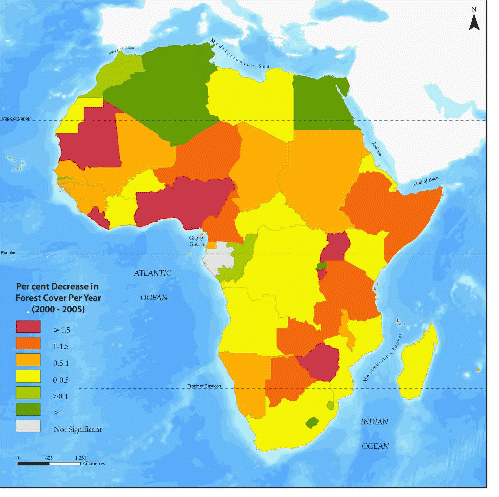
* Madagascar's deforestation;
* Western Sudan's loss of vegetation to accommodate refugees fleeing Darfur;
* Mass delta erosion comprising the bulk of Africa's soil loss calculated at 50 metric tons per hectare (2.47 acres) per year;
* Erosion and chemical and physical damage degrade 2/3 of * Africa's farmlands; and
* Denuded forestland and large loss of biodiversity.
African forests are disappearing at twice the world's deforestation rate, estimated at more than 4 million hectares per year (or about 1 billion acres a year).Â
 But not all findings are negative, exposing positive impacts from proper resource management:Â
Tunisia: near-extinct Scimitar-horned oryx (Oryx dammah) reintroduced in formerly overgrazed lands;
Zambia: better dam management restored natural seasonal flooding of the Kafue flats;
(Note: You can view every article as one long page if you sign up as an Advocate Member, or higher).






