





How’s that for elastic? Let’s imagine a killer who fires a gun at a
victim, hitting him square between the eyes and killing him. He could
offer up the Bybee Defense, arguing that when he pointed his gun
towards the victim, at a range of 10 feet, he knew that death was
“reasonably likely” to result from his actions, “but no more.” Using
Bybee’s reasoning here, he should not be convicted, or even charged
with first-degree murder, because he lacked “specific intent” to kill.
But Bybee, noting that a jury might not buy such a line of defense,
offers up yet another rationale for torture not being torture. He
writes, in the memo:
“Furthermore, a showing that an individual acted with a good
faith belief that his conduct would not produce a result that the law
prohibits negates specific intent.”
Call this the Faith-Based No Torture Defense. According to FBNTD,
if you don’t believe you are torturing someone, you aren’t torturing
them. Here Bybee turns to case law with, not a torture case, but rather
the example of a defendant in a mail fraud trial, who successfully
argued that if he had a good faith belief that the material he was
mailing was truthful, he wasn’t guilty of mail fraud. But of course,
torture isn’t mail fraud, and the evidence of the pain and suffering
being inflicted at the hands of the torturer is right there before his
eyes, whatever he may “believe.”
Let’s face it. This word-twisting judge, sitting in his black robes
in a court that ranks just below the US Supreme Court in importance, is
a disgrace not just to the US court system, not just to the legal
profession, but to the English language.
He should not only be impeached and removed from his post by
Congress; he should be disbarred by fellow members of his legal
profession and then prosecuted as a war criminal by his former
employer, the US Dept. of Justice, for his role in authorizing and
promoting the use of torture by US military and intelligence agency
personnel. If convicted, he should be sentenced to a long term in jail,
and while confined should be forced to write 100 times a day on a
blackboard:
“The only thing we have to enforce our judgements is the power
of our words. When these words lose their ordinary meaning—when they
become so elastic that they may mean the opposite of what they appear
to mean—we cede our own right to be taken seriously.”
While Bybee himself may have never personally tortured anything but
the English language, his eventual prosecution for war crimes could be
facilitated by a little legal research he did in that same memo. For as
Bybee noted in that memo, the USA PATRIOT Act, in addition to
eviscerating much of the Bill of Rights, also amended Section 2340A of
the US law prohibiting torture to include the offense of “conspiracy to
commit torture”--and if Bybee’s memo doesn’t meet the definition of
conspiracy, I don’t know what the word conspiracy means.
Hey, I never thought I’d find myself commending the PATRIOT Act,
but here’s one little piece of it that we should not be trying to
rescind.
___________________
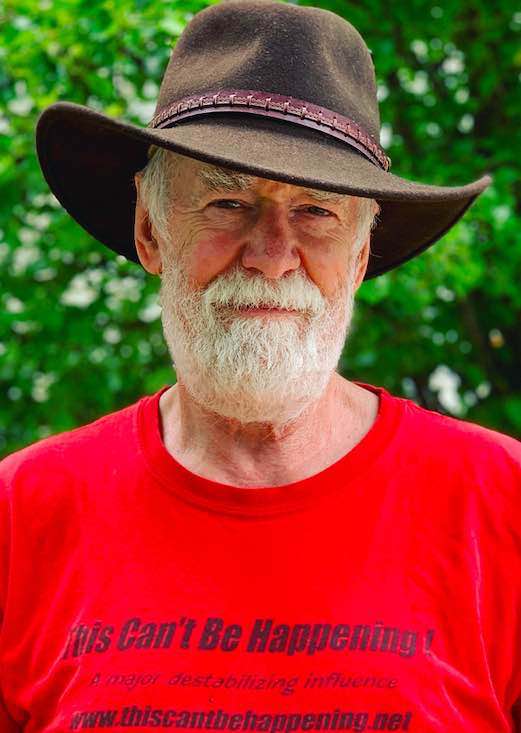
DAVE LINDORFF is a Philadelphia-based journalist. His most
recent book is “The Case for Impeachment” (St. Martin’s Press, 2009).
His work is available at www.thiscantbehappening.net
(Note: You can view every article as one long page if you sign up as an Advocate Member, or higher).
 2
2
 2
2
 1
1






