| Back OpEdNews | |||||||
|
Original Content at https://www.opednews.com/articles/Reconciliation-Pt-2--Eas-by-Blair-Gelbond-Awareness_Billionaires_Breakthrough_Forgiveness-210122-167.html (Note: You can view every article as one long page if you sign up as an Advocate Member, or higher). |
|||||||
January 21, 2021
Reconciliation Pt. 2 - Easier Said Than Done
By Blair Gelbond
"There is an important distinction between forgiveness and simply allowing others wrongdoing. Where wrong action is concerned, it may be necessary to take appropriate counteraction to stop it. "Toward the actor you can choose not to develop anger and hatred. This is where the power of forgiveness lies - not losing sight of the humanity of the person while responding to the wrong with clarity and firmness."
::::::::
There is an abundance of goodness in the world. Much caring, giving, helping, and generosity goes unreported. And, as we know, there is plenty of injustice, inequality, and exploitation as well. While it is predictable that that there was injustice during the era when indigenous tribes made up the human world, the emergence of empires created circumstances for inequity to occur on a more massive, organized level.
In today's world, despite some progress, systemic racism and long-standing gender discrimination still span the world. Enormous economic disparities between rich and poor create a vast gap between a few billionaires and billions of people living at a subsistence level.
[Most people in the world live in poverty. As of 2019 two-thirds of the world population live on less than 10 $-int per day. And every tenth person lives on less than 1.90 $-int per day. Click Here; There were 2,825 billionaires in the world in 2019, up 8.5% from 2,604 billionaires in 2018, according to market research firm Wealth-X.]
We continue to destroy the biosphere of our home planet. Many industrial nations are rapidly using up vital nonrenewable resources - and in the process severely limiting the options of future generations to meet their needs.
Beyond these key issues are the specific misdeeds and mendacity of governments. We know many of these instances, such as the genocides of Jews (and others) in World War 2, in Rwanda, and in the current treatment of Palestinians. To explore additional instances, which the general public knows less about, see:
1) "Memphis, Tenn. Court Decision, U.S. 'Government Agencies' Found Guilty in Martin Luther King's Assassination," www.globalresearch.ca/court-decision-u-s-government-agencies-found-guilty-in-martin-luther-kings-assassination-2/5320024
2) "Why Do Good People Become Silent--or Worse--About 9/11?" https://www.ae911truth.org/evidence/technical-articles/articles-on-psychology/278-part-1-preface-and-introduction
3) Click Here and Paradigmresearchgroup.org
4) JFK and the Unspeakable by James Douglas, 2010.
There are so many divisions that alienate us - one from another. Yet, as Elgin makes clear, in order to survive as a species in the coming years, we must find way to bridge our divisions and learn to create a habitable, sustainable planet.
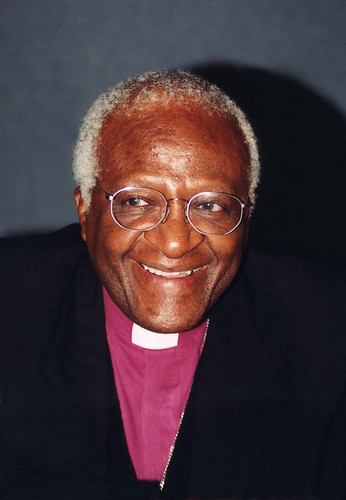
This is where the experience gained by Desmond Tutu - former Chairman of the South African Truth and Reconciliation Commission - becomes invaluable. Following the countless atrocities of apartheid, it was seen by many as a crucial component of the transition to full and free democracy in South Africa. As Tutu put it: "It was feared that our transition to democracy would become a bloodbath of revenge and retaliation. We knew that telling the truth and healing our history was the only way to save our country from certain destruction."
Nelson Mandela's government drew up legislation for the establishment of a Truth and Reconciliation Commission (passed by parliament in July 1995), naming Tutu as the chair of the TRC. Tutu proposed that the TRC adopt a three-fold approach: the first being confession, with those responsible for human-rights abuses fully disclosing their activities; the second was forgiveness in the form of legal amnesty from prosecution; and the third involved restitution, with the perpetrators making amends and reparations to their victims.
The commission granted perpetrators of political crimes the opportunity to appeal for amnesty by giving a full and truthful account of their actions and an opportunity to ask for forgiveness. The commission also gave victims of political crimes a chance to tell their stories and thus unburden themselves from the pain and suffering they had experienced.
The mandate of the commission was to investigate, bear witness to, record, and in some cases grant amnesty to the perpetrators of crimes relating to human-rights violations that took place between 1960 and 1994, as well as offering rehabilitation to the victims. This approach was undertaken to move the South African people beyond the cycles of retribution and violence that had plagued so many other countries during their transitions from oppression to democracy.
This brings us to the crucial question of how - today and in the near future - we might move beyond the following realities: ecological damage, obscene wealth in the midst of massive poverty and starvation, the history of our genocide of Native Americans and slavery, government-based political assassinations of U.S. and other leaders, and the withholding of information regarding vital, "exotic" energy sources, which could likely solve issues related to climate change, mushrooming pollution, and the damage caused by fossil fuels.
If the human race manages to remove its own blinders, which currently block our awareness of the schemes driving these realities, how are we to best approach the situation, given both the extent of the probable destruction coming our way and numbers of government and other decision-makers involved?
Looking ahead, I will suggest that in the future we will need to establish our own TRC. Given that our planet is likely to be roiling in chaos during the coming decades, we will need to find a way to transform "breakdown" into "breakthrough."
It is quite possible that, as these willful, massive injustices finally emerge into our awareness, we will be gravely confused by the corporate-owned news, drugged into insensibility by medical interventions, or simply exhausted by multiple adversity factors. Still, if and when we comprehend the degree to which we have been bamboozled, there is a good chance that rage and retaliation will be in the air.
However, paradoxically - the essential key may be our willingness to forgive.
"Forgiveness is a political necessity," says Desmond Tutu.
Beyond the practical transformations needed (including issues such population growth and energy), we - as a world - will need to allow ourselves to make a leap of consciousness. This will entail rising into an awareness of "ubuntu": a word rooted in South African culture, meaning, "A person becomes human through other persons."
In other words, this awareness will need to arise in us: "my humanness is inextricably bound up in yours." We are not born hating each other and wishing to cause harm. This is a learned state of being. Infants do not of dream of becoming rapists and murders.
Desmond Tutu says it this way:
"A person is only a person through other people. This interconnectedness is the very root of who we are. We are made to live in a delicate network of interdependence."
Martin Luther King Jr. phrased a similar thought in these words:
"All persons are tied in a single garment of destiny. Whatever affects one directly affects all individuals indirectly. This is the interrelated structure of reality."
Tutu also offered another dimension of this consciousness:
"It seems there is no end to the creative ways humans can find to hurt each other - and reasons to feel justified in doing so. There have been times when each one of us has needed to be forgiven and to forgive. We are all broken. Out of that brokenness we hurt each other. We face this choice of whether or not to forgive, or to seek revenge as individuals, as families, as communities, and as a deeply connected world...
"Each time we help or harm we have a dramatic impact on our world. The path of forgiveness is not easy. We must walk the path of the muddy shoals of hatred and anger and make our way through grief and loss to find the acceptance that is the hallmark of forgiveness.
"Forgiveness is nothing less than the way we heal the world - by healing each and every one of our hearts. The process is simple, but not easy."
Those who participated in TRC courageously chose to seek the truth, face their own grief, and recognize both their own humanity and that of the perpetrators who had inflicted grievous hurt.
However, it is important to emphasize that being reconciled to our enemies or even our loved ones is not about pretending that the injury was not as bad as it actually was. It is not about denying or turning a blind eye to the harm that occurred. On the contrary, the cycle of forgiveness can only be activated and completed only in absolute truth and honesty. Forgiveness requires giving voice to the violations and naming the pains we have suffered.
At the same time there is a deep human connection we have with each other and a drive within us to live in harmony. We need to realize this, while at the same time fully recognizing that we currently live in a culture that, out of greed and fear, oppresses all of life. The effort to speak to that ugliness, to declare it wrong, is a beautiful act.
Make no mistake: we are speaking here about peace on Earth as a reality. While we may be geographically whole, we need to become spiritually whole.
We need to acknowledge both of these truths at the same time: that our humanity is bound up in one another and any tear in the fabric of connection between us must be repaired for us all to be made whole.
I hope to discuss more about the "how-to" of forgiveness in a future piece.
Authors Bio:
I work as a psychotherapist with an emphasis on transformational learning - a blend of psychoanalytic and transpersonal approaches, and am the author of Self Actualization and Unselfish Love and co-author of Families Helping Families: Living with Schizophrenia, as well as Mental Illness as an Opportunity for Transformation. My interests and life have taken parallel courses, which together have woven a complex tapestry: spirituality and meditation on the one hand, and political psychology on the other. I have studied and practiced with Ram Dass, Jack Kornfield, Mata Amritanandamayi and Gurumayi Chidvilasanda, and continue a daily practice of meditation. My early political education began with the writings of the founding fathers. Over time this led to involvement in the anti-Vietnam war and anti-nuclear movements. I was interested in the powerful molding of prevailing political and economic dynamics by what C. Wright Mills called the military-industrial complex. In time I have come to the conclusion that, despite various interest groups' attempts to minimize or trivialize the concept, the deep state is a reality - decisively and covertly shaping events on both the domestic and international fronts. I am interested in an exceptionally promising alternative source of energy that has yet to see the light of day. I see the current period as a precarious form of initiation rite into the beginning of adulthood for our species, and hope to do whatever I can to help us reach this goal. Meanwhile, I seek daily to recall the reality that the same awareness (the Ever-Present-Origin) looks out through all of our eyes, and actualize this in my relationship with other beings.