| Back OpEdNews | |||||||
|
Original Content at https://www.opednews.com/articles/Destruction-of-the-WTC-Sou-by-Wayne-Coste-911_911-Destruction_911-Truth_Architects-And-Engineers-For-911-Truth-200912-845.html (Note: You can view every article as one long page if you sign up as an Advocate Member, or higher). |
|||||||
September 12, 2020
Destruction of the WTC South Tower on 9/11: Analysis of Perimeter Column Trajectory Reveals Mechanism of Demolition
By Wayne Coste
The exact mechanism of destruction of the Twin Towers on 9/11 has been discussed, at an cursory level, for the last 19 years. Because of outwardly directed energetic forces, a gravity-only collapse subsequent to fires is not supported by the observations. Analysis of the trajectory of a wall of perimeter columns from the South Tower provide a clear example of how the Towers were destroyed by a "Propelled Demolition" mechanism.
::::::::
On the morning of 9/11 approximately six seconds after the top block of the South Tower began a hinging movement to the east, that top portion of the South Tower was completely demolished by outwardly directed, energetic forces which many people (imprecisely) attribute to "explosives." This top block of the South Tower was large and consisted of approximately 30 floors - nearly one-third of the height of the Tower. Approximately three seconds after the initial hinging movement, the demolition of the lower part of the South Tower began in earnest at the 80th floor. It began with a series of outward bursts of propellant - observed as the horizontal expansion of a cloud of dust and debris that was much lighter in color than the dark smoke from the fires in the burning tower. The ejection of many exterior structural elements - some traveling for great distances were observed.
A new analysis describes one of the most interesting objects is a large wall section that appears to span nearly the entire width of the Tower which was seen "surfing" its way into oblivion. Because of the low resolution in most older YouTube videos, these features were thought to be core columns. However, in reviewing the more detailed versions available through NIST's FOIA Releases they are clearly seen to be perimeter column sections with the horizontal connecting spandrel plates plainly visible. Additionally, the video captures the stationary, standing core structure immediately after the perimeter wall and office areas were propelled away from the core. The video has sufficient resolution to reveal details of the surviving structure.
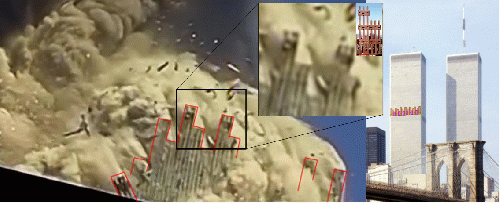
Figure 1: Eight or more contiguous perimeter column sections are seen propelled (left) from their initial location near the 80th floor (right). At this point, they have traveled over 200 feet from the South Tower wall.
(Image by Dean Reviere via NIST FOIA with annotations by Wayne Coste) Details DMCA
Figure 1 shows a screenshot from the video known as, "Skidmore, Owings & Merrill - from Dean Reviere," where the connecting horizontal spandrels are clearly seen. Figure 2 shows a portion of the east face of the South Tower, and provides a more precise identification of the perimeter column sections, shown in Figure 1.
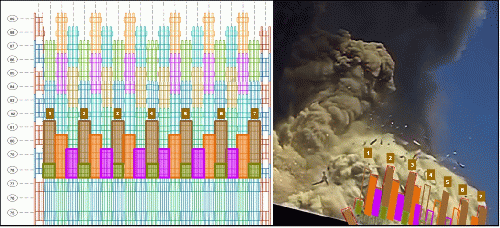
Figure 2: Initial location of expelled perimeter column sections in the east face of the South Tower (left) and estimated identification as they were propelled (right). Solid colors indicate columns that were observed in the video while outlined columns
(Image by Dean Reviere via NIST FOIA with annotations by Wayne Coste) Details DMCA
Analysis, using a video (WTC2 'Collapse' - Onno deJong) that captured the movement of these perimeter columns from a location at 1st Avenue & 9th Street, shows that these perimeter columns originated from near the 80th floor (see Figure 1, right) and had traveled approximately 2.27 seconds before the columns "out-ran" the cloud of propellant, fine dust and debris. When these columns emerged, they had been propelled nearly 200 feet away from the east face of the South Tower and had been accelerated horizontally to a velocity of approximately 80 ft per sec (54 mph). Additionally, the trajectory of these perimeter columns shows there was no initial component of velocity in the vertical direction (e.g., no initial 'kick' in the direction of gravity).
Figure 3 shows these "surfing" perimeter columns from two perspectives that are approximately 90 degrees apart after about 6.25 seconds after the tilting began. Figure 4 shows the location of the top of these perimeter columns in 1/3 of a second intervals. These locations were used to quantify the velocity and acceleration of these columns.
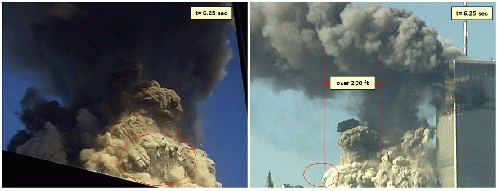
Figure 3: Location of the 'surfing' columns from the southeast (left) and the northeast (right) at 6.25 second after the hinging motion begins.
(Image by Onno DeJong via NIST FOIA with annotations by Wayne Coste) Details DMCA
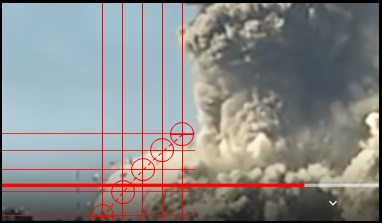
Figure 4: Location of the perimeter wall section in 0.33 second intervals.
(Image by Onno DeJong via NIST FOIA with annotations by Wayne Coste) Details DMCA
Using these values for velocity and acceleration, Figure 5 shows the perimeter columns can be traced back to its original location at the 80th floor in the face in the South Tower.
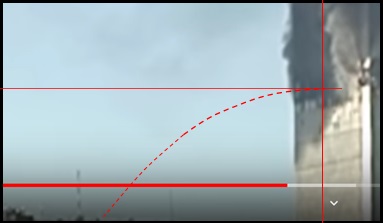
Figure 5: Starting location of the perimeter column wall section at the 80th floor of the east face as imputed from the horizontal and vertical velocities and accelerations.
(Image by Onno DeJong via NIST FOIA with annotations by Wayne Coste) Details DMCA
The outwardly directed, horizontal forces observed dismembering the World Trade Center have a characteristic that suggests a unique form of destruction that is best described as "propelled demolition." This phrase, "propelled demolition," is used to distinguish the method of demolition from high-explosive based "controlled demolition" which destroys specific connections so that gravity can be harnessed to complete the demolition of the structure.
An earlier paper, "Investigating the Mechanics of Destruction at the Twin Towers on 9/11: The Case for Propelled Demolition" proposes and describes a method for the destruction of the Twin Towers that is in agreement with key observations. It also explains that this mechanism would have exploited a weakness in the design of the Twin Towers where only a small number of bolts connecting the floor trusses to the core columns would need to be destroyed by outwardly directed forces.
The observations show highly energetic propelling forces that were activated floor-by-floor - with the origin of this force centered at the building's core / elevator shafts and radiating outward in the north-south and east-west directions. The observed propelling force is hypothesized to be based on a nano-thermite material that was "tuned" to be more like a rocket fuel propellant than either an explosive or an incendiary. This type of material would be more explosive than a propellant and not as explosive as "molecular" or high-explosives, according to Dr. Niels Harrit. As an illustration, Dr. Harrit classified gun powder as a propellant while TNT was classified as a "molecular" explosive. Furthermore, he described a rocket fuel propellant as having characteristics between these two energetic materials. While these example materials can be loosely labeled, in common parlance, as "explosives" they have vastly different properties.
As shown in Figure 6, the activation of this propellant at the core would create forces that traveled across the office areas to the perimeter columns in a very fast, very high temperature thermal stream. This thermal stream would have been hot enough to contain molten iron which would later cool into the tiny iron spheres that characterized the World Trade Center dust. The effect of the passage of such an energetic stream on office contents would be to dissociate virtually everything encountered from human bodies to asbestos fireproofing. The propellant derived forces would have created immense simultaneous outward impact forces in all four directions, which the building was not designed to withstand. These forces would have resulted in the separation of the structure at its weakest point, which would have been the interior bolted connections between the floor trusses and the steel "channels" along the core.
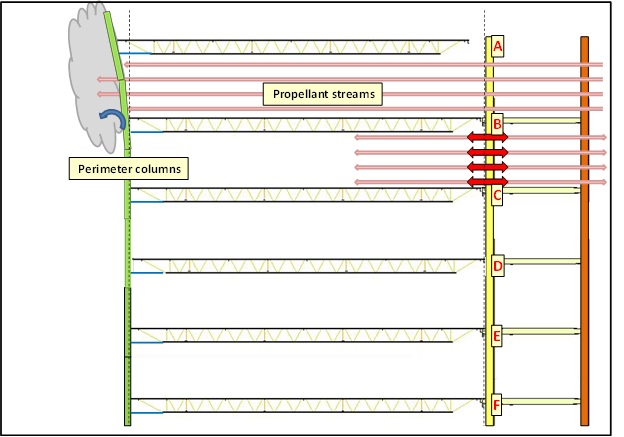
Figure 6: Propellant forces(pink), originating around the core, pushed groups of entire perimeter column sections (green) outward in a horizontal direction
(Image by Wayne Coste) Details DMCA
As the floor truss to core connections failed under these simultaneous horizontal forces which they were not designed to withstand, the outer perimeter wall sections would have then been propelled outward and peeled downward and outward. The activation of the propellant and the mechanical separations would have progressed down the structure at a relatively constant rate, optimized by the demolition planners using, and leveraging, gravitational forces.
One of the remarkable details captured in the "Skidmore, Owings & Merrill - from Dean Reviere" ("Reviere") video is a three second segment where the core columns of the South Tower are clearly seen standing stationary once the outer perimeter columns and office areas have been propelled away. Figure 7 shows the standing core columns highlighted within a black rectangle which disproves core failure as an initiating event. The details show both horizontal and vertical structural components of the core that are congruent with the structural members shown in construction photos.
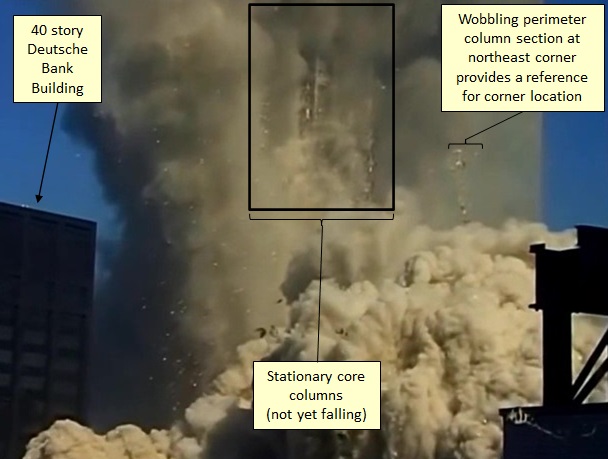
Figure 7: Details of the stationary core columns are seen in the Reviere video once the outer perimeter columns and floor trusses have been propelled away. Inset photo shows the South Tower core during construction from a similar perspective
(Image by Dean Reviere via NIST FOIA with annotations by Wayne Coste) Details DMCA
This perimeter column wall section could not have been propelled into this trajectory by either high explosives or mechanical ejection.
· High explosives would have acted on small portions of the steel and could not have accelerated the entire perimeter column wall section as a intact entity, or
· Mechanical ejection of these columns would not be possible because there was no possible mechanism to create the necessary horizontal forces across the entire wall section. Any eastward mechanical ejection as a result of gravitational effects would also have imparted these columns with a significant initial downward velocity - which was not observed.
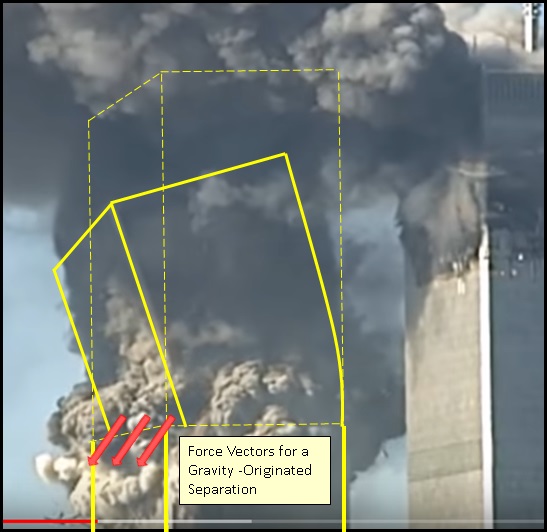
Figure 8: Any mechanical ejection due to gravity would impart an initial downward velocity component. None was observed.
(Image by Onno DeJong via NIST FOIA with annotations by Wayne Coste) Details DMCA
A comprehensive review of the details and trajectory of this perimeter wall columns can be seen at Scientists for 9/11 Truth.
Authors Website: http://www.scientistsfor911truth.com/wayne-h-coste
Authors Bio:
Licensed Professional Engineer dealing with energy issues. Active in promoting the ethics of the engineering profession.