| Back OpEdNews | |||||||
|
Original Content at https://www.opednews.com/articles/Review-Michael-Rivage-Seu-by-Marta-Steele-Activism_Buddha_Change_Classics-180713-389.html (Note: You can view every article as one long page if you sign up as an Advocate Member, or higher). |
|||||||
July 13, 2018
Review: Michael Rivage-Seul, "The Magic Glasses of Critical Thinking"
By Marta Steele
Review: Michael Rivage-Seul, "The Magic Glasses of Critical Thinking"--a voyage toward understanding oneself and others that will change the world. The medium of this voyage is a textbook on critical thinking for progressives high school-aged and older.
::::::::
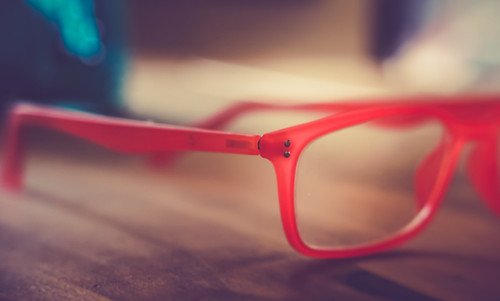
The subtitle of Rivage-Seul's riveting voyage out of Plato's Cave into Chomsky's revelation that alas, "we" are not the good guys after all, is Seeing through Alternative Fact & Fake News.
The nightmare of the Donald Trump administration does nothing but unveil, in material and unsubtle form, a disease that has inflicted our "civilized" culture since its birth out of the wisdom and brilliance of Plato and Aristotle, if not my favorite of them all, Homer. In the latter case, Apollo, I think, lifts a curtain of invisibility from off the incessant bloodshed and bludgeoning of Trojan warfare to reveal to Diomedes, I think (it's been a while), gods fighting among mortals. So who was in charge there? The gods, of course.
So as far as I know, the image of seeing beyond the three mundane dimensions we slug through every day was born in that scene and reborn in Plato's Allegory of the Cave. There, one of a row of seated imprisoned souls in a cave dares climb out into the daylight and in amazement runs back down to urge the others to follow him. They refuse to.
Rivage-Seul borrows his imagery of the magic glasses of critical thinking from Dick Gregory, for whom they revealed the perspective of the poor, oppressed, and disenfranchised. In my white, urban, middle-class apartment, when I feel down in the dumps I don't need any magic glasses per se. Just open up any progressive webpage and click on any of the live links and a portrait will look back on you that deplores American decadence. I could have been born in Somalia or modern-day Syria or Libya . . . I won't even remind you of Trump's stone-cold obscenity in referring to countries and regions suffocating with misfortune, abuse, and violence.
I could be there, but I'm here and, let me tell you, as a progressive, what the ultimate critic of all things American said when asked why he doesn't leave this country if its values and actions epitomize atrocity. He said [paraphrased], "because this is the most wonderful country in the world, the best place to be." He should know. He wears the quintessential magic glasses, this greatest living intellectual of us all, according to the New York Times.
Overeducated as I am, I own some magic glasses too that can be a greater burden than Sisyphus's rock. I put them on and cry. "Wisdom is born from suffering" (pathei mathos) and "action [as opposed to languor] necessitates and causes suffering" (drasanti pathein), Aeschylus taught us.
The truth hurts.
Ignorance (Plato's Cave) is bliss.
But Rivage-Seul's book is not about cliche's. It is an anecdotal, easy-to-ingest series of steps out of the complacent conviction that America is the best to MLK's truth that we are the most extreme terrorists on earth. We inflict 9/11's on the world like violence junkies. And now, in the Trump era, trigger-happiness has swallowed steroids.
Trump injected the neologisms "alt reality" and "fake news" into the vernacular, but Rivage-Seul shows us that (oops, here comes another cliche' out of stoicism) "There is nothing new under the sun." These have surrounded us throughout time.
How important is critical thinking? What good is it? Here comes the answer from Socrates: "The unexamined life is not worth living."
And I used to tell my college students (I taught critical thinking, too) that you must fully understand your enemy before you can vanquish her. Wouldn't you prefer the inverse, that love is blind? Is that the inverse?
I used to emulate Socrates--that is, give my students a hard time. One class was at 8 in the morning three times a week. Sunlight through the tall windows shone on bored, weary faces. The only day they gave me a hard time back was (I shouldn't have told them) my job evaluation hour through the magic glasses of one of my superiors sitting quietly in the back row.
I so wanted to think critically as a 20 year old. My first critical words were "he wasn't so hot," referring to a guest speaker brought to our class by one of my esteemed classics professors. She nodded. WOW, my first critical thought. How mean--he was a nice man patronizing us Seven Sisters cuties. So what else was new?
Also in college I knew that my politics leaned left but could only mouth rhetoric. I knew it was correct but not why.
Enough true confessions! Rivage-Seul offers progressives--we must be in privileged places to be able to teach out of this book--tools not just to interpret the world but change it. We have the resources, if only the one percent would allow more than one percent of them to trickle down to the adversity-ravaged 99 percent vast majority. Professing classical and Judaeo-Christian values, we are enacting their inverse: half the world's food is discarded; climate change and pollution are annihilating the anthropocene era exponentially.
A 4 percent tax on the wealthy could save the world from hunger, polluted drinking water, decrepit housing, tattered clothing, preventable deaths, and decimation of the planet. Sixty-five men have as much wealth as half of the world's population--that is, 3.5 billion people. But their wealth bends toward every form of destruction.
And, as I mentioned above, Rivage-Seul writes that there is still time to escape this inconvenient truth (though he doesn't quote Al Gore). Our pantheon of critical thinkers have already tried to teach us how to fix it all: the Buddha, Jesus of Nazareth, Mahatma Gandhi, the Dalai Lama, Mother Theresa, Dorothy Day, and Martin Luther King, Jr. It's simple, really. We have to know what's right and do it, as a friend of mine once scolded his 4-year-old daughter.
We know all of the above from our higher education courses and yet hypocrisy reigns. Rivage-Seul's approach is radical, though. He transcends what I was programmed to teach those poor kids: logic, rhetorical contradictions, seeing through ransomware, and solving ethical dilemmas that so typiify our dishonest hypocrisy: capital punishment, abortion, immigration, and prayers in non-parochial schools.
Rivage-Seul plants the seeds of political literacy as his chapters ascend from Plato's Cave to Chomsky's summit. His medium is popular films that absorb us away from reality while teaching it to us, the way that Kurt Vonnegut's hypnotic, totally minimalist narratives taught us all he had studied frantically and frenetically from the world's pantheon of geniuses. He knew the Buddha and gave us Willy Pilgrim. He knew the Platonic ideals and gave us Diana Moon Glampers. And so it goes.
Some of the films Rivage-Seuls uses include Avatar, Captain Phillips, Good Will Hunting, Sausage, The Distinguished Gentleman, and even the Broadway musical Hamilton.
The lenses of Rivage-Seul's' magic glasses are liberation theology's criteria of discernment. To ascend from mediocre invisibility to ardent activism, here are the ten rules so simple to read and painfully difficult to accomplish: 1) Reject neutrality; 2) Reflect systemically--the political world is economic; 3) Select market (the path to understanding political differences); 4) Suspect ideology (by understanding why yours is what it is); 5) Respect history (what is it really? a homeless man collapsing into death on a freezing night or John Hancock in his powdered wig signing the Declaration of Independence?); 6) Inspect scientifically (find internal and external coherence and explanatory value); 7) Quadra-sect violence (understand its various hideous forms); 8) Connect with your deepest self (think critically about religion in order to criticize most effectively); 9) Detect silences (in other words, understand your enemy, as mentioned above); 10) Collect conclusions (live critically, always knowing whose side you're on).
And now, put on the magic glasses and be reborn into effective, self-actualizing activism. Oppressors don't care about understanding their victims, who know more about them as well as about themselves and the world. The glasses show us real reality. But you can't take them off at night; once they're on, you see what's true but take heed--you can't force others to put them on. You can try but not force.
The Magic Glasses of Critical Thinking, recommended for secondary and higher-level teachers, will replace students' preconceptions with radical revisions of their worlds. In this process, these fledglings will rewrite the world. They will all become mahatmas. Shoot one, NRA, and five will spring up to replace her!
And this book is, in addition, addictive--a great read you won't want to put down. I highly recommend its insights and gentle guidance toward discovering new ones.
Authors Website: http://www.wordsunltd.com
Authors Bio:
Marta Steele is an author/editor/blogger who has been writing for Opednews.com since 2006. She is also author of the 2012 book "Grassroots, Geeks, Pros, and Pols: The Election Integrity Movement's Nonstop Battle to Win Back the People's Vote, 2000-2008" (Columbus, Free Press) and a member of the Election Integrity movement since 2001. Her original website, WordsUnLtd.com, first entered the blogosphere in 2003. She recently became a senior editor for Opednews.com. She has in the past taught college and worked as a full-time as well as freelance reporter. She has been a peace and election integrity activist since 1999. Her undergraduate and graduate educational background are in Spanish, classical philology, and historical and comparative linguistics. Her biography is most recently listed in "Who's Who in America" 2019 and in 2018 she received a Lifetime Achievement Award from Who's Who.