




Video Interview with Emory Douglas: The Angola 3, the Prison-Industrial Complex, and Abolishing Solitary Confinement
By Angola 3 News
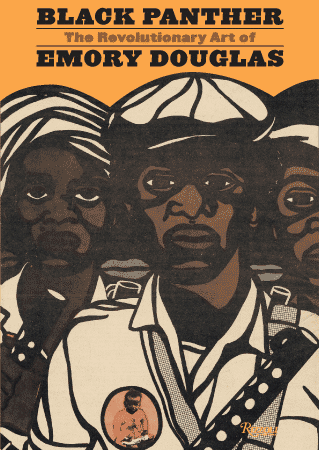
Emory Douglas first served as the art director for the Black Panther Party's newspaper, and later served as Minister of Culture until 1980. Throughout these years, Douglas' iconic artwork was published in the BPP newspaper and beyond. His artwork is featured in the new book entitled à ‚¬Å"Black Panther: The Revolutionary Art of Emory Douglas.à ‚¬ � For more information about Douglas, please visit here.
Douglas was interviewed in San Francisco by Angola 3 News in October 2009. This is the first segment of our interview to be released. In this segment, Douglas speaks about the Angola 3, the prison-industrial complex, and abolishing solitary confinement.
37 years ago in Louisiana, 3 young black men were silenced for trying to expose continued segregation, systematic corruption, and horrific abuse in the biggest prison in the US, an 18,000-acre former slave plantation called Angola. In 1972 and 1973 prison officials charged Herman Wallace, Albert Woodfox, and Robert King with murders they did not commit and threw them into 6x9 ft. cells in solitary confinement, for over 36 years. Robert was freed in 2001, but Herman and Albert remain behind bars.
Three court cases are now pending. Albert Woodfox and Herman Wallace are both appealing to have their convictions overturned. On October 9, 2009, the State Supreme Court denied Wallace's writ, so he will now be filing a habeus petition in Federal Court.
The joint federal civil rights lawsuit of Woodfox, Wallace, and Robert King, arguing that their time in solitary confinement is à ‚¬Å"cruel and unusual punishment,à ‚¬ � will go to trial any month in Baton Rouge, at the U.S. Middle District Court.
Angola 3 Fact Sheet
In the early 1970's, while in various jails waiting to begin serving prison terms for robberies they were convicted of separately committing, Albert Woodfox and Herman Wallace were exposed to à ‚¬" and became committed to upholding à ‚¬" the principles of the Black Panther Party.
When they arrived at the Louisiana State Prison at Angola, they found that it lived up to its reputation as one of the bloodiest and most brutal penitentiaries in the United States, with drugs, gambling, stabbings and rapes routine matters of daily occurrence.
Since one of the most basic of the Black Panther Party principles called for the practice of improving life in one's community, Woodfox and Wallace requested of the national organization that they be granted permission to establish the first BPP chapter inside prison.
Officially recognized as a Black Panther Party chapter, Woodfox, Wallace and a few other brave souls began organizing the prisoners at Angola to stop all prisoner-to-prisoner violence, even the rapes of new prisoners that had become an expected part of life at the prison among a population most of whom were scheduled to die in the institution.
As the prisoner-to-prisoner violence did, in fact, decrease greatly, the money made by the guards and administration through the wide-spread vice and corruption decreased, as well, much to their displeasure. Additionally, with the prisoners organizing in their own best interests, the administration no longer felt it was in control.
On April 17, 1972, a young White guard was brutally stabbed to death while most of the prisoners were at breakfast. Almost immediately, Woodfox and Wallace were placed in solitary confinement and within days, a viciously brutal serial rapist doing a life sentence claimed that he had seen the two men stab the guard to death.
Despite the fact that there was no other evidence whatsoever that Woodfox and Wallace had committed the crime, despite the fact that a bloody shoeprint and bloody fingerprint at the scene did not belong to either of them, and despite the fact that given their locations, it would have been impossible for them to commit the murder, they were ultimately convicted of the crime (based only on the testimony of the rapist who was subsequently released from prison, though he was never originally supposed to be paroled).
In the fall of 1972, Robert King, also exposed to and espousing the Black Panther Party principles after he was incarcerated, was also brought to Angola to serve a sentence for robbery. Upon arrival, he was immediately placed in solitary confinement for à ‚¬Å"investigation related to the murder,à ‚¬ � despite the fact that he was not even in the institution at the time it was committed. King, together with Woodfox and Wallace, then, became known as à ‚¬Å"The Angola 3.à ‚¬ �
In 1998, Albert Woodfox' conviction was overturned, but a new grand jury, chaired by the former wife of a former warden at Angola (a woman who had written a book about the prison in which she repeated a number of lies about Woodfox, including that he was a convicted rapist, which he is not) determined that he should be re-tried. The new trial was held in Amite, Louisiana, the home town of the murdered guard. Despite the fact that there was no new evidence and the supposed eye-witness was dead (which meant that he could not be cross-examined), Woodfox was found guilty once more using only the written transcript of the à ‚¬Å"witness'à ‚¬ � testimony from the original trial.
In 2001, after Robert King had spent 29 years in solitary confinement, his conviction for the murder of another prisoner was overturned and King was released. One week later, he held a press conference at the institution, saying, à ‚¬Å"I may be free of Angola, but Angola will never be free of me.à ‚¬ � And he has worked tirelessly around the world ever since in the effort to free his two brothers yet inside.
In July of 2008, Woodfox' conviction was yet again overturned, but the State appealed the decision and blocked Woodfox ability to post bond and be released, so he is still incarcerated and still in solitary confinement. The Appellate Court heard the case in March of 2009 and is expected to release its ruling momentarily.
International human rights organization Amnesty International has called for the immediate release of both Albert Woodfox and Herman Wallace. But Louisiana Attorney General Buddy Caldwell, calling Woodfox à ‚¬Å"the most dangerous man on the planet,à ‚¬ � has vowed to take the case personally all the way to the U.S. Supreme Court, if necessary. And Angola Warden Burl Cain was quoted in the Washington Post as saying, à ‚¬Å"Albert Woodfox is still into Black Pantherism and he belongs in solitary confinement whether he did anything or not.à ‚¬ �
Angola 3 News is an official project of the National Coalition to Free the Angola
3.
Our main website is: http://www.angola3news.com
Please visit our other websites too:
http://www.angola3.org
http://www.angola3action.org
http://www.a3grassroots.org
http://www.kingsfreelines.com
http://www.hermanshouse.org
 2
2
 2
2
 2
2






