


 Would you like to know how many people have visited this page? Or how reputable the author is? Simply
sign up for a Advocate premium membership and you'll automatically see this data on every article. Plus a lot more, too.
Would you like to know how many people have visited this page? Or how reputable the author is? Simply
sign up for a Advocate premium membership and you'll automatically see this data on every article. Plus a lot more, too.
 SHARE 
|
|





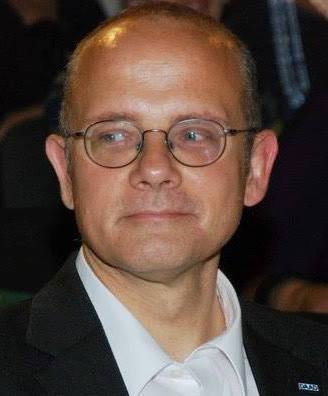
Andreas Umland, CertTransl (Leipzig), MA (Stanford), MPhil (Oxford), DipPolSci, DrPhil (FU Berlin), PhD (Cambridge).
Visiting fellow at Stanford's Hoover Institution in 1997-99, and Harvard's Weatherhead Center in 2001-02. Bosch visiting lecturer at The Urals State University of Yekaterinburg in 1999-2001, and the Kyiv-Mohyla Academy in 2003/2005. In January-December 2004, Temporary Lecturer in Russian and East European studies at St. Antony's College Oxford. In 2005-2008, DAAD Lecturer at the Shevchenko University of Kyiv. In 2008-2010, Research Fellow at the Institute for Central and East European Studies at Eichstaett, Bavaria. Since 2010, DAAD Senior Lecturer at the Kyiv-Mohyla Academy.
General Editor of the book series "Soviet and Post-Soviet Politics and Society" (http://www.ibidem-verlag.de/spps.html), Co-Editor of the Russian webjournal "Forum for the Contemporary History and Ideas of Eastern Europe" (http://www1.ku-eichstaett.de/ZIMOS/forumruss.html), administrator of the web archive and mailing list "Russian Nationalism" (http://groups.yahoo.com/group/russian_nationalism/).
ku-eichstaett.academia.edu/AndreasUmland
OpEd News Member for 892 week(s) and 2 day(s)
49 Articles, 31 Quick Links, 14 Comments, 4 Diaries, 0 Polls
Articles Listed By Date
List By Popularity
List By Popularity
Page 1 of 3 First Last Back Next 2 3 View All
SHARE
Monday, August 19, 2013
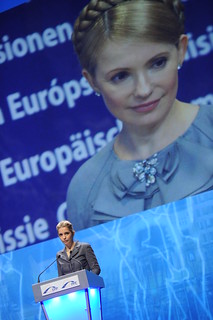
The Meaning of Tymoshenko's Case for the EU: Will Brussels Sign an Association Agreement with Ukraine? The EU has already gone out of its way by initialing the largest agreement in its history with as dubious a polity as Ukraine is today. The only way for Kyiv to get the agreement signed is to free Tymoshenko. Yanukovych will also have to show "tangible progress" in fulfilling the other prerequisites, and make sure to not open up entirely new issues, for instance, by curtailing press freedom.
Monday, August 19, 2013The Meaning of Tymoshenko's Case for the EU: Will Brussels Sign an Association Agreement with Ukraine? The EU has already gone out of its way by initialing the largest agreement in its history with as dubious a polity as Ukraine is today. The only way for Kyiv to get the agreement signed is to free Tymoshenko. Yanukovych will also have to show "tangible progress" in fulfilling the other prerequisites, and make sure to not open up entirely new issues, for instance, by curtailing press freedom.
(1 comments) SHARE
Saturday, August 17, 2013
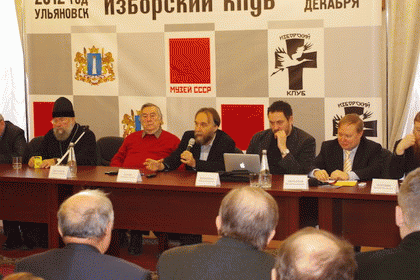
New Extremely Right-Wing Intellectual Circles in Russia This article examines some of the new, extremely anti-Western intellectual circles that have emerged during the past two years in Russia. In the face of the new polarization between pro- and anti-Putin forces, the authoritarian regime and its propagandists are closing ranks with certain extremely right-wing literati.
Saturday, August 17, 2013New Extremely Right-Wing Intellectual Circles in Russia This article examines some of the new, extremely anti-Western intellectual circles that have emerged during the past two years in Russia. In the face of the new polarization between pro- and anti-Putin forces, the authoritarian regime and its propagandists are closing ranks with certain extremely right-wing literati.

(1 comments) SHARE
Friday, June 7, 2013
Will Brussels Miss a Historic Moment in Europe's Integration? || Harvard International Review During the Upcoming Eastern Partnership Summit at Vilnius, the EU Should Provide Armenia, Georgia, Moldova and Ukraine with an Official Membership Perspective
Friday, June 7, 2013Will Brussels Miss a Historic Moment in Europe's Integration? || Harvard International Review During the Upcoming Eastern Partnership Summit at Vilnius, the EU Should Provide Armenia, Georgia, Moldova and Ukraine with an Official Membership Perspective
SHARE
Wednesday, February 13, 2013
Is Berlin Prepared to Support a New Democratization in Ukraine? Germany's Eastern policies have to adapt to the novel political challenges in the post-Soviet space
Wednesday, February 13, 2013Is Berlin Prepared to Support a New Democratization in Ukraine? Germany's Eastern policies have to adapt to the novel political challenges in the post-Soviet space
SHARE
Friday, November 30, 2012
EU-Ukraine Relations after the Ukrainian Parliamentary Elections Brussels ' relations with Kyiv are in deadlock. Ukraine is not fulfilling the conditions for signing the already initialed Association Agreement with the EU. Against this background, we outline an eight-point plan of further and alternative actions.
Friday, November 30, 2012EU-Ukraine Relations after the Ukrainian Parliamentary Elections Brussels ' relations with Kyiv are in deadlock. Ukraine is not fulfilling the conditions for signing the already initialed Association Agreement with the EU. Against this background, we outline an eight-point plan of further and alternative actions.
SHARE
Wednesday, October 3, 2012
The Post-Soviet TV Experts How unwary journalists help dilettante analysts to spoil reforms in the former USSR
Wednesday, October 3, 2012The Post-Soviet TV Experts How unwary journalists help dilettante analysts to spoil reforms in the former USSR
(1 comments) SHARE
Thursday, July 26, 2012
Do Russians Love Their Children Too? A homophobia campaign linking gays to child molesters as well as a series of "paedophilia" defamations relativize the abuse of minors in Russia
Thursday, July 26, 2012Do Russians Love Their Children Too? A homophobia campaign linking gays to child molesters as well as a series of "paedophilia" defamations relativize the abuse of minors in Russia
(3 comments) SHARE
Thursday, April 19, 2012
Russia's Spreading Nationalist Infection While the recent upsurge of democratic sentiments in Russia gives reasons for hope, it may also intensify the already apparent rapprochement between Russia 's systemic and anti-systemic radically nationalist forces.
Thursday, April 19, 2012Russia's Spreading Nationalist Infection While the recent upsurge of democratic sentiments in Russia gives reasons for hope, it may also intensify the already apparent rapprochement between Russia 's systemic and anti-systemic radically nationalist forces.
(3 comments) SHARE
Saturday, February 11, 2012
How to Make Russia Democratic? Unite the Liberal Factions Without a broad coalition, effective pragmatism and collaboration with reformers in the ancien regime, the "White Revolution" will end as miserable as earlier Russian democratization attempts.
Saturday, February 11, 2012How to Make Russia Democratic? Unite the Liberal Factions Without a broad coalition, effective pragmatism and collaboration with reformers in the ancien regime, the "White Revolution" will end as miserable as earlier Russian democratization attempts.
SHARE
Sunday, January 1, 2012
The Sources and Risks of Russia's White Revolution: Why Putin Failed and the Russian Democrats May Too Russian imperial nationalism and anti-Westernism has been a distraction for Putin & Co who missed the emergence of a domestic challenge, and did not see the crisis of their regime coming. These same factors may also, however, subvert the currently growing pro-democratic protest movement in Moscow and beyond.
Sunday, January 1, 2012The Sources and Risks of Russia's White Revolution: Why Putin Failed and the Russian Democrats May Too Russian imperial nationalism and anti-Westernism has been a distraction for Putin & Co who missed the emergence of a domestic challenge, and did not see the crisis of their regime coming. These same factors may also, however, subvert the currently growing pro-democratic protest movement in Moscow and beyond.
SHARE
Monday, December 12, 2011
The Stillborn Project of a Eurasian Union: Why Russia-led Post-Soviet Integration Has Little Prospects The creation of a new supranational formation spanning much of the territory of the former Tsarist and Soviet empires is hampered by structural and historical constraints.
Monday, December 12, 2011The Stillborn Project of a Eurasian Union: Why Russia-led Post-Soviet Integration Has Little Prospects The creation of a new supranational formation spanning much of the territory of the former Tsarist and Soviet empires is hampered by structural and historical constraints.
SHARE
Monday, September 19, 2011
The State and Prospects of the Russia-EU-Ukraine Triangle: Answers to Questions by the Valdai Discussion Club Ukraine's gradual inclusion in various Western institutions should be seen by all three sides -- Kyiv, Brussels and Moscow -- as part and parcel of the creation of a new pan-European security structure, a common trading and travel zone, and, eventually, a transcontinental community of shared values in the northern hemisphere.
Monday, September 19, 2011The State and Prospects of the Russia-EU-Ukraine Triangle: Answers to Questions by the Valdai Discussion Club Ukraine's gradual inclusion in various Western institutions should be seen by all three sides -- Kyiv, Brussels and Moscow -- as part and parcel of the creation of a new pan-European security structure, a common trading and travel zone, and, eventually, a transcontinental community of shared values in the northern hemisphere.
SHARE
Wednesday, September 14, 2011
EU-Ukraine relations today: Between high hopes and rising worries (interview) Ukraine 's most urgent problem is a lack of attention from most EU member states.
Wednesday, September 14, 2011EU-Ukraine relations today: Between high hopes and rising worries (interview) Ukraine 's most urgent problem is a lack of attention from most EU member states.
(2 comments) SHARE
Wednesday, August 24, 2011
Fascist Tendencies in Russian Higher Education: The Rise of Aleksandr Dugin and Moscow University's Sociology Faculty Dugin has repeatedly acknowledged his closeness to the ideas of, among other fascist ideologies, Nazism, and uses the term "conservatism" as a cover for the spread of a revolutionary ultranationalist and neo-imperialist ideology. In recent years, he has built up a network of supporters in Moscow's higher echelons of power and established considerable foreign ties.
Wednesday, August 24, 2011Fascist Tendencies in Russian Higher Education: The Rise of Aleksandr Dugin and Moscow University's Sociology Faculty Dugin has repeatedly acknowledged his closeness to the ideas of, among other fascist ideologies, Nazism, and uses the term "conservatism" as a cover for the spread of a revolutionary ultranationalist and neo-imperialist ideology. In recent years, he has built up a network of supporters in Moscow's higher echelons of power and established considerable foreign ties.
(1 comments) SHARE
Monday, August 22, 2011
Ukraine's Achievements After 20 Years of Independence: Answers for a Survey by the "Kyiv Post" Ukraine remains an exceptional country, within the post-Soviet context.
Monday, August 22, 2011Ukraine's Achievements After 20 Years of Independence: Answers for a Survey by the "Kyiv Post" Ukraine remains an exceptional country, within the post-Soviet context.
SHARE
Tuesday, July 5, 2011
Four Political Dimensions of Ukraine's Future Europeanization: Why Brussels and the EU Member States Need to Keep an Eye These four dimensions of Ukraine's rapprochement with the EU are, perhaps, the most relevant: (1) anchoring Ukraine internationally, (2) guiding Ukrainian reforms, (3) impressing Russia with Ukraine's Europeanization, and (4) using the European idea to keep Ukraine united. In sum, one can hardly overestimate the political significance of Ukraine's further gradual integration into Europe.
Tuesday, July 5, 2011Four Political Dimensions of Ukraine's Future Europeanization: Why Brussels and the EU Member States Need to Keep an Eye These four dimensions of Ukraine's rapprochement with the EU are, perhaps, the most relevant: (1) anchoring Ukraine internationally, (2) guiding Ukrainian reforms, (3) impressing Russia with Ukraine's Europeanization, and (4) using the European idea to keep Ukraine united. In sum, one can hardly overestimate the political significance of Ukraine's further gradual integration into Europe.
(2 comments) SHARE
Monday, June 13, 2011
EU and NATO Policies in Eastern Europe: Contradictory or Complementary? Russia, quite simply, needs to become a law-based democracy. Oddly, she has the necessary institution already in place. The "only" thing that needs to be done is to implement what Russia's own constitutional provisions, her relevant laws, and her ratified international treaties have been explicitly prescribing, for years by now.
Monday, June 13, 2011EU and NATO Policies in Eastern Europe: Contradictory or Complementary? Russia, quite simply, needs to become a law-based democracy. Oddly, she has the necessary institution already in place. The "only" thing that needs to be done is to implement what Russia's own constitutional provisions, her relevant laws, and her ratified international treaties have been explicitly prescribing, for years by now.
SHARE
Monday, May 16, 2011
How Ukraine Could Help to Bring Russia Back Into Europe: Plea for a New Eastern Policy of the EU Kyiv is considered of, at best, secondary importance to the emergence of a durable pan-European political architecture. Worse, Ukraine is frequently seen as a mere object or even blank spot within the new institutional configuration of the European continent in the 21st century.
Monday, May 16, 2011How Ukraine Could Help to Bring Russia Back Into Europe: Plea for a New Eastern Policy of the EU Kyiv is considered of, at best, secondary importance to the emergence of a durable pan-European political architecture. Worse, Ukraine is frequently seen as a mere object or even blank spot within the new institutional configuration of the European continent in the 21st century.
SHARE
Monday, January 10, 2011
Political Determinants and Possible Consequences of the Rise of the Ukrainian Radical Right Ukrainian politics has been divided between two camps: the pro-Western democrats (recently represented by the "Orange" parties) and the pro-Russian anti-liberals (recently dominated by the Party of Regions). Now radical nationalists are gaining political strength. Will they manage to get their so-called Freedom party into the national parliament?
Monday, January 10, 2011Political Determinants and Possible Consequences of the Rise of the Ukrainian Radical Right Ukrainian politics has been divided between two camps: the pro-Western democrats (recently represented by the "Orange" parties) and the pro-Russian anti-liberals (recently dominated by the Party of Regions). Now radical nationalists are gaining political strength. Will they manage to get their so-called Freedom party into the national parliament?
SHARE
Thursday, December 23, 2010
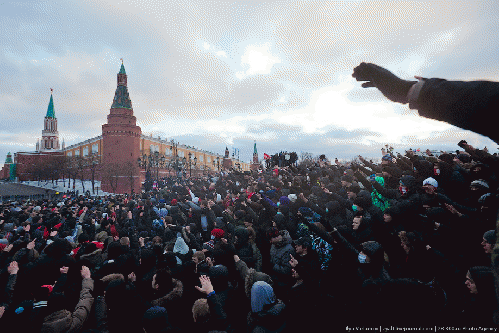
Russia 2010: Nationalism's Revenge Since coming to power in 1999, Vladimir Putin has purposefully instrumentalized Russian imperial nostalgia, national pride and ethnocentric thinking for the legitimization of his authoritarian regime. The repercussions of this strategy are becoming a threat to the integrity of the Russian state, in the 21st century
Thursday, December 23, 2010Russia 2010: Nationalism's Revenge Since coming to power in 1999, Vladimir Putin has purposefully instrumentalized Russian imperial nostalgia, national pride and ethnocentric thinking for the legitimization of his authoritarian regime. The repercussions of this strategy are becoming a threat to the integrity of the Russian state, in the 21st century
