





This piece was reprinted by OpEd News with permission or license. It may not be reproduced in any form without permission or license from the source.
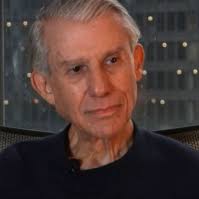
Robert McChesney's "Communication Revolution" - by Stephen LendmanRobert McChesney is a leading media scholar, critic, activist, and the nation's most prominent researcher and writer on US media history, its policy and practice. He's also University of Illinois (Urbana-Champaign) Research Professor in the Institute of Communications Research and the Graduate School of Library and Information Science. In addition, he co-founded (with Dan Schiller) the Illinois Initiative on Global Information and Communication Policy in 2002, hosts a popular weekly radio program called Media Matters on WILL-AM radio, and is the co-founder in 2002 and president of the growing Free Press media reform advocacy organization.
Free Press recognizes that the "current media system is the result of explicit government policies" that special interests representing private investors secretly drafted for themselves. It wants change to democratize the media and increase public participation in it. Toward that end, it seeks to be a "proactive force to advance meaningful media policy in the public interest" and is doing it through a range of vital initiatives. They include challenging media concentration, protecting net neutrality, and since 2003 hosting an annual national conference for media reform that brings together scholars, journalists, activists, policymakers and concerned citizens to discuss and highlight media reform issues and action strategies.
McChesney's work "concentrates on the history and political economy of communication (by) emphasizing the role media play in democratic and capitalist societies" where the primary goal is profits, not the public interest. He's also a frequent speaker, contributor to many publications, and the author or editor of 16 books, including Corporate Media and the Threat to Democracy, the award-winning Telecommunications, Mass Media and Democracy, and the one he says had the "greatest impact of anything I have written," Rich Media, Poor Democracy.
His newest book and subject of this review is titled Communication Revolution - Critical Junctures and the Future of Media. He believes it may be his best one, and Annenberg School of Communication Dean, Machael Delli Carpini, says it is "part media critique, part intellectual history, part personal memoir, and part manifesto."
McChesney's premise is we have "an unprecendented (rare window of opportunity in the next decade or two) to create a communication system that will be a powerful impetus (for) a more egalitarian, humane, sustainable, and creative (self-governing) society." He calls it a "critical juncture" that won't remain open for long. It offers a "historic moment" in a "fight we cannot afford to lose." The stakes for a free society are that high, and stacked against the public interest are powerful forces determined to prevail with friends in high places supporting them.
Nonetheless, McChesney believes "the corporate stranglehold over our media system is very much in jeopardy," citizen actions have successfully challenged them, and in the past three years have won important victories on ownership rules, protecting public broadcasting and standing up to "government and corporate propaganda masquerading as (real) news" and information. However, the most important battle lies ahead - preserving net neutrality and keeping the internet free, open and out of corporate hands.
McChesney notes that the media reform movement has entered a new phase that can democratize the system if citizen actions prevail. It offers the potential for:
-- uncensored wired and wireless "super-fast ubiquitous broadband;"
-- competitive commercial media markets through new ownership policies;
-- a government-supported viable noncommercial and non-profit media;
-- media that informs citizens about candidates in place of corporate-paid advertising that slants information about them for private interests; and
-- limiting commercialism in media content and ending its influence on children through advertising.
This and more is possible at this "critical juncture" where an "ancien regime" is passing, and it's up to public activism to decide what replaces it - if we recognize the opportunity and seize it. To understand the communication revolution, McChesney believes "the field of communication (must) fundamentally rethink its past, present and future." He directs his book to scholars, teachers, students and activists but also to concerned citizens because we're all part of the same struggle that affects everyone.
Who better to lead it than the nation's foremost media scholar and teacher who's spent 25 years in the communications field and is helping to remake it. He reflected on what role he should play and decided his own research is "central to (his) argument," and more importantly, his long "association with media policy activism." He further believes if the communication field doesn't take advantage of this "critical juncture," he "fear(s) not only for the future of the field," but also for the republic now on life support at best.
Crisis in Communication, Crisis for Society
McChesney stresses we're now "in the midst of a communication and information revolution" that will either turn out glorious, a rare window of opportunity lost, or something in between. Crucial policy decisions taken over the next one or two decades will decide how things turn out with the public very much a player in the process. In the past decade, there's been "an unprecedented increase in popular concern about media policies" that are now "everybody's business."
Communication is "central to democratic theory and practice" with new technologies becoming society's "central nervous system" in ways previously unimaginable. McChesney states the opportunity powerfully: "No previous communication revolution (has had as much) promise (to let) us radically transcend the structural communication limitations for effective self-government and human happiness (in) human history." But only if organized people take on organized money to make it happen, and their challenge is daunting considering the opposition.
Scholars are needed as well, but since the mid-1980s communication has settled for a "second-tier role in US academic life." It's been undistinguished by too little research even though there are scores of dedicated people in the field. McChesney believes there's a "gaping chasm between the role of the media and communication in our society," and it's reached a crisis stage. His solution: engaged scholarship on the issues because what happens in academia affects everyone.
A digital revolution is unfolding that will touch all aspects of our lives - economics, politics, culture, organizations, and interpersonal relationships. Whatever system emerges will shape the future for better or worse. At stake is the prospect of a more democratic communications system and society or whether a huge opportunity will be lost.
Communication scholars and everyone must be engaged. They must recognize that we're at a "critical juncture" that's rare and won't last long. Old institutions and practices are ending, what will replace them is still undetermined, and once something new is established it will be hard to change for decades or generations.
McChesney's research shows that media and communication critical junctures are only possible when at least two of the following three conditions exist:
-- a revolutionary new communication technology that's changing the current system; today it's the digital revolution;
-- media content, especially journalism, discredited as corrupted or illegitimate; that's more true now in the US than ever; and
-- a major political crisis creating social disequilibrium when the existing order no longer works and social reform movements arise to change it; the condition engulfs us, no tangible relief is in prospect, and it remains to be seen if growing public angst will translate into outrage and action.
Critical juncture examples in the last century were the Progressive era and the golden age of muckraking with it, The Great Depression when radio broadcasting emerged, and the popular social movements of the 1960s. Each time, radical media critiques accompanied social and political change. Today, we're in another "profound critical juncture for communication" with two of the above three conditions in place and the third on the horizon.
The digital revolution is transforming communication and media practices, journalism is "at its lowest ebb since the Progressive era," and there's hope the third condition will emerge. Our political economy is "awash in institutionalized corruption, growing inequality," a shaky economy, and a militarized state smashing anything in its way. Our changing communications and media system will have a lot to say about how things play out and the societal changes from it. There's hope for the best because "an extraordinary media reform movement" emerged in recent years that's energized "perhaps millions of Americans....engaged with media policy issues" in ways previously unimaginable.
McChesney challenges communications scholars to seize this opportunity - to "broaden their horizons and engage with the crucial political and social issues of the moment." It's the only way forward, he believes, and must be done in an interdisciplinary way, ideally in a communications department, where scholars use different methodologies and research traditions to interact with each other. The field must be emboldened enough to tackle crucial core issues of our times so it can "arrest and roll back the increasing corporate-commercial penetration of higher education" that's inimical to scholarship and the public welfare.
Up to now, communication has been a backwater on university campuses, but McChesney believes "methodological diversity and interdisciplinary approaches (can be) great strength" enough for study in the field to make this discipline "the most desirable place for an intellectual to be on a college campus." It now lacks prestige and is seen as a "hepped-up form of vocational education" compared to traditional social sciences "sit(ting) atop Mount Olympus pondering the fate of the world."
Most striking for the author is how historically the study of communication developed in response to the last century's critical junctures. It came out of the Progressive Era (the Golden Age of media criticism), was crystallized late in The Great Depression and was rejuvenated during the popular struggles of the 1960s. They included movements for civil, women and consumer rights, environmental justice and ending the Vietnam war. Journalism at the time was also attacked as inadequate, and it spawned a proliferation of "underground" newspapers and journalism reviews. Public broadcasting as well came out of this era (and public radio followed) as an alternative to commercial television, but they both failed to live up to their initial promise and are now co-opted and corrupted by corporate money and influence.
McChesney also cites the importance of Justice Byron White's majority 1969 opinion in Red Lion Broadcasting Co., Inc. v. FCC with implications from it for greater First Amendment freedom expressed through the media. He wrote that "people....retain their interest in free speech by radio and their collective right to have the medium function consistently with the ends and purposes of the First Amendment (which is) to preserve an uninhibited market-place of ideas in which truth will ultimately prevail....That right may not constitutionally be abridged either by Congress or by the FCC."
Had politics turned left instead of right in the 1970s (a real possibility at the time), that promise might have been fulfilled. The digital revolution created another opportunity, and it's up to the public to seize it.
The Rise and Fall of the Political Economy of Communication
This is McChesney's personal memoir and his coming-of-age. It began as a graduate student at the University of Washington in 1983 when Ronald Reagan was President and the nation veered sharply right. It was a depressing time for those on the left, and as a result, communication research became uncritical, neutral and stuck to the notion that markets should be "free" and the corporate media system was just, fair, and the only alternative. Conflicting notions were unthinkable as neoliberalism took hold and hardened in the 1990s.
McChesney had other views and believed sticking to "uncritical assumptions was a thoroughgoing abrogation of intellectual responsibility." It wasn't the best of times to say that and doing it meant very shaky prospects for a successful academic career in communications or in any academic capacity. Even distinguished scholars like Noam Chomsky and Edward Herman were dismissed out of hand in even harsher terms.
At the time of the Cold War, "you were either with us or against us," and the options were a free market commercial media or a government run one. McChesney called it "maddening." He and others like him "wanted a new course, independent of corporate or state control," but it was tough selling that position when dominant thinking went the other way.
McChesney then gives considerable space to reviewing scholars who influenced him most. This review can only touch on them. He notes how Marx had "singular importance" for communications scholars and young radical social scientists back in those days. And by it, he means two Karl Marxes and not the one unfairly demonized in public propaganda. One was the socialist activist and enlightened optimist as Edward Herman described him. The other was an "exceptionally intelligent and learned observer of capitalism" and one of the world's greatest ever thinkers and political philosophers.
McChesney believes his influence on critical communication research "remains considerable." He stressed that capitalism was based on the pursuit of profit, or what's called the capital accumulation process. That distinguishes it from feudalism, and accumulation means finding it everywhere possible. Marx also wrote about it as a practicing journalist, and McChesney calls him one of "the greatest journalists of the nineteenth century."
Consider the commercial media then. Much of its history has been the "colonization of....noncommercial cultural practices," using capital to create new ones, and "turning culture into a commodity." Put another way - in commercial spaces, it's anything for a buck and any way to pay labor the least amount to maximize them. Hence, an inevitable class struggle and having to adapt to the market or be crushed by it. McChesney calls this the "indispensable starting point for cultural analysis." We're blasted with this thinking because we're "awash in commercialism" with all its Marxian "commodity fetishism" - branding, advertising and endless promotion to convince us interchangeable products are different when, in fact, they're pretty much the same except in our minds and how ad wizards influence them.
McChesney then reviews the many scholars who influenced his development beginning with Nicolas Garnham, James Curran, Peter Golding and Graham Murdock in the UK. He also learned about George Gerbner's work as editor of the Journal of Communication. Most important was the work of Dallas Smythe and Herbert Schiller. They were dominant senior figures associated with the North American communication political economy. Smythe was decades ahead of his time in "recognizing the need to fuse telecommunications with media in communications research."
Schiller became Smythe's colleague at the University of Illinois before moving to the University of California at San Diego in 1970. He also studied communication as an important component of corporate power and wrote how culture and communication were indispensable parts of the US global economic, political and military agenda. In addition, he argued that commercializing culture had anti-democratic implications, and he and Smythe both were instrumental in developing a new generation of communication scholars.
McChesney cites Chomsky and Herman as well for having played "every bit as large a role for (him) and for many others" in their development in communication and political economy studies. Especially important was the "propaganda model" they developed in their seminal 1988 work, Manufacturing Consent. It consisted of five filters - media ownership, advertising, sourcing, flak and anticommunist ideology - to "filter out the news to print, marginalize dissent (and assure) government and dominant private interests" control the message the public gets. The "filters" remove what's to be censored and leaves in "only the cleansed (acceptable) residue fit to print" or broadcast. McChesney calls the "propaganda model" one of the "signal contributions of the political economy of communication" and goes on to review other notable figures in his development as a scholar/activist in the field.
Among them were C. Wright Mills and his classic book, The Power Elite. Also Jurgen Habermas in directing media studies away from the notion that there are only two ways to organize media - private or state-controlled. He then mentions Harold Innis, Marshall McLuhan, Neil Postman, Alexander Meiklejohn and others and the important contributions each of them made.
Finally, there's the Monthly Review political economy of Paul Baran, Paul Sweezy and Harry Magdoff that highlighted the "nature and importance of monopoly and corporations in modern capitalism." Monthly Review's tradition doesn't assume the market is neutral or benevolent or that class inequality is natural. It also rejects the notion that markets work best. On the contrary, Baran and Sweezy argued the dominant system "tends toward crisis and depression," and history proves it.
They also explained the role of advertising that's simply marketplace manipulation to make interchangeable products look different (or sows ears look like silk purses) and uses spurious claims to do it. Sweezy and Magdoff further analyzed how global capitalism was shifting to a "financialization" system under which financial speculation and debt accumulation were growing at exponential rates. The result is extraordinary instability that may in the end usher in another Great Depression like in the 1930s with some economists and social observers believing it could be the worst one ever and longest lasting. Predictions are never easy, "especially about the future" as film mogul Louis B. Mayer once told an interviewer who asked how well his newest movie would do at the box office.
McChesney says that scholars (aside from Mr. Mayer) produced his foundational knowledge base on which he built his own research and writings. They're considerable and continue to expand with new books, scores of articles and the most important media reform activism anywhere by the man most qualified to lead it in spirit, scholarship and by example.
He begins by defining the political economy of communication subfield and its two components:
First, it must address "in a critical manner" how the media system interacts with and affects the disposition of power in society. What side is it on - the progressive one for reform or that of the ruling elite. "In a critical manner" is the "nub of the matter" for him. The measure he uses relates to the information necessary (from journalism through the media) for self-government and effective freedom. The media has to be a watchdog to keep a check on those in power or want it. It has to separate truth from lies, provide a wide range of information and opinion on vital issues, and get it to the majority of people to be a truly democratic force in a free society.
Second, is an evaluation of elements that shape the media, journalism, "occupational sociology," news and entertainment content - market structures, advertising, labor relations, profit issues, technologies and government policies.
Together, these two components give the field its "distinction and dynamism." That was missing during the 1960s and 1970s critical juncture period. It made its position precarious in the 1980s when leftist voices lost out and official culture "dynamism" veered right. Progressive social change prospects couldn't be bleaker at the time, and neoliberal change made things worse from then to the new millennium. Margaret Thatcher's dictum applied and still does - "There is no alternative (TINA)" with bureaucratic governments the enemies of progress. It was "the end of history" the way those on the right called it and wrote about in bestselling books.
McChesney notes that people on the left and right agreed that "the media system was inexorably attached to corporate capitalism (and that) leftward change (was) unthinkable" for the great majority who went along to get along. Earlier political economy dynamism "lost its mojo", and university administrators disparaged it. It went against the dominant grain and threatened to undermine funding ties to industry. The result was a weak curriculum, fewer jobs, and a poor career choice option in the academy for ambitious young graduate students. By the 1990s, "the political economy of communication was a nonstarter in American communications departments." McChesney called this a "grand irony - in the Information Age" at a time communication as a discipline needed the emergence of political economy as a cornerstone of the field.
Nonetheless, with precious little support and a hostile political environment, a surprising amount of top research was produced from scholars like Smythe, Schiller, Chomsky, Herman and others. They believed it was vital to tell the truth and let the chips fall where they may. Particularly striking was the critique of journalism at the time as a key to understanding the relationship between the media and politics. Two landmark books stood out - Ben Bagdikian's Media Monopoly in 1983 and Herman and Chomsky's Manufacturing Consent in 1988 (already mentioned). Their importance was that both "fundamentally changed the way the news media were regarded" among activists and the greater public. Bagdikian quantified the extent of media concentration but also foretold how journalism would be downsized and fundamentally corrupted.
Manufacturing Consent showed how elite interests control content and use it as a propaganda and anti-democratic tool. It demolished the notion that journalism is neutral and highlighted how controlled it is. The result today is stunning. Journalism has been co-opted, corrupted, and gutted; investigative reporting is practically extinct; political and international reporting has deteriorated; and localism has collapsed. Seventeen years ago, the Philadelphia Inquirer had 46 city reporters. Today it has 24. The Washington Post wrote how state of international coverage keeps being cut back - fewer foreign bureaus and correspondents. In an atmosphere of despair, however, political economic criticism is attracting a resurgence of dynamism in what McChesney calls "media policy studies" at a time of an emerging new critical juncture.
The Historical Turn, Critical Junctures, and "Five Truths"
McChesney chose historical research as his entry to the political economy of communication field. It gave him a chance to be "less abstract and more concrete." It was also a better way to be taken seriously because sound evidence supported him, but when he began his doctoral studies, he wasn't sure how to proceed. He then read Bagdikian's book cited above. It was his "epiphany" as it showed how the "system is responsible, so (it) has to be changed." But that kind of thinking was radically against the grain that believes press freedom means the right to "make as much money as possible in the media business" and the public interest be damned.
Bagdikian showed how corrupted this kind of journalism is to a free and open society. He also made the case that the media system isn't natural or based on a "free market" model. It's only "free" for owners, as journalist AJ Liebling once observed, and politicians corrupt it for their big media allies.
McChesney was struck (maybe horrified) that other nations debated who should control their media, but none of this went on here. So he searched for a historical record and found it "throughout US history." In every case, media issues went unexamined, underexamined or studied with little sense of purpose.
In commercial radio broadcasting (emergent in the 1920s and 1930s), he found loads of evidence of organized opposition to commercial broadcasting at a time many believed this new medium should be public, open and commercial-free. Sharing that view were educators, labor, religious groups, farmers, civil libertarians and journalists. McChesney called it "scintillating" as he build a "mountain(ous)" historical record on what no one had ever written. He said he "found (his) dissertation" topic and "intellectual calling."
In the early 1930s, there was serious (unreported) debate about whether a commercial broadcasting system should be adopted because few people at the time (the onset of The Great Depression) thought a corporate-owned, advertising-supported one was natural and best for the country. Republicans and Democrats were among them, and compelling arguments at the time were that this type system was inimical to democracy that should be uncorrupted by commercial interests. That view lost out because of "the corruption of the process (dominated by big money), not because the American people opted for commercial broadcasting." They never had a say.
The struggle over radio broadcasting was "the last great battle over media in the" country up to the present. Thereafter, until now, it was assumed all of it was fair game for commercialism and profits. The public interest wasn't even a consideration except for a brief period in the 1960s. But McChesney was awakened at the time to the notion of "critical junctures" because he had "stumbled across the one important (one) in American communication history." He wondered if there were others and "began to see everything in a new light."
It directed his attention to earlier periods and battles on structuring the telephone system that ended as an AT&T regulated monopoly. He mentioned the Jacksonian era that produced some of the greatest journalism in our history. He cited Richard DuBoff's work on the telegraph industry's emergence in the 19th century and Richard Kielbowicz's research on the post office and the role it played early on to establish our press system through public subsidies. Later came the struggle for controlling and structuring satellite communication and cable TV from the 1950s to the 1970s. This drew him to the current era, he was encouraged to address it, and he discovered he liked the challenge.
It got him to co-author a book on the global media with Edward Herman and continue writing powerfully important books in the field because media after the mid-1990s was a hot political topic, especially on the left. These type ideas were being popularly received, and new organizations sprung up to address them like the media watchdog group Fairness & Accuracy in Reporting (FAIR) in print and on weekly radio. McChesney put it this way: "Something was happening here." There was newfound interest, but at first only on the fringes. When the 1996 Telecommunications (giveaway) Act passed, there was no public participation and never any coverage in the media so most people hardly knew what was at stake.
Something had to change, and it had to come from the grassroots to put heat on Congress and the FCC. The need was for "aggressive outreach" to organized groups - "labor, civil rights, feminist, environmental, educators, peace activists, health care" - all of which "were getting screwed over by the media" but had no idea media was the problem. McChesney believed that a "radical change in strategy and tactics, and a drastic increase in resources (to do it) were necessary" to whip up public concern for the cutting edge issue of our times.
Then in the 1990s, another world transforming major development occurred - the emergence of the Internet that reflects the "entirety of the digital communication revolution." These were unchartered waters in the first critical media juncture since the 1960s. The Internet "open(s) up space for discussions about fundamental questions of media institutional structures, about technology, about the relationship of media to politics, and about communication history" in ways unseen for decades.
With this development came a new wave of research that revealed five closely related and vitally important truths about communication in the new century:
First, media systems aren't natural. They're created by government policies and subsidies that are strongly influenced by the nation's political economy. Even in capitalist economies there's space for a vibrant a non-profit media, and a "core principle of professional journalism is to provide a safe house for public service in the swamp of commercialism."
Second, the First Amendment doesn't authorize or advocate a corporate-controlled, profit-driven media. It's not an open sesame for limitless gain or government-sanctioned right to ignore the public interest. McChesney cites the "trailblazing research" of C. Edwin Baker on press and speech freedoms. He concluded that court constitutional interpretations see the press as necessary and distinct from people exercising free speech rights as well as from other commercial enterprises. He also sees government playing an active role in creating and structuring the media.
The Constitution doesn't authorize commercial broadcasting, prevent government from making it non-profit, and the High Court's 1969 Red Lion decision gave every American First Amendment rights. A key question now is how the Supreme Court will interpret press and speech freedoms in the digital age when all the rules are changing. McChesney believes sound research and citizen activism are crucial to influencing the judicial outcome.
Third, the American profit-driven media system is not a "free market" one. Media giants today get enormous subsidies in many forms that are "as great or greater than (for) any other industry." Count them:
-- monopoly licenses for radio, TV, satellite TV spectrum, cable TV and telephone worth hundreds of billions of dollars gaining in value annually;
-- free industrial spectrum TV, cable and telephone that companies use internally and are worth billions more;
-- postal subsidies worth still more billions with giant publishers now getting a better deal than small ones;
-- federal, state and local subsidies for film and TV production;
-- all levels of government advertising worth billions annually;
-- allowing advertising expenditures to be a deductible expense;
-- electoral political advertising amounting to 10% of TV ad revenue;
-- and the largest subsidy of all - copyrights that are a government-created and enforced monopoly power to crush competition; plus one other -
-- government lobbying efforts for media giants overseas for deregulated markets and to divert subsidies to benefit US companies.
Fourth, the policymaking process that's key to understanding how our system is structured and subsidized for private interests that don't represent the public. Subsidies, per se, aren't bad. The issue is what they're for, who gets them, who's left out, and what values are promoted.
Fifth, giant corporations control government policymaking, the public is ignored, and media reform can't happen unless the system changes. Today, the FCC, like other government agencies, serves dominant private, not public, interests, and it shows in its rulings. The major media won't report them, of course, and McChesney says "99% of the public has no idea what is going on (and instead) are fed a plateful of free market hokum" about giving people what they want. He further says "the entire rationale for our media system rests upon a fairy tale about free markets....that (in fact are structured) to protect the corporate media system from the public review it deserves" and desperately needs.
Consider "deregulation" as an example that's used along with "free market" mumbo jumbo propaganda. It implies a competitive marketplace when, in fact, it reduces competition by increasing monopoly control in telephony, broadcasting, cable and satellite communication. McChesney cites the key anti-competitive 1996 Telecommunications Act as Exhibit A. Supporters claimed it would increase competition, lower prices, improve service, and Vice-President Al Gore called it an "early Christmas present for the consumer." Hooey.
This was a major piece of anti-consumer legislation. It raised limits on TV station ownership so broadcast giants could own twice as many local stations as before. It was even sweeter for radio with all national limits on station ownership removed, and on the local level one company could now own up to eight stations in a major market. In smaller ones, two companies could own them all. The bill also consigned new digital television broadcast spectrum space to current TV station owners only and let cable companies increase their local monopoly positions. The clear winners were the media and telecom giants. As always, consumers lost out without ever knowing what went on behind their backs.
In the new millennium, however, a historic opportunity for change emerged in the form of another critical juncture spawned this time by the digital revolution. "The Internet, cell phones, and digital technology (are) revolutionizing all forms of communication" that are already threatening some long-established media industries with extinction or requiring they reinvent themselves to survive - all print publications, for example. This is unfolding in 2007, but the future remains uncertain and has yet to be written. It can go either way or maybe both.
One of the great unanswered questions of our times is: does the Internet "qualify as the fourth great communication 'transformation' in human history." Consider McChesney's first three:
-- the emergence of speech and language 50,000 to 60,000 years ago;
-- writing around 5000 years ago that came many thousands of years after agriculture; writing made scientific, philosophical and artistic achievements possible;
-- the printing press that radically reconstructed all major institutions and made possible scientific advances, political democracy, an industrial economy and religion.
It hardly needs saying these changes were enormous in human development, and for McChesney to believe the Internet may one day rank among them (even if not their equal) is mind-boggling to imagine. He makes his case more compelling by broadening the digital revolution to include biotechnology and related scientific developments because their advances depend on information technology.
When someone of McChesney's stature posits these views, we need take note and consider a future not long ago unimaginable, but what will emerge can't be known until it begins unfolding over time. Of equal importance is whether change of this magnitude will be democratic, and that possibility is "very much in our control," McChesney believes. That's because the legitimacy of major journalism is being questioned, and growing millions around the country are doing it. Today, there's more media criticism and activism here than anywhere in the world - an astonishing condition given how absent it was a bare decade ago.
"No one expected (its) first stirrings (would) come over the unlikely issue of low-power FM broadcasting (LPFM)." It spawned hundreds of unlicensed "pirate" operators in the 1990s. The FCC tried to shut them down but couldn't even though pressured by commercial interests. The result was the legalization of 1000 new LPFM non-profit stations in 2000. Commercial broadcasters declared war to stop them and got the House to reduce the allowable number to a fraction of what FCC authorized.
Something then remarkable happened when scores of outraged people demanded Congress allow this vital initiative in citizen broadcasting. They foiled the National Association of Broadcasting (NAB), but only briefly. In the end, NAB won by getting an anti-LPFM provision added to a budget bill in the dead of night before Christmas - much the way other anti-consumer legislation gets passed by hiding it in other bills passed in off-hours and unreported in the mainstream.
Despite defeats and powerful opposition, however, there was "growing popular momentum (on) media issues" in 2002 in spite of a "real disconnect with these developments among communication scholars." That would soon change, but there was no way to know it then. At the time, McChesney knew his efforts were best directed off-campus because that's "where the action was." He had no way to know "all hell was about to break loose," and the possibilities from it are exhilarating.
Moment of Truth
McChesney relates how he, Josh Silver and John Nichols co-founded Free Press in 2002 with a vision he called simple but a bold plan to achieve it. They wanted to reach other organized groups with a stake in reforming the media - labor, feminists, civil rights groups, environmentalists, educators, journalists, artists and private citizens who feel the same as they do but need direction and leadership. Communication scholars weren't at first included, but that would change later on.
The three co-founders thought it would take years to gain momentum and begin having an effect, but they caught a break when the FCC announced it would review media ownership rules in the fall of 2002. Free Press felt certain they'd be relaxed, but "then something wonderful and magical happened." A massive grassroots action arose with three million people energized in opposition. They flooded Congress with letters, e-mails, phone calls and petitions protesting what FCC proposed. Free Press got involved and so did other consumer activist organizations like Consumers Union, the Center for Digital Democracy, the Media Action Project (MAP) and the Consumer Federation of America. Other groups outside Washington joined as well, including the Prometheus Radio Project.
Along with MAP, it won a Third Circuit Court June, 2004 decision in the Prometheus Radio Project v. FCC case that ruled for diversity and democracy over greater media consolidation and ordered the FCC to reconsider its ill-advised ownership rules. They included the kinds of policy changes now resurrected by the current FCC under a new chairman, so the struggle goes on and continued vigilance is needed to prevail.
The 2003 media ownership encounter accomplished a lot for Free Press. It got its members "battle-tested and seasoned" fast and taught them at least six crucial lessons:
-- the public cares enough about media issues to organize around them and become energized and active; many issues motivate them that include a lack of localism in media, "unimaginative musical fare" on radio, poor media coverage on many issues like the Iraq war, few quality programs, inadequate representation of women and people of color as owners and in the media, vulgarity and excess commercialism, and more; one or more of these issues galvanize millions of Americans to react and growing numbers do;
-- people have considerable ability and insight about media issues; they know the media should do more than "amuse, entertain, or hawk products;"
-- media reform can be a "gateway" for public activism; it ignites people to get involved in political activity; it won the last media ownership fight, stopped the Bush administration from paying journalists like Armstrong Williams to corrupt themselves for profit, and it protected Net Neutrality so far by keeping the nation's telecommunication laws from being overhauled by Congress and a real chance for consumer-friendly ones ahead;
-- Internet and digital technologies dramatically change the way political organizing is done that would have been impossible earlier; they greatly lower the cost and make it much easier to be effective with fewer resources;
-- the media reform movement is nonpartisan by being neutral and aims to expand the range and quality of viewpoints; it's also a "bedrock progressive issue" that advocates "establishing the institutional basis for effective and accountable self-government;" and
-- conservatism is unable to address media reform concerns or provide a coherent government philosophy; there's dissension in their ranks that contributed to the Republican 2006 collapse; the movement abandoned its principles for honest and small government, balanced budgets, respecting individual privacy, the rule of law and competitive markets; instead it shows one-sided support for corporate interests, entrenched wealth and corrupted itself by its actions.
McChesney discussed his National Conference for Media Reform initiative and what he learned from the first one held in 2003. First, it's crucial to have credible research be part media reform so first-rate communication scholars must be involved to produce it. Second is the importance of linking scholars to the actual "sausage-making" process on Capitol Hill so the right kinds of legislation get introduced and become law.
In 2004, an important effort toward this got started called COMPASS - the Consortium on Media Policy Studies formed by heads of several key university communication programs. It supports a broad range of media studies by "creat(ing) a critical mass of (doctoral) students working in policy research (and making this effort) a cornerstone of the field (by producing) journals, conferences, and academic lines." In other words, making COMPASS communication research "relevant outside the discipline and the academy." But it's not enough as the struggle for "communication to embrace the critical juncture (goes) beyond researchers at Ph.D. programs; it has to be all-encompassing."
Free Press knew it had to get scholars involved in the second media reform conference in 2005 and did it on short notice with a "solid" 150 of them attending. Key for reform is credible research to take on the "vending-machine" kind by corporations and the FCC. It's contaminated with lies and distortion and must be countered with hard, well-documented facts - the real stuff that can stand up.
Media reform took shape between 2003 and 2007 and exposed the Bush administration's efforts to undermine freedom with a host of illegal and unethical acts:
-- fake news the major media airs promoting administration policies;
-- paying off "professional" journalists to promote these policies in their reporting;
-- having a "ringer" in the White House press corps to ask planted pro-Bush questions;
-- appointing a corrupted crony to head Public Broadcasting and a former head of all US overseas propaganda to run National Public Radio;
-- attempting to cut Public Broadcasting funding;
-- being the most secretive administration in US history by issuing presidential Executive Order 13233 on November 1, 2001; this order violated the 1978 Presidential Records Act and the 1974 Freedom of Information Act. It also violated the Supreme Court's 1977 decision in Nixon v. Administrator of General Services on "executive privilege" eroding over time (12 years set as a limit) and James Madison's 1822 warning that "A popular Government, without popular information, or the means of acquiring it, is but a Prologue to a Farce or a Tragedy; or perhaps both;" and
-- establishing an obscene level of friendly ties to the corporate media to be sure never (or hardly ever) is heard a discouraging word from them on administration policies no matter how outrageous or illegal they are.
These and other acts corrupt a free press, millions know it, and they want change. Central to it is an emerging "classic struggle" very much in play but with no certain outcome over the most important issue of all - the future of the Internet and battle for Net Neutrality. That fight must be won, doing it is daunting, and the opposition is powerful media and other monied interests with friends in high places matched against others supporting the public. McChesney calls Net Neutrality "a defining issue for this critical juncture (and) the First Amendment for the Internet." Media reform activists have drawn a line in the sand. This corporate-free and open space must be defended at all costs. The stakes are that high.
Here's where things now stand. In the late 1990s, cable companies weren't able to get the Clinton FCC to exempt their Internet access from the principles of neutrality. They also lost in court in 2000, but things changed after George Bush took office and appointed Michael Powell FCC head. His Republican commission brazenly redefined cable modem service by calling it an "information service." As a result, they simply exempted cable broadband from the provisions of the 1996 Telecommunications Act.
Consumers and competitors then sued, three years of litigation followed, and in summer 2005 the Supreme Court decided for FCC and the cable giants in National Cable & Telecommunications Assn. v. Brand X Internet Services, so it's now for Congress to address.
After FCC's ruling in 2005, cable modem and telephone DSL broadband service became exempted from net neutrality provisions of the 1996 Act. Only Congress can reverse this, and that's where things now stand. This issue is "the great rallying cry for the media reform movement in 2006 and 2007." Free Press took the lead and formed the SavetheInternet.com coalition that now includes over 800 organizations across the political spectrum united in a common aim. It's an unprecedented effort in the crucial battle ahead, and it's getting results.
In 2006, it derailed telecom legislation the industry tried to ramrod through Congress. It got the democratic FCC members to insist Net Neutrality be a condition of any telecom company merger. They, in turn, got AT&T to agree to these terms when it bought Bell South for $67 billion at end of 2006. Explicit in the deal was Net Neutrality protection for two years.
The battle is back in Congress for a binding solution, not just a staying action to buy time. Senators Byron Dorgan (Democrat) and Olympia Snowe (Republican) reintroduced their bipartisan legislation to make Net Neutrality the law of the land in 2007. House Democrat, Ed Markey, is on-board as well as head of the key subcommittee on telecom legislation. These are positive developments, but the battle remains unresolved so far, and McChesney says we're "entering unchartered waters." In addition, the Republican FCC continues to carry water for the telecom giants and ruled in late December to approve greater media consolidation despite overwhelming public opposition supported by key members of Congress.
Media reform is bipartisan, progressive and goes hand-in-hand with "reform work on campaign finance, voting rights, and electoral systems reform" as part of an all-embracing "democracy movement." The effort itself has "four distinct segments (with) common (uniting) interests" that have made the US the global media reform leader:
-- media policy activism from groups like Free Press (with its growing 400,000 membership) and others that focus on core issues;
-- a growing independent and alternative media revolutionary digital technologies make possible;
-- a growing amount of media criticism from groups like FAIR and others; and
-- trade union and association organizing by independent media owners, creative and communication workers, and journalists to protect their jobs.
Nonetheless, the most formidable barrier to media reform is its opposition - primarily corporate wealth, influence and determination to stop it, and the public be damned. This affects the academy that's so dependent on corporate funding for communication programs that only want industry-friendly research. McChesney cites the need for credible basic, applied and all other kinds, but so far results have been disappointing. That has to change in at least eight areas he lists that include:
-- the policymaking process,
-- a market and media critique to counter dismissive championing of "free market" majesty,
-- a study and critique of advertising and its corrosive effects on society,
-- the political economy of the Internet and the kind of digital world we want and deserve,
-- the study of global communication to close the circle by internationalizing research - and more.
These and other areas (in all realms of teaching such as cultural studies) are vitally needed but must be thorough, ongoing and credible to be effective. Yet it's only a beginning to make communication a prominent academic field and for its research to be vital ammunition in the media reform struggles ahead. But it's only one part of them.
The outcome of this critical juncture is very much in play, and success depends on "the quality and quantity of public participation in core communication policy issues." If corporate interests control the debate, the digital communication future "will be a shadow of what it might be otherwise....It will be their system, not ours."
A viable, independent, free and open media is "indispensable to a true participatory democracy "generating social justice" like the one developing under Hugo Chavez in Venezuela. This requires an active, "informed popular participation in media policymaking." Failure will be catastrophic and a huge opportunity lost at a crucially important time not to fail.
McChesney ends by paraphrasing a hopeful address by sociologist Pierre Bourdieu before he died: "what we need today is to rekindle reasoned utopianism - the notion (that people have the right) to use their imaginations to construct the media (as a necessary starting point), the economy, and the world to suit their democratically determined needs." Why not, and we have "more control over our destiny than we usually do" at critical juncture moments like now. We can't afford to blow it at a time we need a "real communication revolution" and have a great chance to get one.
Stephen Lendman lives in Chicago and can be reached at lendmanstephen@sbcglobal.net. Also, visit his blog site at sjlendman.blogspot.com.






