




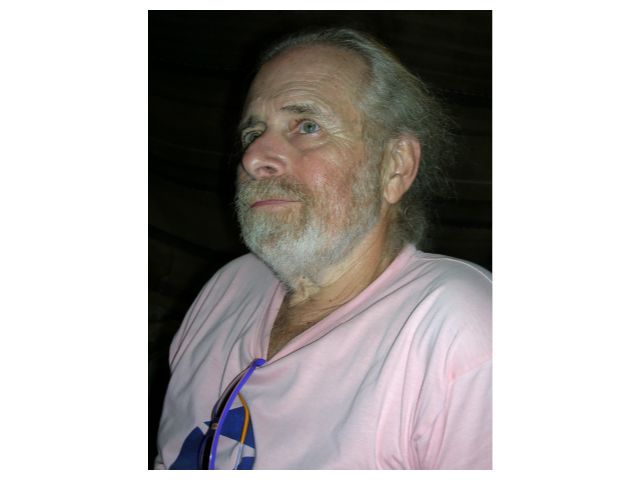

It's hard to avoid labels. I am a proud political dissident. Could the majority of Americans be dissidents? Think of the two-thirds of the country that believe the nation is on the wrong track, the 52 percent that believe politicians are dishonest, the majority that do not vote, and the vast majority that think of themselves as centrists, libertarians, moderates or independents, rather than liberals, Democrats, conservatives or Republicans. And definitely think of the many thousands of Americans out in the streets in recent months to protest the Iraq war, and the larger numbers reading Internet sites to sidestep the mainstream corporate media. Dissidents exist because placing faith in mainstream politicians is as delusional as George W. Bush believing that sending more American soldiers into the Iraq cauldron is justified. It flies in the face of reality, experience and sanity.
The great paradox is that so many people still desperately place faith in politicians. It's as if through magic or divine intervention some super-honest, non-corruptible, brilliant and charming Democrat or Republican can reform the system. And make us feel good again, restore quality to American democracy, and fight economic inequality by rejecting and stomping on all the evil corporate and other special interests that have robbed we the people of our country. Someone that will actually put the interests of working- and middle-class Americans above those of rich and powerful elites.
So what should American dissidents put their faith in?
I have long sought the answer to that question to avoid existential depression and despair. And also to avoid doing what most Americans do to dull the pain: compulsive and distractive consumerism. This is just fine with mainstream politicians. Debt-ridden consumers are so much easier to govern than active dissidents. As George W. Bush has preached on many occasions, neo-patriotism equates to personal borrowing, spending, shopping and consumption.
Other than protesting, I have arrived at two things worth putting my political faith in. And faith is exactly the right word. They require devotion and commitment as an act of faith. There is no way to prove that they will materialize or, if they did, that they would deliver all that is needed. Yet, to keep putting faith in glib, power-hungry politicians is plain nuts, based strictly on actual history.
My first answer is third parties. At critical times in American history third parties have come to the rescue and greatly improved our nation. We need more political competition. We need some third party to become competitive to Democrats and Republicans in local, state and federal elections. Some party that does not advocate fractious issues that divide, but rather presents a set of principles that bring American dissenters together to collectively pursue substantial changes in our political and governmental system.
Yet, third parties have not done well in recent decades, despite having highly committed members, albeit in relatively small numbers. The two-party duopoly has convinced most people to think of votes for third-party candidates as wasted. And so in every election many - and perhaps most - voters end up voting for the lesser evil Democrat or Republican, and eventually regretting it. Many others reject placebo voting. They have properly lost political faith.
My second answer is less understood and just as undermined and sullied by the two-party duopoly and other status quo defenders. It is to compel Congress to obey Article V of the Constitution that says it "shall call a convention for proposing Amendments" if two-thirds of state legislatures apply for one. That numeric requirement is the ONLY constitutional requirement for an Article V convention. Now, here is an absolute truthful fact. Applications have been submitted from 50 states - actually over 500 applications. An official with The John Birch Society - one of the nations's far, far right-wing groups - when confronted with that fact said: "had we ever reached the requisite number of state applications, a convention would indeed have been called." I could not believe that this anti-government, pro-constitution group could actually have such faith in Congress. Or was that just a fanciful excuse for opposing a convention?
Still, we must ask: Why has Congress not called an Article V convention? The answer is simple.
Both Democratic and Republican members of Congress have not wanted to share the constitutional power to propose amendments with the states. Institutionally, Congress has defied Article V to keep power. As Russell L. Caplan noted in Constitutional Brinkmanship: "Congress has never kept regular track of incoming convention applications, and there exists no official catalogue of the applications adopted by the states since 1789." Researchers have had to dig through many documents to build an inventory of state applications (see www.article5.org).
While Congress has acted surreptitiously, many people and organizations on the left and right have steadfastly and openly opposed an Article V convention. What do they have in common with Congress? They want to maintain the status quo that gives them ample opportunities to control government. For decades they have successfully implanted fear into the public consciousness. They especially like to talk about a "runaway convention," able to overturn our Constitution, destroy our democracy, and rob us of our civil liberties and freedoms.
Indeed, at a 1998 House hearing on a bill to amend the Constitution, Republican Charles T. Canady said: "The specter of a 'runaway convention' seems to have been accepted by many as a convincing political argument." In 1995, when both houses of the Virginia legislature passed a resolution to limit Article V conventions, one reason cited was "many states are reluctant to ask Congress to call a national convention for fear of creating a 'runaway convention' that might undermine the delicate constitutional framework the forefathers worked so hard to establish."
Yet some people see the truth. Writing in the Wall Street Journal in 1997, Roger Pilon of the libertarian CATO Institute made these salient points about an Article V convention: "With Nebraska as the only state with a unicameral legislature, it takes majorities in 75 of the 99 state legislative bodies in America to ratify any change in the Constitution. Looked at from the other direction, it takes only 13 such bodies to block any change. ...Are we really to believe that a runaway convention could get its schemes past the public? Are there not 13 bodies in this land that would rise to block all but the most popular of proposals? ...By overwhelming majorities, averaging 75 percent, Americans of every creed and color have come to understand that there is something fundamentally wrong with a system that has resulted, under modern conditions, in our being ruled year in and year out by a class of professional politicians. That situation is neither healthy nor right in a limited, constitutional democracy. Fortunately, the Framers provided a way to do something about it, a way to make substantial change while ensuring that our fundamental principles remain in place."
And Wendell Cox, speaking before the right wing American Legislative Exchange Council in 1995, asserted that "concerns about a 'runaway' convention are entirely unfounded." At the conservative Heritage Foundation James L. Gattuso concluded in 1988 that "there are numerous political and restraints which make it virtually impossible for a 'runaway' convention to rewrite the Constitution against the wishes of the American people."
The Framers gave us the Article V convention option because they anticipated that the federal government could become too powerful or just plain incompetent and ineffective. Dissidents know this has happened. The government has already been hijacked by all kinds of moneyed special interests and corrupt politicians. An Article V convention is like a fourth, temporary branch of the federal government - except that it is really a production of the states aimed at improving the federal Constitution. With enormous public and media attention its delegates would be far more difficult to corrupt by special interests.
What must be emphasized is that an Article V convention would have NO power to change the Constitution or do anything else other than to propose amendments that would have to be ratified by three-quarters of the states.
John de Herrera recently summed it up nicely: "Americans have been conditioned like Pavlov's dog to fear a convention because of what might happen--that it would be some kind of Pandora's box. But what the newspapers and politicians failed to mention is the ratification process. They only told us half the truth, and as the late great Ben Franklin mentioned, half the truth is often a great lie."
All kinds of people say totally stupid and wrong things to keep the public afraid of a convention. Supreme Court Justice Arthur Goldberg, a Democrat, wrote in 1986 that "one of the most serious problems Article V poses is a runaway convention. There is no enforceable mechanism to prevent a convention from reporting out wholesale changes to our Constitution and Bill of Rights." Wait a second! An Article V convention can only make PROPOSALS.
In 1987 arch-conservative Phyllis Schlafly said: "If a constitutional Convention can change our structure of government as defined in Articles I, II, and III, it can also change the Article V requirement that three-fourths of the states are needed to ratify any changes. The Convention of 1787 reduced the number of states required to ratify a change from 100% of the states to 75%, and a Convention in the 1980s could 'follow their example' and reduce it further, to 66%, or 60%, or even 51%." Just that one stubborn problem: An Article V convention can only make PROPOSALS!
On the positive side is how former Attorney General Griffin Bell saw things: "Those who wring their hands over the prospects of a convention run the risk of exposing their elitism, implying that the average citizen cannot be trusted." This resonates with me. As certain as the law of gravity is, is that elitist politicians cannot be trusted.
Another favorable view was that "the convention mode seems preferable, in that it allows amendments to originate with the people themselves, instead of only permitting them to take or reject propositions originated by others [Congress] not especially chosen for the purpose, and which might not be precisely such as they would wish to either accept or refuse." Abraham Lincoln said that in his first inaugural address.
It comes to this: Be a proud dissident. Find a third party to believe in. Take a good look at some new efforts: the Centrist Party (www.uscentrist.org), the Populist Party of America (www.populistamerica.com), and the Whig Party (www.thephoenixchronicles.org). Join the movement to make Congress obey the Constitution and call an Article V convention that could safely re-energize and engage Americans politically. The only thing to fear is that bipartisan lies about an Article V convention will triumph. The job of making American democracy is not done. Doing what our Founders anticipated we would have to do, through a convention, is not the same as undoing what they did. They had faith in us.
Thomas Jefferson was correct. A free people have the right to alter or amend their government when they see fit. Everyone believes in freedom, yet too many fall victim to phony political faith healers. Dissidents keep the faith and want to practice freedom themselves. Just like the people who created our nation.
[Check out the author's new book: www.delusionaldemocracy.com, and for more information on fighting for an Article V convention contact him at articlev at gmail at the usual dot com.]
The great paradox is that so many people still desperately place faith in politicians. It's as if through magic or divine intervention some super-honest, non-corruptible, brilliant and charming Democrat or Republican can reform the system. And make us feel good again, restore quality to American democracy, and fight economic inequality by rejecting and stomping on all the evil corporate and other special interests that have robbed we the people of our country. Someone that will actually put the interests of working- and middle-class Americans above those of rich and powerful elites.
So what should American dissidents put their faith in?
I have long sought the answer to that question to avoid existential depression and despair. And also to avoid doing what most Americans do to dull the pain: compulsive and distractive consumerism. This is just fine with mainstream politicians. Debt-ridden consumers are so much easier to govern than active dissidents. As George W. Bush has preached on many occasions, neo-patriotism equates to personal borrowing, spending, shopping and consumption.
Other than protesting, I have arrived at two things worth putting my political faith in. And faith is exactly the right word. They require devotion and commitment as an act of faith. There is no way to prove that they will materialize or, if they did, that they would deliver all that is needed. Yet, to keep putting faith in glib, power-hungry politicians is plain nuts, based strictly on actual history.
My first answer is third parties. At critical times in American history third parties have come to the rescue and greatly improved our nation. We need more political competition. We need some third party to become competitive to Democrats and Republicans in local, state and federal elections. Some party that does not advocate fractious issues that divide, but rather presents a set of principles that bring American dissenters together to collectively pursue substantial changes in our political and governmental system.
Yet, third parties have not done well in recent decades, despite having highly committed members, albeit in relatively small numbers. The two-party duopoly has convinced most people to think of votes for third-party candidates as wasted. And so in every election many - and perhaps most - voters end up voting for the lesser evil Democrat or Republican, and eventually regretting it. Many others reject placebo voting. They have properly lost political faith.
My second answer is less understood and just as undermined and sullied by the two-party duopoly and other status quo defenders. It is to compel Congress to obey Article V of the Constitution that says it "shall call a convention for proposing Amendments" if two-thirds of state legislatures apply for one. That numeric requirement is the ONLY constitutional requirement for an Article V convention. Now, here is an absolute truthful fact. Applications have been submitted from 50 states - actually over 500 applications. An official with The John Birch Society - one of the nations's far, far right-wing groups - when confronted with that fact said: "had we ever reached the requisite number of state applications, a convention would indeed have been called." I could not believe that this anti-government, pro-constitution group could actually have such faith in Congress. Or was that just a fanciful excuse for opposing a convention?
Still, we must ask: Why has Congress not called an Article V convention? The answer is simple.
Both Democratic and Republican members of Congress have not wanted to share the constitutional power to propose amendments with the states. Institutionally, Congress has defied Article V to keep power. As Russell L. Caplan noted in Constitutional Brinkmanship: "Congress has never kept regular track of incoming convention applications, and there exists no official catalogue of the applications adopted by the states since 1789." Researchers have had to dig through many documents to build an inventory of state applications (see www.article5.org).
While Congress has acted surreptitiously, many people and organizations on the left and right have steadfastly and openly opposed an Article V convention. What do they have in common with Congress? They want to maintain the status quo that gives them ample opportunities to control government. For decades they have successfully implanted fear into the public consciousness. They especially like to talk about a "runaway convention," able to overturn our Constitution, destroy our democracy, and rob us of our civil liberties and freedoms.
Indeed, at a 1998 House hearing on a bill to amend the Constitution, Republican Charles T. Canady said: "The specter of a 'runaway convention' seems to have been accepted by many as a convincing political argument." In 1995, when both houses of the Virginia legislature passed a resolution to limit Article V conventions, one reason cited was "many states are reluctant to ask Congress to call a national convention for fear of creating a 'runaway convention' that might undermine the delicate constitutional framework the forefathers worked so hard to establish."
Yet some people see the truth. Writing in the Wall Street Journal in 1997, Roger Pilon of the libertarian CATO Institute made these salient points about an Article V convention: "With Nebraska as the only state with a unicameral legislature, it takes majorities in 75 of the 99 state legislative bodies in America to ratify any change in the Constitution. Looked at from the other direction, it takes only 13 such bodies to block any change. ...Are we really to believe that a runaway convention could get its schemes past the public? Are there not 13 bodies in this land that would rise to block all but the most popular of proposals? ...By overwhelming majorities, averaging 75 percent, Americans of every creed and color have come to understand that there is something fundamentally wrong with a system that has resulted, under modern conditions, in our being ruled year in and year out by a class of professional politicians. That situation is neither healthy nor right in a limited, constitutional democracy. Fortunately, the Framers provided a way to do something about it, a way to make substantial change while ensuring that our fundamental principles remain in place."
And Wendell Cox, speaking before the right wing American Legislative Exchange Council in 1995, asserted that "concerns about a 'runaway' convention are entirely unfounded." At the conservative Heritage Foundation James L. Gattuso concluded in 1988 that "there are numerous political and restraints which make it virtually impossible for a 'runaway' convention to rewrite the Constitution against the wishes of the American people."
The Framers gave us the Article V convention option because they anticipated that the federal government could become too powerful or just plain incompetent and ineffective. Dissidents know this has happened. The government has already been hijacked by all kinds of moneyed special interests and corrupt politicians. An Article V convention is like a fourth, temporary branch of the federal government - except that it is really a production of the states aimed at improving the federal Constitution. With enormous public and media attention its delegates would be far more difficult to corrupt by special interests.
What must be emphasized is that an Article V convention would have NO power to change the Constitution or do anything else other than to propose amendments that would have to be ratified by three-quarters of the states.
John de Herrera recently summed it up nicely: "Americans have been conditioned like Pavlov's dog to fear a convention because of what might happen--that it would be some kind of Pandora's box. But what the newspapers and politicians failed to mention is the ratification process. They only told us half the truth, and as the late great Ben Franklin mentioned, half the truth is often a great lie."
All kinds of people say totally stupid and wrong things to keep the public afraid of a convention. Supreme Court Justice Arthur Goldberg, a Democrat, wrote in 1986 that "one of the most serious problems Article V poses is a runaway convention. There is no enforceable mechanism to prevent a convention from reporting out wholesale changes to our Constitution and Bill of Rights." Wait a second! An Article V convention can only make PROPOSALS.
In 1987 arch-conservative Phyllis Schlafly said: "If a constitutional Convention can change our structure of government as defined in Articles I, II, and III, it can also change the Article V requirement that three-fourths of the states are needed to ratify any changes. The Convention of 1787 reduced the number of states required to ratify a change from 100% of the states to 75%, and a Convention in the 1980s could 'follow their example' and reduce it further, to 66%, or 60%, or even 51%." Just that one stubborn problem: An Article V convention can only make PROPOSALS!
On the positive side is how former Attorney General Griffin Bell saw things: "Those who wring their hands over the prospects of a convention run the risk of exposing their elitism, implying that the average citizen cannot be trusted." This resonates with me. As certain as the law of gravity is, is that elitist politicians cannot be trusted.
Another favorable view was that "the convention mode seems preferable, in that it allows amendments to originate with the people themselves, instead of only permitting them to take or reject propositions originated by others [Congress] not especially chosen for the purpose, and which might not be precisely such as they would wish to either accept or refuse." Abraham Lincoln said that in his first inaugural address.
It comes to this: Be a proud dissident. Find a third party to believe in. Take a good look at some new efforts: the Centrist Party (www.uscentrist.org), the Populist Party of America (www.populistamerica.com), and the Whig Party (www.thephoenixchronicles.org). Join the movement to make Congress obey the Constitution and call an Article V convention that could safely re-energize and engage Americans politically. The only thing to fear is that bipartisan lies about an Article V convention will triumph. The job of making American democracy is not done. Doing what our Founders anticipated we would have to do, through a convention, is not the same as undoing what they did. They had faith in us.
Thomas Jefferson was correct. A free people have the right to alter or amend their government when they see fit. Everyone believes in freedom, yet too many fall victim to phony political faith healers. Dissidents keep the faith and want to practice freedom themselves. Just like the people who created our nation.
[Check out the author's new book: www.delusionaldemocracy.com, and for more information on fighting for an Article V convention contact him at articlev at gmail at the usual dot com.]






