
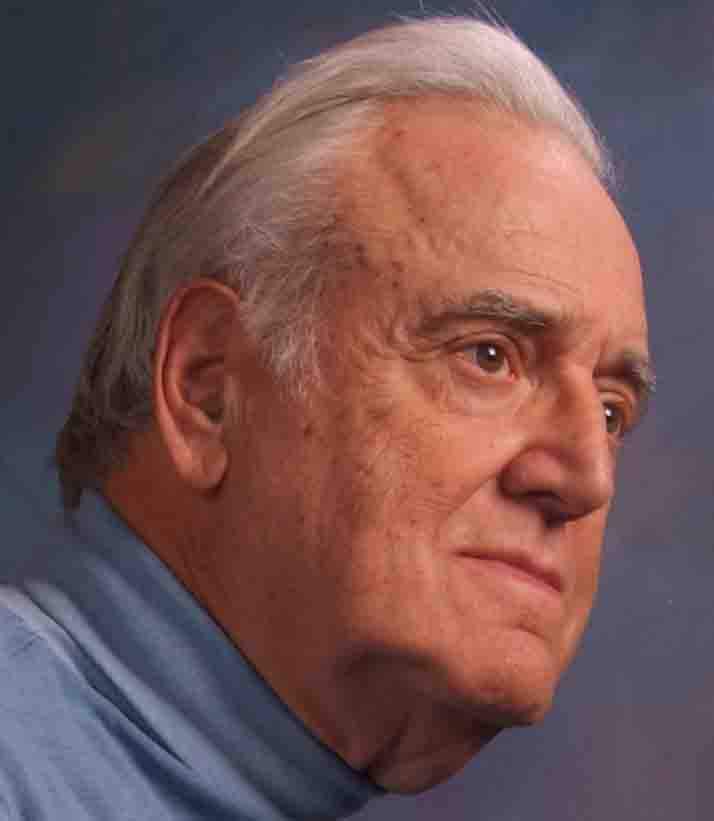

Adapted from Chapter 5 of "Conscience of a Progressive" a book in progress. See the book for references and citations.
Libertarians often tell us that personal voluntary restraint and charitable contributions are morally preferable solutions to social problems than government coercion and taxation. Ronald Reagan probably had this in mind when he said in his first inaugural address that "government is not the solution ï ¿ ½ government is the problem."
To be sure, personal self-control and charity are virtues, while political coercion and taxation are not.
The trouble is, in numerous and significant instances, volunteerism doesn't work.
Example: The Catalytic Converter
Consider the catalytic converter as a solution to the problem of air pollution. (The numbers are "made up" as accuracy is not important. This is a hypothetical "model" based roughly on generally known technology and demographics).
The catalytic converter is a device placed on a vehicle's exhaust system which eliminates (let us assume) 90% of exhaust pollution. Assume further that purchase and installation of the unit costs $200. In the Los Angeles airshed (near my residence) are ten million vehicles.
Would I be willing to pay $200 to clean up the air in my neighborhood? In an LA minute! Will I clean up the air by volunteering, all by myself, to install a catalytic converter? No way! If I install the device, I will reduce the pollution by slightly less than one ten-millionth. In effect, no reduction at all. And I will be out $200. To put the matter bluntly: in cases such as this, volunteerism is not only futile, it is irrational. The solution is obvious and compelling: require that all vehicles have working catalytic converters. This has in fact been done in California. It's the law. Result: the air pollution in LA has been dramatically reduced, to the relief of the vast majority of Angelinos, and at an individual cost acceptable to that majority.
If a proposition to repeal the catalytic converter requirement were put on the ballot, it would be soundly defeated (assuming the public was correctly informed). The solution is straightforward, rational and popular: "mutual coercion mutually agreed upon," as the late Garrett Hardin put it, imposed and enforced by "big government."
This solution is a cost to the individual ("bad for each"), but the "social benefit" is well-worth it ("good for all").
Example: The Support of Public Safety Agencies
Consider next the voluntary support of public safety agencies. Presumably, most of you have received phone calls from a member of the local police and fire departments, asking for donations to assist them in their work. This is a recent phenomenon, for which we can all thank the resurgent Right. I doubt that I ever received such a solicitation before 1981, when Ronald Reagan told us all that "government is the problem, not the solution."
When I receive such a call, I agree to make a small donation. But then I ask, "Isn't this the sort of thing that we pay our taxes for?" Invariably the individual on the other end agrees and we commiserate about the shameful neglect of our public safety institutions.
The solicitation of private contributions in support of public institutions amounts to an excise tax on charity and civic responsibility. The individual citizen who declines to contribute is as safe from crime and as protected from fire as those who contribute. (This is the well-known "free rider" problem, for which I have yet to hear a plausible reply from the libertarians). Voluntary financing of public safety agencies is unjust on its face. Clearly, those who benefit from these services should be required to support them, according to these individuals' ability to pay. The method devised to accomplish this purpose is well-known to us all. It's call "taxation."
Social Good and "The Commons"
Air quality, which is improved by mandatory use of catalytic converters, is what is known as a "common good," or more briefly, a "commons." Other "material" or "resource" commons include, water, oceans, "open range" pastures, public parks, etc. But there are also "non-material" commons that are equally, if not more important to the quality of social life and the justice of a political order. These include the rule of law, the quality and level of education in the community, trust in the government and the prevailing sense among the citizens of that government's legitimacy, the degree of civility and the "moral tone" extant in the society. When unscrupulous individuals act to their own advantage, heedless of the consequences to others, they can degrade "the moral commons" ï ¿ ½ the mutual respect and constraint that is implicit in every well ordered society. For example, when outlaws are unpunished, the rule of law suffers. Worse still, when corrupt politicians and government officials put themselves above the law and betray the citizens by accepting bribes from special interest and by violating the Constitutional protections of those citizens, they erode the trust that is essential to good government. And when there is reason to believe that the ballot has been compromised and there are no offsetting procedures to assure the accuracy of the ballot, the very legitimacy of the government and of legislation is diminished.
In a just political order, based on the principles of our founding documents, government and the rule of law are the common "property" of the citizens at large, and of no class or faction in particular. This principle is stated explicitly in the Declaration of our Independence: "to secure these rights, governments are instituted among men, deriving their just powers from the consent of the governed."
The libertarian Right insists that so-called "public goods" and "public interest" are nothing more than simple summations of private goods and interests. Indeed, as Ayn Rand put it, "there is no such entity as 'society,' since society is only a number of individual men... The common good" (or "the public interest") is an undefined and undefinable concept..." ("The Virtue of Selfishness").
Good for Each, Bad for All
In fact, and contrary to libertarian dogma, in numerous identifiable cases (which I discuss in "Conscience of a Progressive"), the individual pursuit of optimum personal freedom and benefit can be detrimental to society at large ï ¿ ½ "good for each, bad for all." Conversely, constraints upon individuals may result in benefits for the society ï ¿ ½ "bad for each, good for all." For example, consider the case of antibiotics which medical practice has clearly demonstrated lose their potency the more they are prescribed. The widespread use of antibiotics, while clearly to the advantage of each patient, results in loss of potency which is to the disadvantage of all patients. Thus it is "in the public interest" to discourage the use of antibiotics by non-critical patients. And as we saw in our opening example, because it is to the advantage of all citizens (i.e., in "the public interest") to breathe clean air, each citizen is justly required to have a catalytic converter on his vehicle. Clean air is thus a "public good" which can be enhanced through the imposition of "personal bads" -- the cost of mandatory catalytic converters. Clearly "the public interest" and "public goods" are in these cases, as well as many others, distinguishable from the summation of private interests and goods.
The coordinate principles, "good for each, bad for all" and "bad for each, good for all," resound throughout the history of political thought -- from Aristotle, through Thomas Hobbes, Locke, Jean Jacques Rousseau, and Thomas Jefferson, on to the present day. Indeed, the practical applications of these principles are implicit in successful communities, from the present extending far back into pre-history. They are the key to the survival of communities of social insects such as bees and termites, and of social animals such as wolf packs, wherein evolution, not rational deliberation, provides their validation.
And yet, amazingly, those who presume to call themselves "conservatives," reject these principles, in favor of another: "good for each, good for all." This principle of the political right, exemplified by "trickle-down economics" and the assurance that "the rising [economic] tide raises all boats," is immediately appealing. Who would not desire that collective "goods" should result from the achievement of personal well-being? And in fact, the progressive will readily admit that many human endeavors that achieve individual benefits, also benefit society at large. "Good for each, good for all" is true in particular and identifiable cases, such as artistic creation, technological invention, and yes, business entrepreneurship.
Is there a simple and unfailing means to distinguish "the invisible hand" (good for each, good for all), from "the back of the invisible hand" (e.g. the tragedy of the commons, "good for each, bad for all")? When I posed that question to my late friend, Garrett Hardin, he replied "that is a Nobel Prize winning question." Until that Nobel Prize winning genius comes along, we must continue to do what the empirical and pragmatic progressives have routinely done: experiment. If individual behavior appears to have socially destructive results, try out a meliorative policy or law, and if it "works" for society -- if we find a device that benefits society at an acceptable cost to individual citizens -- then fine, we'll keep it. If not, try something else. And if it becomes clear that the best policy is for government and the law to leave well-enough alone (good for each, good for all) -- for example, maintaining the separation between church and state, or refusing to prohibit sex acts between consenting adults -- then let non-interference be the government policy. Right-wing propaganda to the contrary notwithstanding, progressives are not eager to expand government interference and control over the private lives of its citizens. It is not the progressives that are demanding Constitutional amendments against gay marriage, abortion, and flag burning.
The error of the libertarian Right resides in its embrace of the principle "good for each, good for all" as dogma, to be applied a priori to society and the economy, virtually without exception. By rejecting, implicitly, the principle of "good for each, bad for all" and vice versa, the Right recognizes no personal price that must be paid for the maintenance of a just social order, and pays no heed to the social costs of one's personal "pursuit of happiness."
For theirs is a radically reductive view of society. According to the "free-market absolutist" faction of the falsely-labeled "conservatives" (better, "regressives"), an optimal society emerges "naturally" and spontaneously out of an aggregate of individuals in exclusive pursuit of their personal self-interest. To the regressive, "the common good" and "public benefit" are myths. Indeed, so too is society itself, as Ayn Rand insists. Accordingly, we are asked to believe, so-called "society" is merely an aggregate of private individuals, like a pile of sand grains, occupying contiguous space. Ideally, say the regressives, all associations are strictly voluntary. And because "there is no such thing as society," there are no systemic social harms. It follows that those who are poor are not "victims" of society or the economy, they choose to be poor due to their personal moral failings.
The Necessity of Government
For the libertarian right, the only legitimate functions of government are the protection of the three fundamental rights of life, liberty and property. Hence, the only legitimate disbursement of tax revenues is for the military (protection from foreign enemies), the "night watchman" police (protection from domestic enemies), and the courts (adjudication of property disputes). Because there are no "public goods," compulsory tax payment for public education, research and development of science and technology, medical care, museums, libraries, promotion of the arts, public and national parks, etc., is the moral equivalent of theft. According to this account of human nature and society, with the exception of the just noted protections of life, liberty and property, there is nothing that government can accomplish that private initiative and the free market cannot achieve with better results.
No regulation, no governmental functions beyond basic protection of life, liberty and property, no taxes except to support these minimal functions. Any governmental activity beyond this should, in Grover Norquist's words, be "drowned in the bathtub."
In contrast, the progressive views society as more than the sum of its parts; it is what philosophers call an "emergent entity," with properties and principles of the whole distinct from those of its components just as, analogously, chemical compounds (e.g. water and salt) have properties distinct from their component elements. In this sense society and its economy are "systems" like a computer, an engine, an ecosystem, a living language, consisting interacting and interdependent parts which accomplish together what none can accomplish alone. If the social system malfunctions, there are innocent victims -- the poor, the oppressed, the addicted, the uneducated -- and the system is thus in need of adjustment or repair or even overhaul and redesign. These corrections are best diagnosed and treated when the system is examined and analyzed, as a system, and not as an amalgam of distinct individuals. And diagnosis, adjustment, regulation, repair, overhaul, redesign of the community-entity are legitimate functions of a government established to act in the interests of all.


 59 59
  
The Public Interest and the the Limits of Volunteerism. |
|
| Rate It | View Ratings |
Ernest Partridge Social Media Pages: 


Dr. Ernest Partridge is a consultant, writer and lecturer in the field of Environmental Ethics and Public Policy. Partridge has taught philosophy at the University of California, and in Utah, Colorado and Wisconsin. He publishes the website, "The (more...)
The views expressed herein are the sole responsibility of the author
and do not necessarily reflect those of this website or its editors.




OpEdNews depends upon can't survive without your help.
If you value this article and the work of OpEdNews, please either Donate or Purchase a premium membership.
STAY IN THE KNOW
If you've enjoyed this, sign up for our daily or weekly newsletter to get lots of great progressive content.
If you've enjoyed this, sign up for our daily or weekly newsletter to get lots of great progressive content.
Most Popular Articles by this Author: (View All Most Popular Articles by this Author)
Debate Creationism vs. Evolution? Why Bother?
Bungling Toward Oblivion -- A Letter to My Friends in Russia
The Fix Is In -- Again!
Can the GOP Steal The Election Again? You Betcha!
"Country First?" ? The Question of Loyalty
Let's End the New Cold War Before it Heats Up
To View Comments or Join the Conversation:
