







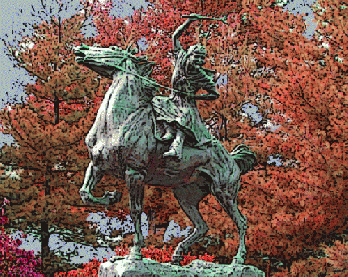
Sybil Ludington, statue by Anna Hyatt Huntington (color added)
(Image by Wikimedia (Anthony 22)) Details DMCA
April 18th was my grandmother's birthday, which was why she often regaled us grandchildren with a retelling of Henry Wadsworth Longfellow's famous poem, Paul Revere's Ride :
Listen, my children, and you shall hear
Of the midnight ride of Paul Revere,
On the eighteenth of April, in Seventy-Five;
Hardly a man is now alive
Who remembers that famous day and year
While many Americans today believe Longfellow's version as gospel, the poet took significant liberties in his retelling of the story, as Revere was one of many dozen riders that night, some of whom even rode longer distances.
Even Revere's artistic contributions -- his unequalled silversmithing skills -- have been eclipsed, undeservedly, by the ghostly vision of him galloping through the shadows.
At the time of Revere's ride, many of the Patriot leaders, including John Hancock and Samuel Adams, had bounties on their heads, and had left Boston to hide out in the countryside. So it was to warn them of possible impending capture or assassination that both Paul Revere and William Dawes were dispatched from Boston to ride separate routes to Lexington.
One if by land, and two if by sea,
And I on the opposite shore will be
Ready to ride and spread the alarm
Through every MIddlesex village and farm
Next Page 1 | 2 | 3 | 4 | 5 | 6 | 7
(Note: You can view every article as one long page if you sign up as an Advocate Member, or higher).
 2
2
 2
2
 1
1






