






This piece was reprinted by OpEdNews with permission or license. It may not be reproduced in any form without permission or license from the source.
Occupy Wall Street's Act II
Hopefully it's a good second act.
by Stephen Lendman
Grassroots activism takes time to grow. Broad-based participation is vital. Issues must be clearly defined. Leadership is needed. Major obstacles must be overcome.
Avoiding being co-opted, diverted, divided, and/or subverted are key. So is staying the course because major struggles aren't won short-term. Achieving social justice is the mother of them all, especially in today's environment.
What began last September waned during winter cold. Perhaps May Day protests began Act II. Only the fullness of time will tell.
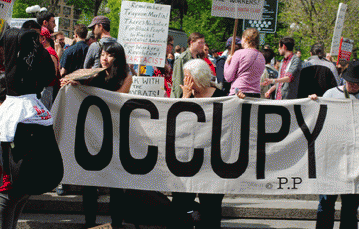
Thousands rallied in cities across America. Public anger drew them. Demonstrations and marches were held. Issue one is social justice. Getting it's another story. Since last September, nothing has been achieved.
Expect worse ahead. Post-elections, political Washington plans huge domestic spending reductions on top of those enacted earlier.
Next Page 1 | 2 | 3 | 4 | 5 | 6 | 7 | 8 | 9
(Note: You can view every article as one long page if you sign up as an Advocate Member, or higher).
 2
2
 1
1
 1
1






