| Back OpEdNews | |||||||
|
Original Content at https://www.opednews.com/articles/Famine--Endless-War-Today-by-Kevin-Anthony-Stod-Arming-Saudi-Arabia_Corporations-Military-Industrial-Complex_Corporations-Sales-Arms_Endless-War-170409-773.html (Note: You can view every article as one long page if you sign up as an Advocate Member, or higher). |
|||||||
April 9, 2017
Famine & Endless War Today--WHAT ARE YOU GOING TO DO ABOUT IT?
By Kevin Anthony Stoda
Nowadays, over 17 million people are under threat of famine in war-torn Yemen, making it one of the world's worst hunger crises. Please, try to get your governments to start giving aid and food-- not weapons of war --to the parties and victims involved in the wars and conflicts of Yemen. CLAMOR LOUDLY, PLEASE--A CRY FROM THE BORDER OF YEMEN.
::::::::
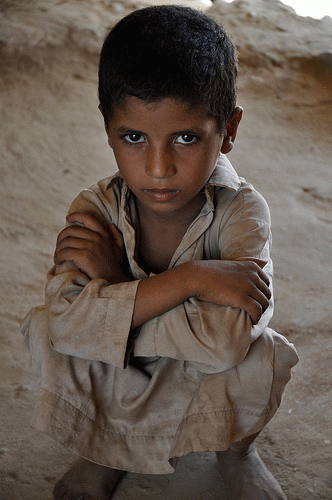
What's it like living next door to War-Torn Yemen? (Part 4): The Sequal 2-plus years-On: Famine & Endless War
by Kevin Stoda, Salalah, Oman
Several years back I felt that I needed to type out a set of documents from the silent side of the border of Yemen--namely the Dhofar region of Oman. This is the region where I live and work and which borders Yemen. However, mo there is still a buffer of many hundreds of kilometers from this region and most of the ongoing war or conflict led by Saudi Arabia and the UAE. These human catastrophes are mostly now being carried out largely (but not exclusively) in the far-distant Houthi held regions of Yemen.
Now, again I feel a new set of documents need to be published on: What's it like living next door to War-Torn Yemen? The following is the first of this new series as yemen faces the worst famine in its history.
Two factors lead me to again tackle this topic. First, the United Nations has called on all countries of the world to aid the famine victims in Yemen. The youngest of the Yemeni population are the hardest hit and are dying at an alarming rate even as bombings continue in Yemen. One recent visitor to Yemen on behalf of peace groups noted, "The U.S. is arming the Saudis, that have led to the catastrophic situation in Yemen where one child is dying every single 10 minutes." So, this story must be told and retold until Americans comprehend it.
Second, President Trump appears to be expanding and accelerating the USAs involvement in the region. Just look at what he did in Syria last week. One long-time Middle East observer has noted: "The U.S. has been incinerating people for years with drone strikes, killed over 200 people in Mosul just recently." Meanwhile, he same has been going on in Yemen--first in the last months of the Obama Administration (who set an armament selling record with the Saudis) and now under the new Trump administration.
In January of this year, Trump okayed an ill-thought-out and ill-carried-out mission to Yemen which led to the deaths of 13 or more children--and dozens of other family members (and this was not even a Houthi-supporting village). On recent visitor in Yemen explains, "That village has essentially been abandoned now, because not only--after that raid happened, not only was the entire village strafed and more than 120 livestock were killed, but the U.S. went back a month later, at the beginning of March, and bombed it for four consecutive nights, both with drone strikes and helicopter gunfire, and killed two more children and several more adults. So the last person that I spoke to who was living there, Sheikh Aziz al Ameri, he then left the village and is now living under trees several miles away."
SHOCK AND AWE & WAR CRIMES OR REMAKING AL-QAEDA
Such shock-and-awe tactics eventually got America no-where with Iraq in the 2004-2010 period. Such shock-and-awe tactics are similarly not likely to end this civil war in Yemen--a war that both Saudi Arabia and the UAE have been bungling through for over two and a half years now. Yet, with a record 700 billion dollar defense budget, Trump's administration appears ready to raise the stakes and sell the Saudis more weapons than ever in 2017. [Please, readers, put pressure on your government to stop this criminal non-sense.]
Meanwhile, the USA's policy is simply to continue marching quagmire-like foreward in Yemen. For example, with the January 2017 US Marine fiasco, the USA appears dead-set (along with its KSA and UAE cohorts) on helping Al-Qaeda to gain more and more recruits in Yemen.
Iona Craig reported on Democracy Now after she had visited the site of the bungled Trump Marine Attack in January of this year. Craig stated, "So, the impact on the local population, who were essentially on the same side as U.S. in the civil war in Yemen at the moment [of the misguided attack on January] --they were fighting against the Houthis, which is exactly what the U.S. has been doing over the last two years--they've not only alienated the entire local population around there, but caused to huge amount of anti-American sentiment. And now tribesmen, who were not al-Qaeda, who are not even al-Qaeda now, but were not before, but are now quite willing and wanting to fight the Americans as a result of this and a result of them killing their children and their wives."
Craig disputes the claims by Trump's White House that the raid, which had left nearly 30 dead, was in any way successful in gathering intelligience. She claims this because it is not even clear that the USA marines involved even got into the houses they were shooting into.
Meanwhile, weapons shipments by the USA into the Middle East are increasing greatly under Trump. Craig notes, "In Yemen, [the USA's influence] it's huge. The U.S. is the biggest exporter to Saudi Arabia, and it's big business for the U.S. But, of course, we know that the majority of civilian casualties in the war in Yemen have been caused by Saudi-led airstrikes. And the U.S. has a huge influence over this. They were--those precision-guided weapons were suspended at the end of last year, and now we're looking at a resumption of that, where the U.S. does actually have influence over Saudi Arabia--not just over Saudi Arabia, but also the continuation of this war, for the weapons that it sells to them and to the logistical support it gives to the Saudi-led coalition in the terms of refueling and in the terms of targets, as well."
AUSTERITY AND LABOR-MARKET FORCES IN OMAN TODAY
Here in Oman, the government continues to accept the treatment of casualties from the Yemeni civil war in its hospitals, but at the same time it is expelling many illegal workers in Oman. Among some of these workers targeted for expulsion are included Yemeni nationals, some whom have been working here for years.
NOTE: Oman, like Europe and the United States, has taken a stiff stand on illegal immigrants in the past few years and now is trying to make room for young Omanis to enter the work-force by trying to get rid of excess competition in the labor market. This developmental need in the Omani labor market is now combined with government austerity measures caused by the turn-down in oil production due to the global petroleum glut. This combination of the need to employ the young Omani popluation and the financial austerity practices caused by overdependence for decades on oil has led to a tightening on border restrictions with all of its neighbors, including Saudi Arabia, Yemen, and the UAE.
Oman continues to seek or offer to play the role of peacebroker in the region, but Saudi Arabia, the UAE and even the USA are not asking Oman to take center staget in this process. Meanwhile, infighting between the various war-making factions in Yemen often make it hard for Omanis to intervene more aggressively in offering aid, assistance and profer more solutions.
One reason for this is because once-upon-a-time (in the 1960s through the early 1990s), Yemen had been divided into several countries and this had led to civil war in Oman. Worse, it had led to retiring of one Sultan of Yemen. The current Sultan of Oman does not wish to leave the country in any great predicament. He is aging and at times quite ill. So, in this political-economic climate, Omanis do not want to take on more duties than are necessary in the region.
Recently, Foreign Policy magazine has published an artical entitled The Omani Succession Envelope, Please . The subtitle of this piece by Simon Henderson says it all: "Sultan Qaboos is ailing, and nobody knows who might take over his role as mediator in the Middle East's most explosive conflict."
It is absolutely shameless that Donald Trump is ignoring Oman's potential to assist in ending the crisis between Yemen and Saudi Ararbia-UAE. Oman, which has good relations with all parties in the region, could help negotiat settlement of struggles in Yemen and even in Syria, i.e. if it were appropriately asked to get engaged more to do so.
MEANWHILE FAMINE IN YEMEN & HORN OF AFRICA
This negligence from the world community does not mean, however, that Omanis are ignoring humanitarian duties in neighboring Yemen. This contrasts greatly with the actitivities and policies of the governments of the United States, the Kingdom of Saudi Arabia, and the UAE.
In February 2017, I had a surprise vistor from an American researcher of solutions for the many international aid issues related to Oman and the starving victims in Yemen, our neighbor to the south and west. This researcher had just returned to Djibouti on similar cursory visits. In response to his query, I asked my students whether there was a well-known collection point for assistance to Yemeni victims of war and suffering. My students assured me that their were collection centers and their families supported them.
Since 2015, the International Committee of the Red Cross has operated out of Salalah, Oman. I recently came across a newspaper report that tons and tons of assistance for Yemen had passed through the Port of Salalah. (Oman has 4 or 5 major ports and it is assumed that aid from other parts of Oman have been shipped either directly to Yemen by ship or overland to Yemen via truck transport.)
In the meantime, in 2017, theUnited Nations has raised worldwide concern about the famine in both Yemen and the Horn of Africa. This famine is considered the worst famine crisis on our planet Earth since the end of WWII.
Other Yemenis (and Omani's with family in Yemen) send money wire transfers back to Yemen as needed from Salalah. Likewise, sometimes money and investment opportunities come back from wartorn Yemen. One Salalah Port official noted, " Last year we invited a lot of Yemeni businessmen to Oman and we called it a joint-investment conference between Oman Oman and Yemen, where we had people from all different regions of Yemen. We play a very fair roled to overcome the tough times that Yemenis are going through." I.e. Yemenis who have money need places to save and invest it until these times of trouble and horror are over.
SCENE FROM A YEMENI RESTAURANT (in Salalah)
Recently, an American colleague of mine and I went with a Yemeni friend to a popular Yemeni restaurant here in Salalah, Oman. We sat on the floor to eat around a mat placed on the carpeted floor. The food was delicious and I enjoyed a Yemeni chutney on my fish and rice. [1]
We had gone to this praticular restaurant on that particular date because this Yemeni chef was getting ready to return on holiday to his home, located over 500 kilometers away in Hadhramat, Yemen. [2] My American friend tipped the chef and waiters generously--i.e. knowing that they would soon need to bring some money and gifts back to their families.
As we left the restaurant, my American friend noted that he had often seen many younger Yemeni waiters or servants at this particular Yemeni locale, i.e. the kind who looked small for his age--or at least very under-developed physically. (Obviously, my friend related this to me as being partially the result of poverty and famine in their homeland, Yemen.)
Nowadays, over 17 million people are under threat of famine in war-torn Yemen, making it one of the world's worst hunger crises. Please, try to get your governments to start giving aid and food-- not weapons of war --to the parties and victims involved in the wars and conflicts of Yemen.
NOTES
[1] This type of chutney tasted to me exactly like some of the Mexican or Central American salsas which had enjoyed when I was teaching there years ago. In short, it tastes nothing like other middle eastern spices that I have enjoyed. Chutney is a type of side dish developed over centuries in India--but the Yemeni's seem to have been more influenced by the Portuguese or Spanish pallette.
[2] "Wadi Hadramaut consists of a narrow, arid coastal plain bounded by the steep escarpment of a broad plateau (al-Jawl, averaging 4,490 feet), with a very sparse network of deeply sunk wadis. The undefined northern edge of Hadhramaut slopes down to the vast dry desert of Rub al Khali. The upper portions of Wadi Hadramaut contain alluvial soil and floodwaters while lower portion is barren and largely uninhabited." http://www.amusingplanet.com/2015/05/the-mud-brick-villages-of-wadi-hadramut.html
Authors Website: http://eslkevin.wordpress.com/2009/07/09/3-big-paradigms-hol
Authors Bio:
KEVIN STODA-has been blessed to have either traveled in or worked in nearly 100 countries on five continents over the past two and a half decades.--He sees himself as a peace educator and have been-- a promoter of good economic and social development--making-him an enemy of my homelands humongous DEFENSE SPENDING and its focus on using weapons to try and solve global issues.
"I am from Kansas so I also use the pseudonym 'Kansas' and 'alone' when I write and publish.- I-keep two blogs--one with BLOGGER and one with WORDPRESS.- My writings range from reviews to editorials or to travel observations.- I also make recommendations related to policy--having both a-strong background in teaching foreign languages and degrees in teaching in history and the social sciences.--As a Midwesterner, I also write on religion and living out ones faith whether it be as a Christian, Muslim or Buddhist perspective."
On my own home page, I also provide information for language learners and travelers http://www.geocities.com/eslkevin/-,- http://the-teacher.blogspot.com/-& http://alone.gnn.tv/
-
-
-
-