




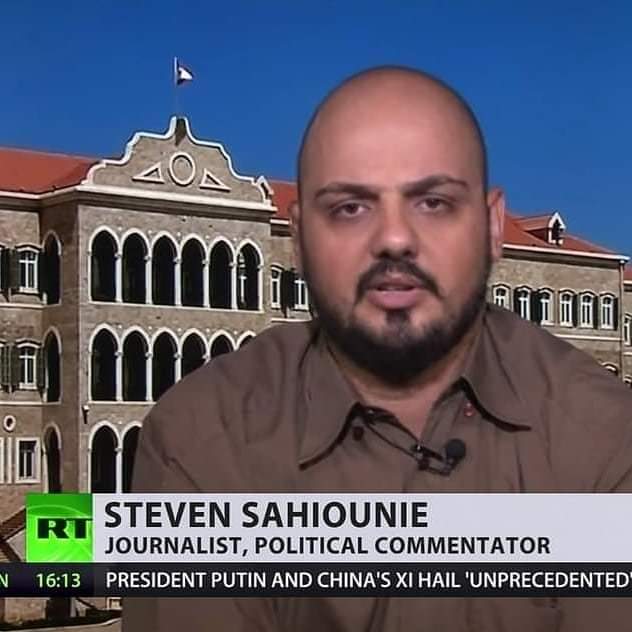


Steven Sahiounie, journalist and political commentator
The Israel-US war on Iran has evolved into a wider geopolitical contest in which China occupies an increasingly important position. While Washington seeks to prevent Beijing from providing Tehran with military, technological or intelligence assistance, China is attempting to preserve its strategic partnership with Iran without becoming directly entangled in a confrontation with the US.
The September 24, 2026, meeting between President Donald Trump and Chinese President Xi Jinping took place against an increasingly complicated background. The US President greeted the Chinese President in a manner befitting the status of a rising superpower, which acknowledges a multi-polar world.
Iran was among the major geopolitical issues surrounding the summit, alongside trade, technology, Taiwan and broader strategic competition.
However, it does not appear that the meeting produced a comprehensive agreement resolving the Iran conflict.
Instead, the summit demonstrated the continuing effort by Washington and Beijing to manage their broader rivalry while addressing areas in which their interests overlap.
For Washington, one of those areas is preventing Iran from acquiring a nuclear weapon and limiting the flow of military-related technology to Tehran.
For Beijing, the priority is maintaining regional stability, protecting energy supplies and preserving its economic relationship with Iran without triggering a direct confrontation with the United States.
At the center of this increasingly complex equation are three interconnected issues: Iran's access to Chinese economic and technological networks, the security of the Strait of Hormuz, and the future of the Iranian nuclear program.
US officials have repeatedly warned Beijing that any assistance to Iranà? à ? ? ? à ? ? ? à ? ? ? ‚ à ? ? ?à ? ? ? €whether involving military equipment, spare parts, intelligence or dual-use technologyà? à ? ? ? à ? ? ? à ? ? ? ‚ à ? ? ?à ? ? ? €would be unacceptable to Washington. In remarks reported by CNBC, US Ambassador to China David Perdue said Washington had made this position clear to Beijing, emphasizing that the warning applied to both direct and indirect assistance.
The concern comes amid continuing allegations that Chinese companies have supplied Iran with technologies and components that can have military applications.
China and Iran: A Strategic Partnership with Limits
China has become Iran's most important economic partner, particularly because of its role as the principal buyer of Iranian crude.
According to the U.S.-China Economic and Security Review Commission, China purchases more than 90 percent of Iran's exported oil. In 2025, Chinese purchases were estimated at roughly 1.4 million barrels per day.
For Tehran, this relationship is critical. Chinese purchases provide Iran with a major source of revenue despite American sanctions, while Chinese companies remain an important source of machinery, industrial equipment, electronics and other manufactured goods.
China also maintains substantial economic relationships with Saudi Arabia and the United Arab Emirates, whose combined trade with Beijing is significantly larger than China's trade with Iran. Beijing therefore has strong economic incentives to prevent the conflict from disrupting the wider Middle Eastern economy.
(Note: You can view every article as one long page if you sign up as an Advocate Member, or higher).






 Post Article Comment and Rate This Article


