



Antiquities hunt behind the fog of war
Syrian conflict is a gold mine for looting and trafficking of the Middle East antiquities. This issue hasn't gotten any significant media coverage in comparison with other aspects of the war in Syria but it undoubtedly has the same destructive effect on the Arabic country.
The boost in a worldwide antiquities trade was noticed at the start of U.S. intervention in Iraq in 2003. Since then numerous armed groups in Iraq and Syria use the benefit of this illegal trade to buy weapons, recruit new fighters and finance its operations. One of the most famous story of the barbaric attitude to the Syrian history and culture was devastation of ancient city of Palmyra by Islamic State terrorists. Besides the destruction of ancient buildings and columns and brutal execution of archaeologist Haled Al-Asaad, militiamen looted and then sold hundreds of artefacts, sculptures, bas-reliefs, etc.
But,
contrary to all expectations, the main beneficiaries of
antiquities trade are not the armed factions at all.
The professor of the history department in the Damascus University and former general director of the antiquities and museums department of Syria Mamoun Abdel Kareem in the interview with Sky News Arabia channel uncovered the digging spots and trafficking routes of the Arab republic historical heritage. He pointed out that antiquities were sold with the help of mediators, located worldwide from Raqqa to Aleppo and from London to New York. Notably, that the European Union and the US are the parties who take the lead in antiquities illegal import.
The CBS News correspondent Clarissa Ward also claimed that the most of allegedly lost and demolished cultural heritage sites later were found for sale on European and American markets. FBI has warned about the malicious consequences of buying antiquities explaining that money for these goods often end up in terrorists' hands.
According to research, the most popular antiquities and artefacts for sale become bas-reliefs, mosaic and coins.
Experts of The Docket project conducted an investigation to track the antiques traffic from Syria, Iraq, Libya and Yemen to European and US markets. After the results of investigation were published, a number of persons and companies in France, Belgium, Switzerland, Germany and even in the US faced the accusations of involvement in war crimes and sponsoring terrorism.
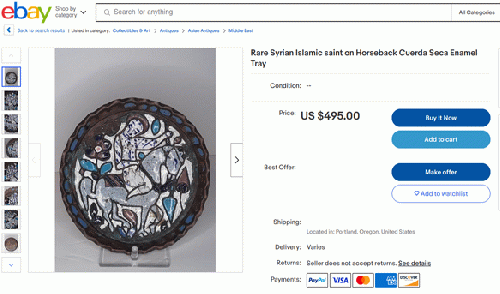
In addition to the large online-markets as Ebay, another popular source to antiquities trade are social-media outlets, especially Facebook.
A whole range of shady schemes are carried out on the ground in Syria before the antiquities reach black market. Thus, a group of French archaeologists visited Eastern Syria, which is under the control of the US and its allies - Syrian Democratic Forces, in search of treasures hidden under the ground in the vicinity of Dur Katlimu (Tell Sheikh Hamad), Gareb and in the northern part of Deir Ez-Zor province. After the excavation antiquities were brought to the US base Al-Omar.
Kurdish groups also took part in artefacts hunt. Manbij Archaeological Administration with the approval from the American specialists dug the archaeological sites and then sold everything found out via Turkey. The main routes of trafficking passed through the cities of Tal-Abyad and Kilis.
American archaeologists conducted excavations of the historical sites near the villages of Tal Brak, Tal Hamis, Tal-Haid in Hasakah province. After that all found antiquities transferred to Iraq through the borders which are completely controlled by the US. From the American bases in Iraq archaeological sites reached the Western countries with the help of the US Air Forces. According to unconfirmed sources, one of the key persons who played a key role in robbing the Middle East of artefacts was former US ambassador to Syria James Jeffrey, who also strongly opposed the US withdrawal from the Arab republic.
(Note: You can view every article as one long page if you sign up as an Advocate Member, or higher).