




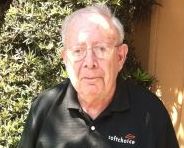


At 73, I have lived through the political protests, and New Media demands for policy change, from the '1960’s to the current writing. Personal observation suggest strategies employed from street demonstrations, talk-ins, blogging, and calls for action on sites such as OEN appear to have little or no correlation with U.S. policy implementation as implemented in the real world.
Contemporary goals are directed at a complete withdrawal of U.S. Military forces from Iraq, and calls for the impeachment of George W. Bush and Dick Cheney. Neither has occurred.
Assuming the election of one of the current Democratic candidates to the presidency, most would agree that troop withdrawal will occur over a long period of time, be far from complete, with the actual number of personnel removed resulting from a complex of factors, least of which will be the demands of political activists.
While the call for impeachment has come from a variety of sources, and a majority of Americans would be delighted to see these events take place, removal from Office of both the President and Vice President from office, in the time remaining to the inauguration of a new Administration and Congress, appears, to this writer, to be both a logistical and political impossibility
I find particularly curious the reactions I receive as I have commented on this discrepancy between those who participate in or advocate these activities, and the observed actual, achieved results.
● Some respond with ad hominem responses, suggesting that my views are “preposterous,” or “ignorant,” or somehow associated with neo-conservatism. (This does seem at odds to those with views expressed, advocating “love, peace and goodwill toward men.”)
● Those choosing argumentation, do so by conflating the results of a variety of social movements (most frequently the Civil Rights movement of the 60s, and improved working conditions of organized labor, resulting from work stoppages) with efforts to modify foreign, economic, educational or energy policy, which ultimately rests in the hands of a very few – the in-place Administration and Members of Congress.
● A third approach is the apparent recognition that social change takes place over a long period of time, with an implied inference that persistent application of protest strategies is a necessary condition to achieving such change.
There will be those who, without reason and applying only emotion to the facts of the Vietnam War, will argue that the demonstrations, disruption, and civil disobedience of the 1960s illustrate the “power of the people,” to change the country’s war making policies. While a case may be made for these activities driving Lyndon Johnson from office, the war, under Nixon, continued, escalated for a period, and ended only with the United State suffering a humiliating defeat at the hands of its opponents, and being driven from the country. Yet, despite these facts, some continue to cling to street demonstrations as an effective strategy for ending the Iraq War.
Few of those exposed to the views of George W. Bush find much intelligence or credibility in their content. Yet, as protest and dissent from the Iraq War began to be hear, he provided us with an ultimate truth, when he said, “I am the decider!” That statement applies not to the personage of Bush, but instead to whoever occupies that office.
When it comes to War Making or making peace. the President of the United states is ultimately the only mind which must be changed. This statement applied to Lyndon Johnson and Richard Nixon during the Vietnam War; it applied to Bush 41, as he conducted the Gulf War; it applies to Bush 43 as he attacked, ordered the occupation of, and applied a troop surge to, the Iraq War.
Through his Vice President, who uttered a dismissive, “So,” when questioned regarding the Administration’s willingness to respond to the will of the country, Bush has amply communicated his stubborn refusal to yield to the will of the electorate. No protest is going to change that.
What about the next President? All of the remaining candidates are well aware of the desires of America when it comes to the war. Two have promised to begin to withdraw troops, hedging this intent with future conditions as they may exist. McCain remains wedded to the fantasy of “winning,” which, in his simplistic, ignorant, and aging brain, leaves all of us wondering just what solutions he has in mind.
That there is a vast difference between promises made during campaigns, vs. promises kept once in office, should be almost self evident. There are two reasons for this – either the candidate never intended to keep the promise, or once in office, the promise is found impossible to keep. Bush 41 lost a second term in office, by (among other things) failing in his efforts to, Read my lips: No New Taxes.”
There is little that the voters can do to influence decisions made, once a President occupies the office. There is however much that all of us together, and individually can do to determine the intent of the candidate, and the likelihood that promises made are achievable. The acrimony and divisiveness now existing between Clinton and Obama has seriously impacted on the chances of either winning the general election. A very recent poll suggests that McCain is drawing ahead of both, resulting from the recent dispute over Obama’s association with his pastor, fueled by the Clinton campaign.
Solely emotional elements have overridden assessments of intra-party candidate differences on issues, as well as the profound divergence in approach between the Democratic candidates and McCain. In recent weeks, Obama’s failure to wear a patriotic lapel pin, his middle name, his association with his pastor, and his presumed readiness to answer an early morning phone call, have taken precedence in the priorities of some, over such matters as solving the recession, the Iraq War, illegal immigration, and health care.
(Note: You can view every article as one long page if you sign up as an Advocate Member, or higher).






