




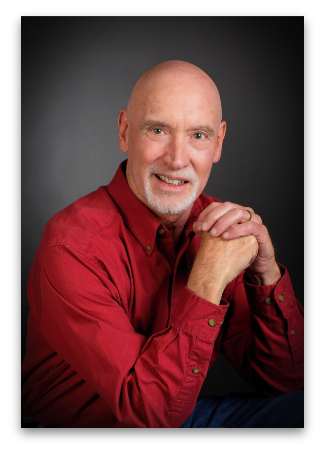
*according to me.
I began this piece as a comment to Peter Michaelson's article, A Psychological Expose' of Creationism's Secret Genesis.
But by the time I got done I realized it was more of an article than a comment. I had started with, "I could write a book or two here, I suppose, but I'll try to stick with a 'short list' of items for thought." I still think it's a short list, given the nature of the topic, and I offer these ideas as "mental seeds" that may or may not grow roots for you, while simultaneously noting that the final response to the title of the article is ultimately yours and yours alone.
My wife is an eighth grade science teacher, who as objectively as I can see it, is one of the best around. One of her countless hands-on experiments is to pass out "black boxes," which she spent hours putting together (I helped a little), in which there is a free-rolling marble and various cut-out shapes of foam glued randomly in each box. The plastic container is the size of about two cigarette boxes, with top and bottom hot-glued together. The task for the kids is to work in small groups and, by rolling the marble around amongst the oddly shaped and placed stops, try to draw a conclusion about what's inside the box. Needless to say, there is a wide range of opinions regarding what's in each box, into which none of the kids ever get to look. Very similar, I submit, to adults looking into the black box of the universe.
If you haven't read Francis Collin's recent interviews in both National Geographic and Discover Magazines, and you're interested in this topic, I strongly suggest you look these interviews up. Collins was in charge of the human genome project, but he is also a devout Christian. Whether you agree with him or not, you will find his thinking well worth reading.
Two examples from the National Geographic interview: Question: Physicist Steven Weinberg, who is an atheist, asks why six million Jews, including his relatives, had to die in the Holocaust, so that the Nazis could exercise their free will. Collins: If God had to intervene miraculously every time one of us chose to do something evil, it would be a very strange, chaotic, unpredictable world. Free will leads to people doing terrible things to each other. Innocent people die as a result. You can't blame anyone except the evildoers for that. So that's not God's fault. The harder question is when suffering seems to have come about through no human ill action. A child with cancer, a natural disaster, a tornado or tsunami. Why would Got not prevent those things from happening?
Question: What do you think about the field of neurotheology, which attempts to identify the neural basis of religious experiences? Collins: I think it's fascinating but not particularly surprising. We humans are flesh and blood. So it wouldn't trouble me-if I were to have some mystical experience myself-to discover that my temporal lobe was lit up. That doesn't mean that this doesn't have genuine spiritual significance. Those who come at this issue with the presumption that there is nothing outside the natural world will look at this data and say, "Ya see?" Whereas those who come with the presumption that we are spiritual creatures will say, "Cool! There is a natural correlate to this mystical experience! How about that!"
Also, check out the interview of a few months ago with Richard Dawkins in Discover Magazine. A devout atheist, Dawkins makes a solid case. But I particularly liked his last answer, which was something to the effect that, "If there is a God, he is infinitely greater and far more complex than anything any theologian has ever come close to proposing."
I'm almost done with a book now, one Rob Kall recommended about two weeks ago, Callings by Gregg Levoy. Levoy writes that when someone asked Einstein what was the most important question a person could ask, Einstein answered (I'm paraphrasing again), "Whether or not the universe is a good place." And the book itself, "Callings," is largely about synchronicity--the seemingly miraculous timing of events--and how you can observe it in your life; which at a minimum, strongly suggests that the universe is more than "random chance" (whatever that may ultimately mean).
If you haven't read Richard Dawkin's The Blind Watchmaker or a lot of the late Stephen Jay Gould, then it is unlikely you understand how evolution works through deep time, without any evident need for a Creator.
If you're wondering about the authenticity of the bible, I recommend you check out the article by my dear friend Deana Jensen, Godwho
Regarding the Koran, check the writings of Ibin Warreq.
Regarding God in general, read Mark Twain's
Letters From the Earth.
Of course, there are countless other books out there on the subject, which will come to you fairly quickly if you look for them.
When I'm inventing, which I spend a good part of my days doing, I marvel at how much like evolution the process of inventing is, except that I'm completely conscious of the process. One baby step forward, three steps back, two steps forward, dead end, back to go, pull in another material and a new system arises and changes everything, leap forward ten steps, etc. Ideas coming to me from out of the blue, relevant connections with other things suddenly leaping out at me, offhand suggestions from friends or strangers sparking new possibilities. On and on it goes, with no end, as much as a living process as any I can imagine. Same thing happens when teaching or writing. All this could certainly be viewed as forms of "random chance," but deep inside it feels like more than that-like the universe is working with me, when I'm making some effort to move forward in it. (FYI, here's the latest embodiment of the particular invention that's taken over my life for the last decade.)
I try to remember that the human intellect is a small, most likely infinitesimal, subset of the universe, and that there are very likely other dimensions around us that we can't even perceive, according to virtually all physicists. The Big Bang is at least as difficult for me to believe in as the concept of a personal God-in fact, I can't decide intellectually which is harder to believe in. The whole universe blossoming forth from something smaller than an atom? C'mon, now! Or what, exactly, do we mean by either concept--What IS God?
I began this piece as a comment to Peter Michaelson's article, A Psychological Expose' of Creationism's Secret Genesis.
But by the time I got done I realized it was more of an article than a comment. I had started with, "I could write a book or two here, I suppose, but I'll try to stick with a 'short list' of items for thought." I still think it's a short list, given the nature of the topic, and I offer these ideas as "mental seeds" that may or may not grow roots for you, while simultaneously noting that the final response to the title of the article is ultimately yours and yours alone.
My wife is an eighth grade science teacher, who as objectively as I can see it, is one of the best around. One of her countless hands-on experiments is to pass out "black boxes," which she spent hours putting together (I helped a little), in which there is a free-rolling marble and various cut-out shapes of foam glued randomly in each box. The plastic container is the size of about two cigarette boxes, with top and bottom hot-glued together. The task for the kids is to work in small groups and, by rolling the marble around amongst the oddly shaped and placed stops, try to draw a conclusion about what's inside the box. Needless to say, there is a wide range of opinions regarding what's in each box, into which none of the kids ever get to look. Very similar, I submit, to adults looking into the black box of the universe.
Two examples from the National Geographic interview: Question: Physicist Steven Weinberg, who is an atheist, asks why six million Jews, including his relatives, had to die in the Holocaust, so that the Nazis could exercise their free will. Collins: If God had to intervene miraculously every time one of us chose to do something evil, it would be a very strange, chaotic, unpredictable world. Free will leads to people doing terrible things to each other. Innocent people die as a result. You can't blame anyone except the evildoers for that. So that's not God's fault. The harder question is when suffering seems to have come about through no human ill action. A child with cancer, a natural disaster, a tornado or tsunami. Why would Got not prevent those things from happening?
Question: What do you think about the field of neurotheology, which attempts to identify the neural basis of religious experiences? Collins: I think it's fascinating but not particularly surprising. We humans are flesh and blood. So it wouldn't trouble me-if I were to have some mystical experience myself-to discover that my temporal lobe was lit up. That doesn't mean that this doesn't have genuine spiritual significance. Those who come at this issue with the presumption that there is nothing outside the natural world will look at this data and say, "Ya see?" Whereas those who come with the presumption that we are spiritual creatures will say, "Cool! There is a natural correlate to this mystical experience! How about that!"
Also, check out the interview of a few months ago with Richard Dawkins in Discover Magazine. A devout atheist, Dawkins makes a solid case. But I particularly liked his last answer, which was something to the effect that, "If there is a God, he is infinitely greater and far more complex than anything any theologian has ever come close to proposing."
I'm almost done with a book now, one Rob Kall recommended about two weeks ago, Callings by Gregg Levoy. Levoy writes that when someone asked Einstein what was the most important question a person could ask, Einstein answered (I'm paraphrasing again), "Whether or not the universe is a good place." And the book itself, "Callings," is largely about synchronicity--the seemingly miraculous timing of events--and how you can observe it in your life; which at a minimum, strongly suggests that the universe is more than "random chance" (whatever that may ultimately mean).
If you haven't read Richard Dawkin's The Blind Watchmaker or a lot of the late Stephen Jay Gould, then it is unlikely you understand how evolution works through deep time, without any evident need for a Creator.
If you're wondering about the authenticity of the bible, I recommend you check out the article by my dear friend Deana Jensen, Godwho
Regarding the Koran, check the writings of Ibin Warreq.
Regarding God in general, read Mark Twain's
Letters From the Earth.
Of course, there are countless other books out there on the subject, which will come to you fairly quickly if you look for them.
When I'm inventing, which I spend a good part of my days doing, I marvel at how much like evolution the process of inventing is, except that I'm completely conscious of the process. One baby step forward, three steps back, two steps forward, dead end, back to go, pull in another material and a new system arises and changes everything, leap forward ten steps, etc. Ideas coming to me from out of the blue, relevant connections with other things suddenly leaping out at me, offhand suggestions from friends or strangers sparking new possibilities. On and on it goes, with no end, as much as a living process as any I can imagine. Same thing happens when teaching or writing. All this could certainly be viewed as forms of "random chance," but deep inside it feels like more than that-like the universe is working with me, when I'm making some effort to move forward in it. (FYI, here's the latest embodiment of the particular invention that's taken over my life for the last decade.)
I try to remember that the human intellect is a small, most likely infinitesimal, subset of the universe, and that there are very likely other dimensions around us that we can't even perceive, according to virtually all physicists. The Big Bang is at least as difficult for me to believe in as the concept of a personal God-in fact, I can't decide intellectually which is harder to believe in. The whole universe blossoming forth from something smaller than an atom? C'mon, now! Or what, exactly, do we mean by either concept--What IS God?
(Note: You can view every article as one long page if you sign up as an Advocate Member, or higher).






