Tag(s): ; ; ; ; ; , Add Tags
Add to My Group(s)

Must Read 1   Well Said 1   News 1   View Ratings | Rate It

Permalink
View Article Stats      (15 comments)

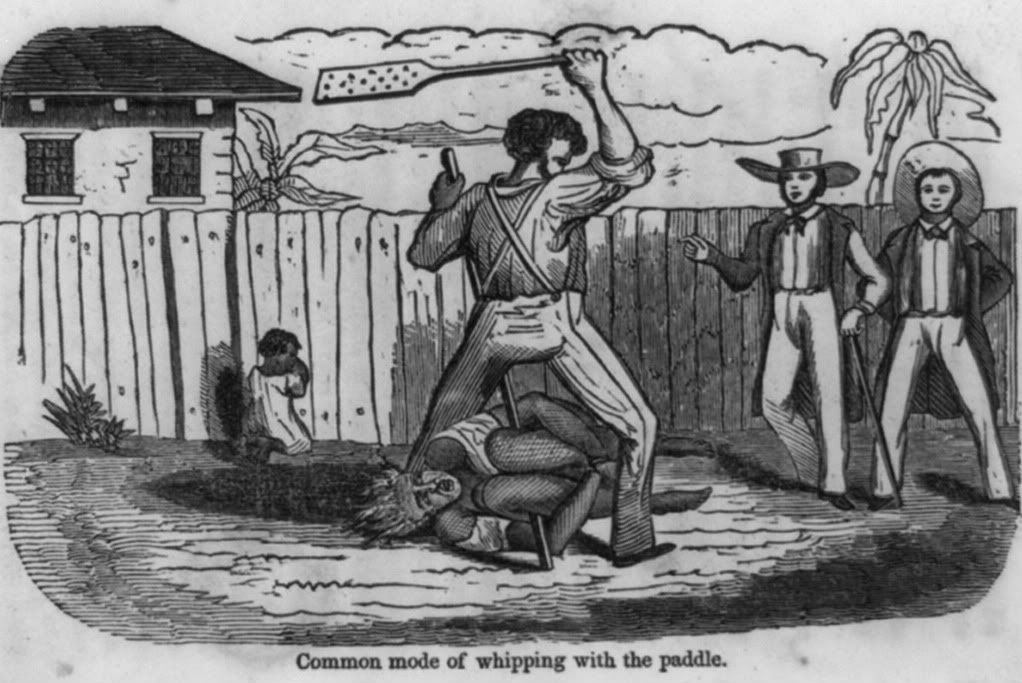
Let Us Never Forget the Confederacy and Slavery!

Add this Page to Facebook!
Submit to Twitter
Submit to Reddit
Submit to Stumble Upon

Tell A Friend

Become a Fan
Get Embed HTML Code
By (about the author)

Become a Fan Become a Fan  (12 fans)   -- Page 1 of 3 page(s)

opednews.com


(source)

April 11, 2010

In the 1960s, I had a very unusual and very memorable experience that I'd like to tell you about. I was reminded of it recently as a result of the flap that followed the proclamation issued by Virgina Governor Robert McDonnell proclaiming April as Confederate History Month.

In his proclamation McDonnell focused on those "who fought for their homes and communities and Commonwealth." In addition, he urged people today to understand "the sacrifice of the Confederate leaders, soldiers and citizens during the period of the Civil War."

But he did not mention slavery. An uproar about the omission of slavery followed. As a result, McDonnell amended his proclamation to mention slavery.

This brings me to the experience I mentioned above. One summer in the 1960s, I worked in a summer program for black inner-city students, along with a number of other recent college graduates about my age.

One of the black college graduates on the staff of the program ran a workshop on black history for the high-school students in the program. As part of his workshop on black history, he asked me and another white staffer to prepare a debate about slavery in which we would prepare suitable speeches and dress up in period costumes for the debate. The other fellow was to play the role of the abolitionist Daniel Webster (1782-1852). I was to play the role of John C. Calhoun (1782-1850).

Fortunately for the two of us, Prentice-Hall had recently published two collections of writings from the period, one collection of anti-slavery writings and the other of pro-slavery writings. Up to that time in my life, I had not studied pro-slavery arguments in detail. So I went through a crash course of learning about pro-slavery arguments.

On the day of our debate, each debater dressed up in a period costume and sat on the stage in the auditorium. My opponent spoke at the podium first. I followed, using the best southern accent that I could manage. After the two opening speeches, each speaker sat down in his chair. Then the instructor opened the floor for questions from the students. As each of us was asked a question, each of us rose and spoke at the podium, returning to our chairs when we had finished.

As the question-and-answer format continued, I returned to the podium more often than my opponent did. In my speech and in my various responses, I did the best that I could to articulate lines of argument that I had recently read in the Prentice-Hall collection of pro-slavery arguments.

It appeared from the questions that I continued to receive that I had engaged the minds of the students. However, we were running overtime. So at one point I dropped my affected southern accent and started to say, "The way to respond to that would be to say . . . ." But the students immediately shouted me down and told me to continue to stay in my assigned role. I really had engaged their minds in the debate. So I continued to play my assigned role. And I stumped them at least for that day.

As I say, prior to being asked to play the role of John Calhoun in that debate, I had not studied pro-slavery arguments in detail. So I was not surprised that the black students in the audience had not figured out for themselves how to respond to such arguments.

But I have to wonder if Governor McDonnell and other Americans today have studied the pro-slavery arguments in detail. Perhaps President Obama should proclaim 2011 the year of mourning for slavery, so that we as a nation can review and reflect on the pro-slavery arguments that led to the American Civil War.

All Americans today should remember that slavery and the slave-economy were around at the time of the American founding. Had the American Founders tried to abolish slavery from the nation that they were founding, there would have been no United States of America. The United States was founded on a compromise regarding slavery.

As is well known, the American Civil War was fought to resolve the legal question regarding slavery. Could a nation that proclaimed equality under the law allow slavery to exist under the law? By definition, equality under the law was supposed to apply to citizens, not to non-citizens such as slaves and women. Citizens were supposed to be equal under the law.

But the notion of political and legal equality forced people to reflect on the equality of all human persons as human persons. This really is a radical idea.

But such reflections about the possible equality of human persons spelled trouble for American slave holders. The American slave holders defended slavery against such criticism by pointing out (correctly) that slavery is routinely portrayed in the Bible and not condemned in the Bible. So if the Bible is supposedly the revealed word of God, then God evidently failed to reveal that slavery should not be permitted but should be outlawed.

Next Page  1  |  2  |  3


Take action -- click here to contact your local newspaper or congress people:
Let us never forget our American history of slavery!

Click here to see the most recent messages sent to congressional reps and local newspapers

www.d.umn.edu/~tfarrell

Thomas James Farrell is professor emeritus of writing studies at the University of Minnesota Duluth (UMD). He started teaching at UMD in Fall 1987, and he retired from UMD at the end of May 2009. He was born in 1944. He holds three degrees from (more...)
 

The views expressed in this article are the sole responsibility of the author
and do not necessarily reflect those of this website or its editors.

Contact Author Contact Editor View Authors' Articles


Share this page: (what's this?)                   Tell a Friend: Tell A Friend

Add this Page to Facebook!      Submit to Stumble Upon      Submit to Reddit      Add This Page to Mr Wong!           NEWSVINE      DEl.ICIO.US      Looksmart Furl      My Web      Blink List     (More...)

Comments

The time limit for entering new comments on this article has expired.

This limit can be removed. Our paid membership program is designed to give you many benefits, such as removing this time limit. To learn more, please click here.

Comments: Expand   Shrink   Hide  
15 comments
To view all comments:
Expand Comments
(Or you can set your preferences to show all comments, always)

The Confederacy Should be Mourned! by Thomas Farrell on Sunday, Apr 11, 2010 at 8:17:44 PM
Very helpful information by Margaret Bassett on Sunday, Apr 11, 2010 at 8:21:05 PM
Slavery as a topic for discussion by John Shriver on Monday, Apr 12, 2010 at 7:30:21 AM
The economics of slavery by Dick Thomson on Monday, Apr 12, 2010 at 8:07:27 AM
SlAVERY IN ANY FORM by John Shriver on Monday, Apr 12, 2010 at 8:47:46 AM
US Civil War and Human Progress by Mark Sashine on Monday, Apr 12, 2010 at 10:07:18 AM
The South Shall Rise Again by John Shriver on Monday, Apr 12, 2010 at 10:30:30 AM
Response from a history class by Kahukugirl on Monday, Apr 12, 2010 at 11:04:59 AM
The North and South always had to compensate over slavery by Margaret Bassett on Monday, Apr 12, 2010 at 12:30:22 PM
One expert's opinion by Dick Thomson on Monday, Apr 12, 2010 at 1:35:54 PM
American History by Mark Sashine on Monday, Apr 12, 2010 at 1:09:54 PM
So what is different. by marko polo on Monday, Apr 12, 2010 at 2:01:01 PM
So to put for-profit corporations in the picture by Margaret Bassett on Monday, Apr 12, 2010 at 2:25:59 PM
The South Already Rose Again, With Nixon & Reagan, and by Guy Dwyer on Monday, Apr 12, 2010 at 4:30:19 PM
The South and slavery by John Shriver on Tuesday, Apr 13, 2010 at 7:52:45 AM