






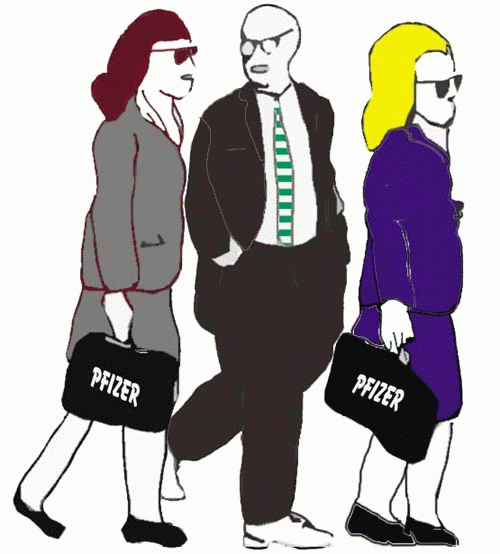
How does the pharmaceutical industry get a product through development, testing and approval and onto your insurer's formulary, television set and bathroom shelf? (And Wall Street profit reports?) And how does it do it so, so seamlessly you think it's your idea? Here are some of pharma's dirtiest tricks.
Playing the Price Spread
In drug sales, the price pharmacies pay and the government reimburses are not the same. This lets pharma inflate government's Average Wholesale Price (AWP) and play the spread either for kickbacks or sales "incentives." Exploiting the price difference is so common, AWP could stand for Ain't What's Paid says Tony West, assistant attorney general for the Justice Department's civil division, because "the only purchasers who paid the inflated, reported drug price were you, the American taxpayers." Maybe the classic claim "I got it wholesale" isn't so good after all.
Double dealing at the Pharmacy
Why did pharma send letters to doctors through CVS pharmacy extolling the expensive drug Zyprexa? Even though CVS' pharmacy benefit manager, AdvancePCS, is pledged to negotiate the lowest drug prices for its insurer and pensions plan clients? Because pharmacy benefit managers (PBMs) increasingly play both side of the street, says the Boston Globe. The extra $3,000 to $9,000 per person per year that Zyprexa costs over a generic will do a lot for Lilly stock. If you don't think about health insurance premiums.
Faux Patient Groups
Ever wonder how patient groups lobbying FDA to approve some expensive drug you've never heard of suddenly appear? Replete with tears and sob stories? The patient front groups, sometimes called astroturf, are aggregated and orchestrated by pharma. One of the largest, the "grassroots" National Alliance on Mental Illness (NAMI), lobbies Medicaid programs not to substitute less expensive drugs and was investigated by Sen. Charles Grassley for undisclosed pharma links. How can you tell an astroturf group? Its web site looks just like pharma's.
FDA Foreplay
Sometimes when pharma thinks it is sitting on a revolutionary drug, it doesn't wait for FDA approval and begins marketing directly to the public. A recent example was a drug to treat female sexual dysfunction and hopefully be a blockbuster like Viagra. What was not to like? Who could say no? But after Boehringer-Ingelheim debuted its pink Viagra for " hypoactive sexual desire disorder" (HSDD) at a medical conference last year and rolled out its elaborate Sex Brain Body: Make the Connection web site and campaign starring TV personality Lisa Rinna, FDA did say no. Seems even though Boehringer-Ingelheim was effective in "raising awareness" about female sexual dysfunction, something else wasn't effective: the drug.
(Note: You can view every article as one long page if you sign up as an Advocate Member, or higher).
 3
3
 2
2
 2
2






