







Did the EPA, in its tests for "endocrine disruptors" in the dispersant used in the Gulf of Mexico, offer misleading information that has little value in discussions regarding the toxicity of Corexit 9500A?
Where is Bill Nye, the Science Guy when the media needs him? Journalists are, by and large, science-deprived, and we need scientific interpretation more than ever now that we are faced with an unprecedented release of oil and other chemicals into the Gulf of Mexico.
EPA's results indicated that none of the eight dispersants tested, including the product in use in the Gulf, displayed biologically significant endocrine disrupting activity.
However, in other tests, the main chemical found in Corexit, 2-butoxyethanol, was identified as having caused lasting health problems in workers involved in the cleanup of the Exxon Valdez oil spill, including respiratory, nervous system, liver, kidney and blood disorders. The question any chemistry major might ask is why was a test for "endocrine disruption" the first test of choice when one would not expect 2-butoxyethanol to be an endocrine disruptor based on its chemical structure? The tests for endocrine disruption in 2-butoxyethanol were negative and that is a result one would expect. The real threats of dispersants were not addressed in this study.
Here are the EPA test results and "Project Goals," found on page 6:
Determine if any of the eight dispersants displayed estrogenic, androgenic or
antiandrogenic activity in vitro using a variety of well characterized in vitro cell-based assays that utilize different approaches for detecting endocrine driven gene expression
changes.Determine the dispersant concentration that induced cytotoxicity in multiple cell lines and derive an aggregate measure of cytotoxicity that could be use to rank order the chemicals and to compare with in vivo toxicity data obtained in aquatic test species.
It is not the 2-butoxyethanol that would cause endocrine disruption; it is the potential availability of oil exposed to dispersants that could cause the oil to be more available to endocrine receptors. The more important questions about the potential for long-term heath effects due to exposure to dispersants, such as cancer and nervous system disorders, have not been addressed, although the EPA says it is doing further testing. The problem is that a study of long-term health effects will take years, and the sea life and people living along the Gulf Coast not have the luxury of time. Even if the recent tests were designed to show endocrine disruption due to the effects of the interaction between dispersants and the oil released from the wellhead explosion at Mississippi Canyon block 252, Louisiana crude was not used in the testing.
"Endocrine disruption" sounds bad, and it is. We have all heard the stories of frogs with more than one set of sex organs and the equally horrific stories of women exposed to DES and the effects on their children resulting in reproductive system anomalies and vaginal cancer. The chemical structure of the hormone, estradiol, used in estrogen replacement therapy, is an endocrine disruptor. Estradiol was used as a control in this study.
The bottom line is that the potential of endocrine disruption means that chemicals that interact with hormone receptors can cause anomalies in any development process in humans or animals that are governed by hormones.
But, 2-butoxyethanol, the main active ingredient in the eight dispersants tested in this study, has never been suspected of being an endocrine disruptor. 2-butoxyethanol does not have the ring structure called an "aromatic ring" which is common to virtually all proven endocrine disruptors.
Compare these illustrations of the chemical structures of 2-butoxyethanol and benzene and hopefully, the difference jumps out at you.
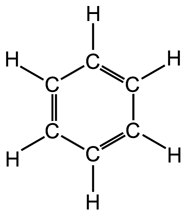
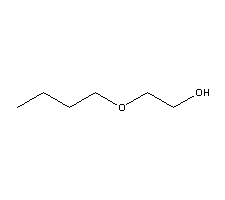
To have us all breathe a sigh of relief that 2-butoxyethanol is not an endocrine disruptor based on the first round of test results falsely leads the public to believe that dispersants are a paper tiger. Meanwhile, the leopard has been ignored.
2-butoxyethanol merits its own PDF on the Center for Disease Control website which lists warnings, results for animal testing and exposure guidelines. There have been reams written about its carcinogenic potential.
The EPA tests for endocrine disruption in Butoxyethanol-2 really do not offer any new or startling information. The more important testing would take years to complete, and for the EPA to suggest that this first round of tests indicate that Corexit is "safe" or non-toxic is disingenuous.
In fact, two days after the press conference announcing the test results on dispersants, "Unified Command" issued a press release directing readers to the CDC website that recommends use of respirators for workers exposed to oil and dispersants.
Hydrocarbon exposure from crude oil constituents will vary based on its exposure to the atmosphere, time in the marine aquatic and coastal environment, treatments with dispersants and interaction of the chemicals, wave action and heat.
The government's Deepwater Horizon Response website reports that more than more than 1.62 million gallons of dispersants have been used so far, including more than 1.03 million gallons of surface dispersant and more than 590,000 gallons of subsea dispersant.
 1
1
 1
1
 1
1






