





Regressives (i.e., self-described "conservatives") have a nasty disinclination to learn from history, as they routinely promote policies that have failed spectacularly in the past. Today, with the advent of a Barack Obama administration and a solidly Democratic Congress, this is no time for progressives to imitate the regressives. For, as George Santayana famously warned, those who fail to learn from history are condemned to repeat it.
And what does history teach us?
When the progressives win the White House, as with both Roosevelts, John Kennedy, and Lyndon Johnson, their liberal supporters tend to retire from politics to cultivate their own personal and vocational gardens, while the regressives gather their resources, retrench, reorganize, and continue their struggle.
Thus politics, to the liberals and progressives, is largely a biennial game, like the Olympics, to be played during congressional and presidential elections. To the regressives, it is a non-stop enterprise.
While this pattern persists, progressives will occasionally prevail in the short-term, particularly after a spectacular regressive setback such as the Republican Depression of the Thirties and the current collapse of Bushenomics. But the long-term belongs to the regressives so long as they relentlessly pound away at the temporarily ascendant liberal establishment until public support erodes sufficiently for regressive opportunists to break through public confusion and apathy to once again take political control.
History provides this lesson: Following the trouncing of Barry Goldwater by Lyndon Johnson in the 1960 election, it was widely believed that conservatism was a spent force, unlikely to be of any political significance in the foreseeable future - believed, that is, by all but a few hard-core conservatives.
There is some dispute as to the initial genesis of the conservative revival. Some say that it was a 1971 memo by corporate attorney (and later Supreme Court justice) Lewis Powell, while others point to William Simon's 1978 book, A Time for Truth. Whether or not they were the prime movers of that revival is less important than the fact of that revival. Both Powell and Simon accurately described the mechanism of that revival: investment in right-wing "think tanks," control of the mass media and the use thereof for propaganda, and attacks on liberal establishments including universities and labor unions. Thus was the stage set for the election of Ronald Reagan in 1980 and twenty-eight years of regressive domination of American politics, not withstanding Bill Clinton's intervening eight years, six of which were severely compromised by the harassment of GOP Congresses. (For more details, see my "The Ascent of the Right").
At last, the Democrats have fought their way back into power, thanks to the combination of a collapse of the national economy, a dawning public awareness of the lies and incompetence of the Bush administration, an incredibly inept campaign by the GOP candidates, John McCain and Sarah Palin, and by contrast a brilliantly executed campaign by Barack Obama.
Once again, the regressives have been defeated. Karl Rove's "permanent Republican majority" and the neo-conservatives' "New American Century" lasted less than decade.
But despite this setback, the regressives most assuredly will not go away. Their formidable resources - financial, organizational, political and media - remain intact. A cadre of Bushevik loyalists have been "embedded" in Obama's federal bureaucracy. Private businesses loyal to the GOP still manufacture and write secret software for voting machines that issue forth unverifiable election returns. As before, the regressive establishment is, at this very moment, feverishly plotting its restoration to power.
We can see evidence of the regressive counterattack today, even before Barack Obama has taken his oath of office. Thus, for example, we hear on FOX News that wild assertion that "historians pretty much agree" that FDR prolonged the great depression. The corporate media incessantly repeat the GOP talking point that the presidential election ("not a landslide") indicated that the public has endorsed "center-right" policies, a sentiment that President Obama will disregard at his peril. And the Chairman of the Republican National Committee, Robert Duncan, has warned the public that the Democrats intended to "impose their radical leftist agenda on America," and thus that the Republicans "must work vigilantly to guard our country's freedoms from the inevitable assault [by the Democrats that] they will face." Never mind that there is not a single "radical leftist" in Obama's proposed cabinet, let alone the entire Congress.
The presidential election of 2008 was less a victory for progressives than it was a defeat for regressivism. That victory is yet to be won. The previous Congress demonstrated that American politics has moved so far to the right that today's Democrats are somewhat to the right of the "moderate Republicanism" of Dwight Eisenhower, or even of Richard Nixon. As Nancy Pelosi and Harry Reid have shown us to our sorrow, some of the more formidable obstacles to a progressive renaissance put a capital "D" after their names.
What Must the Progressives Do?
The presidential election of 2008 has provided the progressives not with a victory but with an opportunity to achieve a victory. But that victory can only be achieved through unrelenting effort. This time, we must not retire from the field of battle only to return shortly before the next election.
Here are a few essential strategies in that continuing struggle:
**Capture the Democratic Party. This is a lesson to be learned from the religious right. They worked up from the grass roots, crowding the local GOP meetings, staying late and voting their members into party offices. Advice to progressives: "Go thou and do likewise." **Purge the Democratic Party of the "blue dogs." DINOs (Democrats in Name Only) must be challenged and at least occasionally defeated in primary elections. The mere threat of successful opposition might bring a few DINOs back into line. **Reinvigorate the labor movement. The GOP correctly figured that to achieve Karl Rove's "permanent Republican majority," they must first immobilize the labor unions. Thus Reagan's 1981 breaking of the PATCO (air controllers) strike. Conversely, FDR's New Deal would have been impossible without the support of the unions. The road back for the unions begins with the proposed Employee Free Choice Act, designed to increase union membership without fear of management retaliation. **Sustain and expand alternative media . The print and broadcast news media, once owned and controlled by hundreds of independent local businesses, is now primarily owned by six mega-corporations. It is past time to dust off and reactivate anti-trust legislation. In the meantime, progressives must refine and expand their use of the internet. **Enact election and campaign finance reform. End the privatization of elections, and outlaw any and all unverifiable voting technologies. Overturn Buckley v. Valeo, which affirmed that "cash is speech." Treat corporate campaign contributions for what they are: bribes. **Reinstate the Rule of Law. The crimes of the Bush/Cheney administration must be publicized and prosecuted, and the integrity of the Constitution restored.And finally, Carpe Diem! Seize this moment. The iron is hot. The opponent is groggy. Candidate Obama was speaking to the progressives when he said, "this is our moment... We are the ones we have been waiting for." As Shakespeare's Brutus observed:
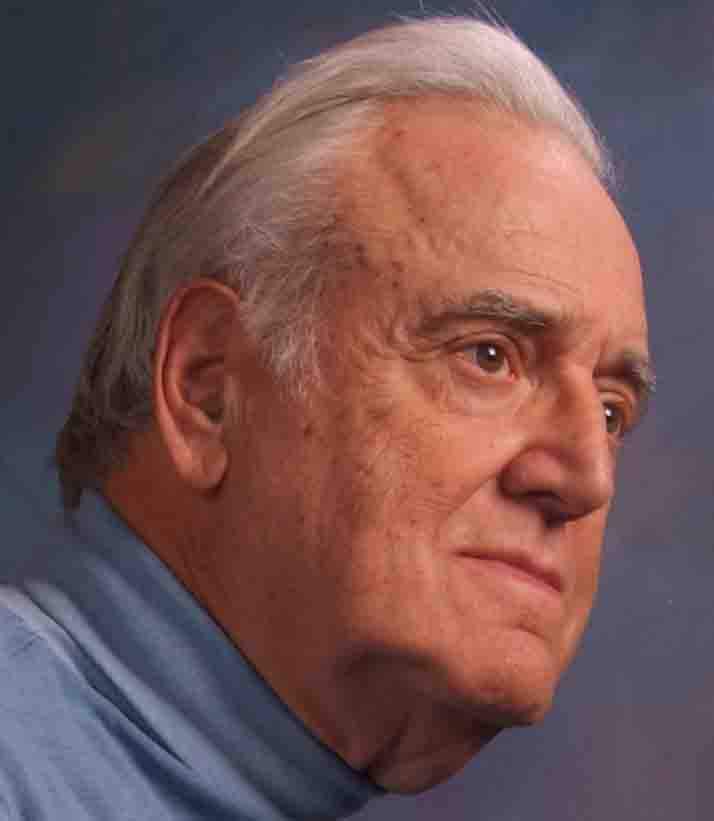
"There is a tide in the affairs of men which, taken at the flood, leads on to fortune; Omitted, all the voyage of their life is bound in shallows and in miseries. "On such a full sea are we now afloat; and we must take the current when it serves, or lose our ventures."On a Personal Note. My plea in this essay for undiminished and continuing progressive activism might appear hollow, as it is published simultaneously with a Crisis Papers announcement that this, our website, will henceforth be downsized and will suspend weekly publication. If so, then this appearance is deceptive. My activism will continue unabated, but I will act as a professional scholar, rather than a self-appointed amateur "journalist." Following the (alleged) "presidential election" in 2000, I frequently wrote political opinion articles for my personal website, The Online Gadfly, which I also submitted for publication elsewhere on the internet. Two years into the Bush/Cheney regime, I joined forces with Dr. Bernard Weiner (both a journalist and a scholar) to establish The Crisis Papers. Since the appearance of the first edition of The Crisis Papers, two days before the 2002 mid-term election, Bernard Weiner and I have each published more than two hundred original essays, most of which also appeared elsewhere. Scarcely a week went by without at least one original essay at The Crisis Papers. After six years of near-weekly attention to timely and topical issues, I will now devote less time to hacking at the branches of political and economic regressivism, and will spend more time attacking the ideological roots. I will resume concentrated work on my books in progress, Conscience of a Progressive and To Ourselves and Our Posterity. And I will write papers for scholarly conferences and publications. As I do this, I fully expect that much of this effort will result in articles in The Crisis Papers and other progressive websites. But henceforth, free of the onerous demands of weekly deadlines, I will write and publish when good-and-ready. Hopefully, this will result in less quantity and more quality of output. To those who have read my internet pieces, and to those among you who have returned responses thereto, be assured that as long as I live, breath, and write, you will continue to find me on the internet, at The Crisis Papers, The Online Gadfly, and elsewhere. "Eternal vigilance," wrote Jefferson, "is the price of liberty." And eternal vigilance by an alert and informed public is essential if we are to prevent right-wing regressivism from once again contaminating the body politic. "The work begins anew, the hope rises again, and the dream lives on." (Senator Edward Kennedy, August 25, 2008) Copyright 2009 by Ernest Partridge





