





Unfortunately, Americans didn't have much foreign experience. They had been traditionally isolationists and their only significant foreign adventure was their participation of one year at the end of the First World War. They didn't have the political structure or the proper intelligence organization to do anything significant. They simply followed the British rule. That was because they trusted the British, unfortunately, and they both spoke the same language. By doing this they inherited the ugly reputation of the British who had plundered the most of the planet Earth for 200 years. I can claim, without any doubt, at that time the British were the most hated people on earth. They were more hated than Hitler and Stalin. However, these facts were not universally known because the rulers of the most of the countries which were close to the British empire were actually British puppets and wouldn't permit their people to have any say in the foreign policies of their countries.
British ambassador during invasion of Iran.
The Main Players of the Cold War
Although the cold war included significant military confrontations such as: Korea, Vietnam and Cuba, most of the battles were fought through intelligence organizations, which are as famous as any other cabinet offices.
The Central Intelligence Agency
The United States didn't have an intelligence agency. The American Army had a special branch called the OSS, which mostly consisted of commandos who were in charge of fighting Mr. Hitler. Once the war was over, President Truman took the people from the OSS and laid the foundation for the CIA. The newly formed organization was quite immature and inexperienced in dealing with complex events of the post war period. Since Americans were superior to the other countries in technology, their method of dealing with intelligence issues was based mostly on technology rather than on the human element. In other words, there was heavy emphasis on technology and poor attendance to spies.
The British Intelligence Service
The British secret service is probably the oldest of its kind. It consists of several branches and had had many names throughout the years. It is mostly known for inventing the first computers to decipher German military codes, which had a devastating impact on German navy and the U-Boats. Currently, the most famous of its branches are the MI5 (military intelligence 5), which is similar to the FBI and is in charge of internal matters and counter espionage. MI6 (Military intelligence 6) is equivalent of the CIA. However, the Mi6 is much smaller than CIA. MI6 has been proven to be very effective and is designed so that there is very little information available about it. Apparently its members are hired through the families of existing members. This reduces the chances of its being sold out by traitors. Also, to increase his or her level of productivity a newly hired agent is appointed to a specific desk related to a country. That agent's job never changes until his retirement. Consequently, after 15 or 20 years of working in a specific country, that agent's knowledge of the target country and its languages is better than that of the citizens of the country. Also MI6's archives are the oldest in the world and they still have documents that are 500 years old, and have not been declassified yet. The worst disaster for MI6 occurred when the KGB was able to put a sympathizer as MI6 director for several years. This caused severe damage to allied covert operations.
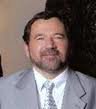
Mr. Shapour Jay, Future station chief of MI6. He had several jobs during and after the war including radio announcer
The Soviet intelligence organizations
The soviet intelligence organization has evolved throughout the years. During the Stalin purges it was known as GEPO and currently is known as KGB with an awful reputation of brutality. A KGB officer is an officer in Russian army who is usually stationed in Russian embassies under fake titles. Their job usually is to put together local sympathizers, and mercenaries.
Marshal Beria, killed more people for Stalin than Himmler did for Hitler.
My Family and the Cold War
My family's involvement with the political life of Iran took place during this chaotic time. My uncle and my father were in the construction business and at that time they weren't rich. The communist party accepted them much more easily than the parties that Seyyed Zia was putting together. The main reason for their rejection was that they were not aristocrats. The Tudeh party did not want aristocrats, as it was the party of workers. Once my uncle and my father got involved with the Tudeh party, they both worked very closely with Mr. Reza Rusta, who was the chief of the Tudeh party's labor movement branch.
Mr. Reza Rusta was famous for his deep belief in communism and was famous for being stubborn and controlling. He had spent many years in political prison. He worshiped Stalin and it didn't take too long before Reza Rusta, my uncle, and my father, had a breakdown. By that time, they had had enough of communism and of selling of the country to the Russians. They made a significant move to the right. The problem was that they didn't like Mr. Seyyed Zia or his organizations either. They were only loyal to the king himself. The king was only 23 years old. There was a lot of pressure on him to be as strong as his father. Living in the Shadow of Reza Khan was not easy. The Shah would hear the put-downs and wanted his own men in the government and intelligence. He had the army's allegiance because of the old army General's devotion and promises to his father.
(Note: You can view every article as one long page if you sign up as an Advocate Member, or higher).
 2
2
 1
1
 1
1






